20 Symptoms of Endometriosis: Signs You Should Not Ignore
Endometriosis is a chronic condition in which tissue similar to the lining of the uterus grows outside the uterus. It can affect the ovaries, fallopian tubes, pelvic lining, and other areas of the pelvis. Although endometriosis is relatively common, it can sometimes take years to diagnose because its symptoms may overlap with menstrual problems and other health conditions.
Knowing the 20 symptoms of endometriosis can help you recognise potential warning signs and understand when it may be appropriate to consult a gynaecologist.
Symptoms vary considerably. Some people experience severe pain, while others may have mild symptoms or no noticeable symptoms at all. The severity of pain also does not always correspond to the extent of endometriosis.
What Is Endometriosis?
Endometriosis occurs when tissue similar to the uterine lining grows outside the uterus. This tissue can respond to hormonal changes during the menstrual cycle, potentially causing inflammation, irritation, scarring, and adhesions.
Common areas affected include:
- Ovaries
- Fallopian tubes
- Pelvic lining
- Areas around the uterus
- Bladder
- Bowel
In some cases, endometriosis can contribute to fertility difficulties.
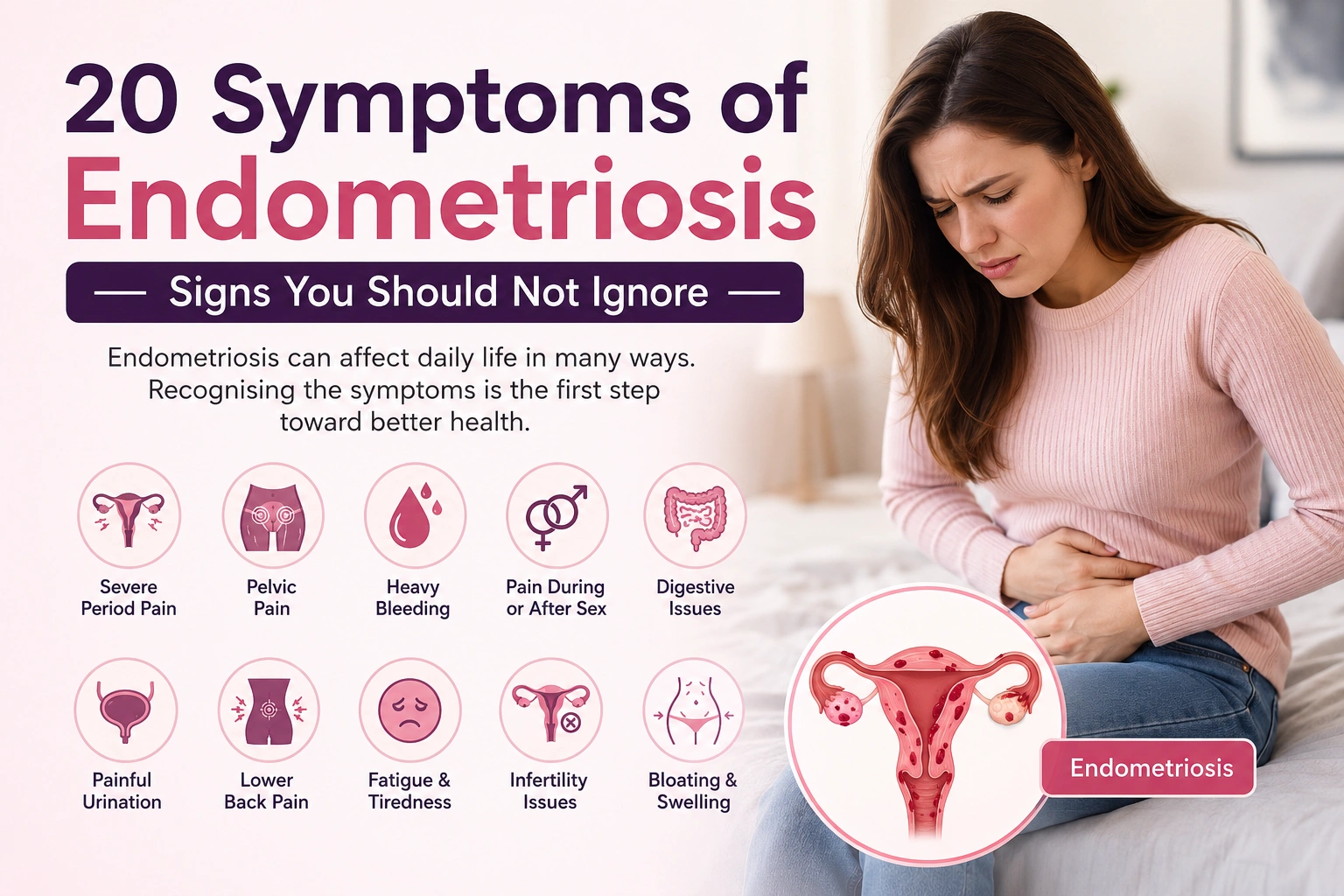
20 Symptoms of Endometriosis
The following are some of the most commonly reported symptoms associated with endometriosis.
1. Severe Period Pain
Painful periods, known as dysmenorrhea, are one of the most common symptoms. The pain may be significantly stronger than typical menstrual cramps and can interfere with daily activities.
2. Pelvic Pain
Persistent or recurring pelvic pain can occur outside the menstrual period. It may feel like aching, pressure, cramping, or sharp pain.
3. Heavy Menstrual Bleeding
Some people with endometriosis experience unusually heavy periods or bleeding that lasts longer than expected.
Heavy bleeding may include:
- Frequently changing sanitary products
- Passing large blood clots
- Periods lasting longer than usual
However, heavy menstrual bleeding can have many causes and does not automatically indicate endometriosis.
4. Pain During or After Sex
Deep pain during sexual intercourse or discomfort that continues afterward can occur when endometriosis affects tissues around the reproductive organs.
5. Painful Bowel Movements
Endometriosis involving or located near the bowel can cause pain during bowel movements, particularly around menstruation.
6. Painful Urination
Some people experience pain or discomfort while urinating, especially during their period. This may occur when endometriosis affects areas near the bladder or urinary tract.
7. Lower Back Pain
Endometriosis-related inflammation and pelvic involvement can sometimes contribute to lower back pain. It may occur alongside pelvic or menstrual pain.
8. Abdominal Bloating
Bloating is a commonly reported symptom. Some people describe significant abdominal swelling or a feeling of fullness, particularly around their menstrual period.
9. Constipation
Hormonal changes and endometriosis affecting or irritating the bowel can contribute to constipation in some patients.
10. Diarrhoea
Some people experience loose stools or diarrhoea, particularly during menstruation. Alternating constipation and diarrhoea may also occur.
11. Nausea
Pain and gastrointestinal involvement may contribute to nausea. Some patients notice nausea primarily during their menstrual period.
12. Fatigue
Persistent pain, inflammation, sleep disruption, and heavy menstrual bleeding can contribute to tiredness and reduced energy.
Fatigue can have many causes, so it should be assessed in the context of other symptoms.
13. Infertility or Difficulty Becoming Pregnant
Endometriosis can affect fertility in some individuals. It may contribute to inflammation, scar tissue, adhesions, or changes involving the ovaries and fallopian tubes.
Difficulty becoming pregnant does not necessarily mean a person has endometriosis, but fertility problems warrant appropriate medical evaluation.
14. Pain Before or During Ovulation
Some individuals experience pelvic discomfort or pain around ovulation. When associated with endometriosis, this pain may be more persistent or severe than typical ovulation discomfort.
15. Pain That Gets Worse Over Time
Endometriosis symptoms may change over time. Some patients notice that menstrual or pelvic pain gradually becomes more frequent or severe.
Pain that repeatedly interferes with work, education, sleep, exercise, or social activities should not simply be dismissed as “normal period pain.”
16. Leg or Hip Pain
Pelvic inflammation or irritation of nearby nerves can sometimes cause pain that radiates toward the hip, thigh, or leg.
This symptom is less specific to endometriosis and may have several other causes.
17. Pain Around the Bladder
Bladder-related pelvic discomfort or pressure can occur when endometriosis affects tissues near the bladder.
Some patients notice that these symptoms become more pronounced during menstruation.
18. Pain With Bowel Movements During Periods
While painful bowel movements can occur at other times, pain that consistently becomes worse during menstruation may be a symptom worth discussing with a gynaecologist.
19. Abdominal or Pelvic Tenderness
Some patients may experience tenderness when pressure is applied to the lower abdomen or pelvis. A healthcare professional can assess pelvic tenderness during an examination when appropriate.
20. Menstrual Symptoms That Affect Daily Life
One of the most important warning signs is when menstrual symptoms become severe enough to interfere with normal life.
For example:
- Missing work or school because of period pain
- Avoiding exercise or social activities
- Difficulty sleeping because of pain
- Needing frequent pain medication
- Being unable to perform routine activities during periods
Severe menstrual symptoms should not automatically be considered normal.
Symptoms of Endometriosis Can Vary
Not everyone with endometriosis experiences the same symptoms. Some people may have extensive endometriosis with relatively mild symptoms, while others may experience severe pain despite having less extensive disease.
| Symptom | May Be Associated With Endometriosis |
| Severe period pain | Yes |
| Pelvic pain | Yes |
| Heavy bleeding | Sometimes |
| Pain during sex | Yes |
| Painful bowel movements | Yes |
| Painful urination | Sometimes |
| Bloating | Commonly reported |
| Constipation | Possible |
| Diarrhoea | Possible |
| Nausea | Possible |
| Fatigue | Commonly reported |
| Fertility difficulties | Possible |
| Lower back pain | Possible |
| Hip or leg pain | Possible |
These symptoms are not exclusive to endometriosis. Other conditions, including fibroids, adenomyosis, ovarian cysts, pelvic infections, irritable bowel syndrome, and urinary conditions, can cause similar symptoms.
When Should You See a Doctor?
Consider speaking with a gynaecologist if you experience:
- Severe menstrual pain
- Persistent pelvic pain
- Pain during sex
- Recurrent bowel or urinary symptoms during periods
- Very heavy or prolonged menstrual bleeding
- Difficulty becoming pregnant
- Symptoms that interfere with daily life
- Pain that is becoming progressively worse
Keeping a symptom diary can be useful. Record when symptoms occur, their severity, their relationship to your menstrual cycle, and whether they affect bowel or bladder function.
How Is Endometriosis Diagnosed?
Diagnosis begins with a detailed medical history and discussion of symptoms.
Your doctor may recommend:
Pelvic Examination
A pelvic examination may help identify tenderness, masses, or other abnormalities, although a normal examination does not rule out endometriosis.
Ultrasound
Pelvic ultrasound can help identify ovarian endometriomas and other causes of pelvic pain. It may not detect all forms of endometriosis.
MRI
MRI may provide more detailed images and can be useful in selected cases, particularly when deep endometriosis is suspected.
Laparoscopy
In selected patients, minimally invasive surgery may be used to directly assess the pelvis and, when appropriate, treat visible endometriosis.
The diagnostic approach depends on symptoms, examination findings, imaging results, and individual circumstances.
Can Endometriosis Be Treated?
Although there is currently no guaranteed permanent cure for endometriosis, treatment can help manage symptoms and improve quality of life.
Treatment may include:
- Pain-relieving medicines
- Hormonal medicines
- Other medical treatments
- Laparoscopic surgery in selected cases
- Fertility treatment when appropriate
- Individualised management based on symptoms and reproductive goals
Your gynaecologist can discuss the most suitable approach based on your symptoms and future pregnancy plans.
Frequently Asked Questions About the 20 Symptoms of Endometriosis
What are the most common symptoms of endometriosis?
Severe period pain, pelvic pain, pain during sex, painful bowel movements, heavy bleeding, bloating, and fertility difficulties are among the symptoms commonly associated with endometriosis.
Can endometriosis cause back pain?
Yes. Some people with endometriosis experience lower back or pelvic pain, particularly around menstruation.
Can endometriosis cause stomach problems?
Yes. Endometriosis can be associated with bloating, constipation, diarrhoea, nausea, and painful bowel movements, especially when symptoms are linked to the menstrual cycle.
Can endometriosis affect fertility?
Yes. Endometriosis can contribute to fertility difficulties in some individuals. However, many people with endometriosis can become pregnant, either naturally or with appropriate medical assistance.
Is severe period pain normal?
Mild to moderate menstrual discomfort can be common, but severe pain that interferes with everyday activities should not simply be accepted as normal. It may warrant evaluation for endometriosis or another underlying condition.
Can you have endometriosis without severe pain?
Yes. Some people with endometriosis experience mild symptoms or no noticeable symptoms. Symptom severity does not always reflect the extent of the condition.
Conclusion
Knowing the 20 symptoms of endometriosis can help you recognise patterns that may deserve medical attention. Severe period pain, pelvic pain, painful intercourse, bowel or urinary symptoms, heavy bleeding, fatigue, and fertility difficulties can all occur with endometriosis.
However, these symptoms can also be caused by other medical conditions. A proper diagnosis requires assessment by a qualified healthcare professional.
If menstrual or pelvic symptoms are affecting your daily life, speaking with a gynaecologist can help identify the underlying cause and determine appropriate treatment options.
Horizon Naupada Hospital, Thane, provides gynaecological evaluation and treatment for women experiencing menstrual, pelvic, fertility, and other reproductive health concerns. Consult a gynaecologist for personalised medical advice based on your symptoms.
Contact Details:
Address: Malati Mohan Bunglow, Telephone Exchange, Mahatma Gandhi Rd, opp. Naupada, Naupada, Thane West, Mumbai, Thane, Maharashtra 400602
Phone: 022 6124 2400
Website: horizonnaupada.com