What Causes Lower Abdominal Pain in Females? Causes, Symptoms and Treatment
Introduction
Lower abdominal pain in females can occur for several reasons, ranging from normal menstrual changes to digestive, urinary or reproductive health conditions. The discomfort may be mild and temporary or persistent and severe, depending on its underlying cause. It can occur in the centre of the lower abdomen, on either side of the pelvis or across the entire lower abdominal region.
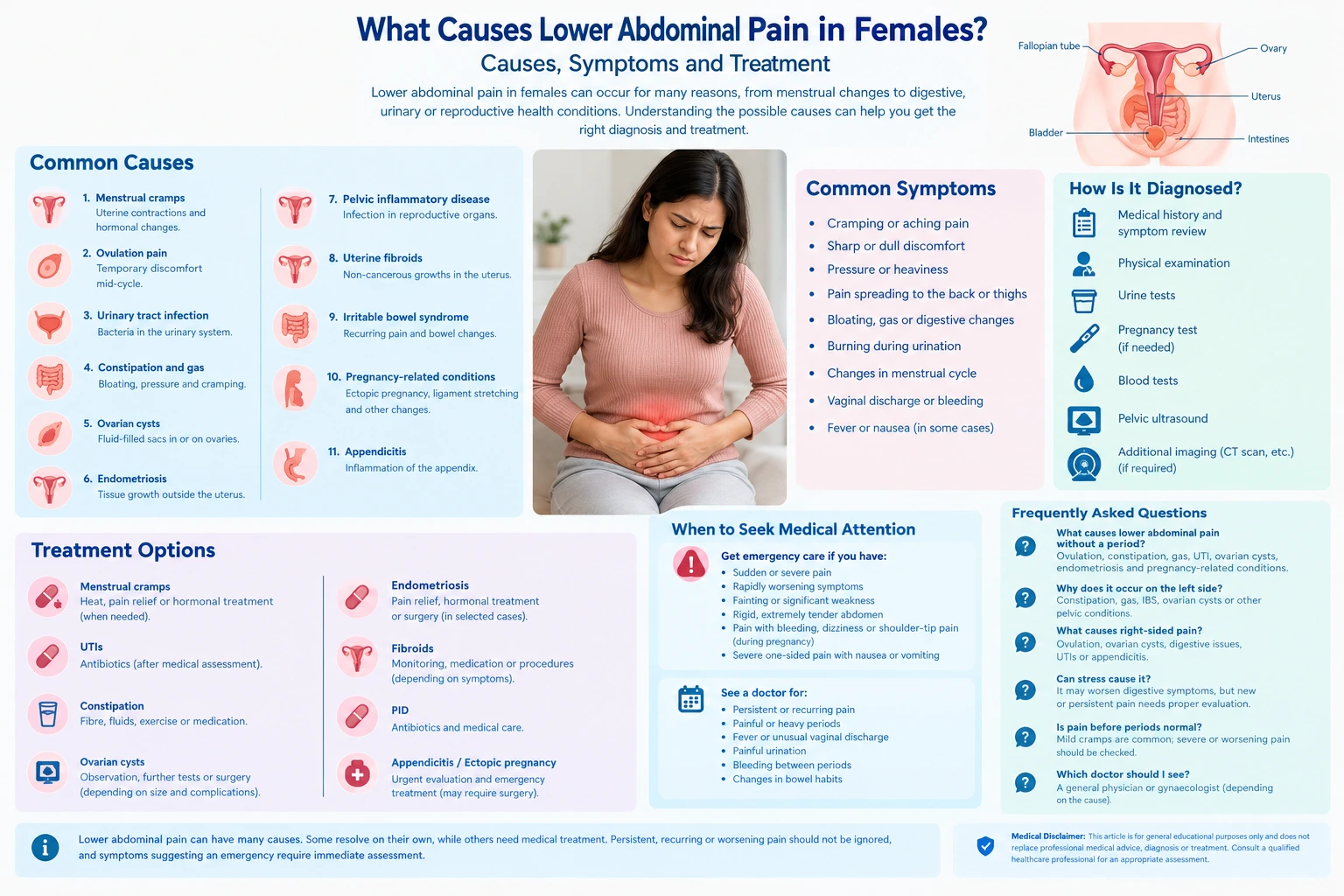
Understanding what causes lower abdominal pain in females involves considering the timing of the pain, its location, its duration and any associated symptoms. Menstrual cramps, ovulation, constipation and urinary tract infections are common causes. Other possibilities include ovarian cysts, endometriosis, uterine fibroids and pelvic inflammatory disease.
In some cases, lower abdominal pain may be associated with pregnancy-related complications or conditions that require urgent medical attention, such as appendicitis. Because different conditions can produce similar symptoms, the pain should be assessed in the context of a person’s overall health.
This article explains the possible causes of lower abdominal pain in females, accompanying symptoms, diagnostic methods and available treatment approaches.
Understanding Lower Abdominal Pain in Females
The lower abdomen is the area below the belly button and above the pelvis. It contains several organs and structures, including the uterus, ovaries, fallopian tubes, urinary bladder, intestines and appendix.
Pain in this region may originate from one of these organs or from surrounding muscles and tissues. It may feel like cramping, pressure, aching, sharp discomfort or a dull, persistent sensation.
Lower abdominal pain can be classified as:
- Acute pain: Pain that develops suddenly and may require immediate assessment.
- Chronic pain: Pain that persists for an extended period or repeatedly returns.
- Cyclical pain: Pain associated with particular stages of the menstrual cycle.
- Intermittent pain: Pain that comes and goes, sometimes in association with eating, urination or bowel movements.
The pattern of pain can provide useful information, but it cannot establish a diagnosis on its own.
What Causes Lower Abdominal Pain in Females?
1. Menstrual Cramps
Menstrual cramps, also known as dysmenorrhoea, are a common cause of lower abdominal pain. They occur when the uterus contracts to shed its lining during menstruation. Prostaglandins, which are substances involved in inflammation and uterine contractions, contribute to the discomfort.
Common symptoms include:
- Cramping in the lower abdomen.
- Pain that spreads to the lower back or thighs.
- Nausea or loose stools.
- Discomfort beginning shortly before or during menstruation.
Mild menstrual cramps may improve with a warm compress, gentle physical activity and appropriate pain-relief medication when medically suitable.
Severe cramps, pain that becomes progressively worse or symptoms that interfere with daily activities should be medically evaluated. Conditions such as endometriosis or uterine fibroids may contribute to painful menstruation.
2. Ovulation Pain
Ovulation occurs when an ovary releases an egg during the menstrual cycle. Some women experience temporary discomfort during this process, known as ovulation pain.
The pain typically occurs around the middle of the menstrual cycle and may affect one side of the lower abdomen. It can feel like a mild ache, cramp or sudden twinge and may last from a few minutes to a day or two.
Mild, short-lived ovulation pain is generally not a cause for concern. However, severe or sudden one-sided pain requires assessment because ovarian cyst complications and other conditions can produce similar symptoms.
3. Urinary Tract Infection
A urinary tract infection (UTI) occurs when bacteria enter and multiply in the urinary system. A bladder infection may cause discomfort or pressure in the lower abdomen.
Other symptoms may include:
- Burning or pain during urination.
- Frequent urination.
- An urgent need to urinate.
- Cloudy urine or blood in the urine.
- Discomfort over the bladder.
A suspected UTI should be assessed by a healthcare professional. Treatment may involve antibiotics, depending on the diagnosis.
Fever, chills, back or side pain, and vomiting may indicate an infection involving the kidneys and require prompt medical assessment.
4. Constipation and Gas
Constipation and trapped gas can cause abdominal pressure, bloating and cramping. Constipation occurs when bowel movements become infrequent or difficult, while gas may accumulate in the digestive tract and produce discomfort.
Symptoms can include:
- Hard stools or difficulty passing stools.
- Bloating and abdominal fullness.
- Excessive gas.
- Cramping that changes after a bowel movement.
Dietary fibre, adequate fluid intake and regular physical activity may help manage uncomplicated constipation. Persistent pain, vomiting, blood in the stool or an inability to pass stools or gas requires medical evaluation.
5. Ovarian Cysts
Ovarian cysts are fluid-filled sacs that develop in or on an ovary. Many are associated with the menstrual cycle and resolve without treatment. Others may cause symptoms depending on their size, location and complications.
Possible symptoms include:
- Pain on one side of the lower abdomen.
- Pelvic pressure or heaviness.
- Abdominal bloating.
- Pain during sexual intercourse.
- Changes in menstruation in some cases.
Sudden, severe pelvic pain, especially when accompanied by nausea or vomiting, may indicate ovarian torsion or a ruptured cyst. These conditions require urgent medical assessment.
A pelvic ultrasound may be used to examine the ovaries and help determine whether further monitoring or treatment is needed.
6. Endometriosis
Endometriosis is a condition in which tissue similar to the lining of the uterus grows outside the uterus. It can cause inflammation, scarring and recurring pelvic pain.
Symptoms may include:
- Painful or increasingly severe menstrual cramps.
- Pelvic pain before, during or after menstruation.
- Pain during or after sexual intercourse.
- Pain during bowel movements or urination, particularly around menstruation.
- Difficulty becoming pregnant in some cases.
Symptoms vary between individuals, and the severity of pain does not necessarily reflect the extent of the condition.
Depending on the clinical assessment, treatment may involve pain management, hormonal medication or surgery. Persistent pelvic pain should be evaluated by a qualified healthcare professional.
7. Pelvic Inflammatory Disease
Pelvic inflammatory disease (PID) is an infection involving the female reproductive organs, including the uterus, fallopian tubes and ovaries. It can develop when bacteria spread from the vagina or cervix into the upper reproductive tract.
Possible symptoms include:
- Lower abdominal or pelvic pain.
- Unusual vaginal discharge.
- Pain during sexual intercourse.
- Bleeding between periods or after intercourse.
- Fever or painful urination.
Some women may have mild symptoms. Without appropriate treatment, PID can lead to complications such as chronic pelvic pain, damage to the fallopian tubes and fertility problems.
Medical assessment and appropriate antibiotic treatment are important when PID is suspected.
8. Uterine Fibroids
Uterine fibroids are non-cancerous growths that develop in or around the uterus. Their effects depend on their size, number and location.
Possible symptoms include:
- A feeling of pressure in the lower abdomen.
- Heavy or prolonged menstrual bleeding.
- Painful periods.
- Frequent urination if a fibroid presses on the bladder.
- Lower back discomfort.
Some fibroids do not cause symptoms and may be discovered during an examination or ultrasound.
Management depends on symptoms, the characteristics of the fibroids and individual reproductive considerations. Options may include observation, medication or procedures when clinically indicated.
9. Irritable Bowel Syndrome
Irritable bowel syndrome (IBS) is a digestive condition associated with recurring abdominal pain and changes in bowel habits.
Symptoms may include:
- Lower abdominal cramping.
- Constipation, diarrhoea or alternating between the two.
- Bloating and gas.
- Discomfort associated with bowel movements.
Symptoms may be influenced by certain foods, changes in routine or stress. Management may involve dietary adjustments, lifestyle changes and medication based on individual needs.
Persistent or unexplained pain should not automatically be attributed to IBS. Medical assessment may be necessary to exclude other conditions.
10. Pregnancy-Related Conditions
Mild abdominal discomfort can occur during pregnancy because of changes in the uterus, constipation or stretching of supporting ligaments. However, abdominal pain during pregnancy may also indicate a complication.
One important condition is an ectopic pregnancy, in which a fertilised egg implants outside the uterus, most commonly in a fallopian tube.
Warning signs may include:
- Lower abdominal pain, particularly on one side.
- Vaginal bleeding.
- Shoulder-tip pain.
- Dizziness, fainting or significant weakness.
An ectopic pregnancy can become life-threatening if it ruptures. Anyone who may be pregnant and experiences abdominal pain, particularly with bleeding or dizziness, should seek urgent medical assessment.
11. Appendicitis
Appendicitis is inflammation of the appendix and may require emergency treatment. The pain often begins around the belly button and later moves towards the lower right abdomen, although the pattern can vary.
Other symptoms may include nausea, vomiting, loss of appetite, fever and pain that worsens with movement or coughing.
Appendicitis can initially cause mild or unclear symptoms. Severe or progressively worsening abdominal pain, especially on the lower right side, requires urgent medical evaluation.
How Is the Cause of Lower Abdominal Pain Diagnosed?
Diagnosis depends on the symptoms, medical history and findings from a clinical examination. A healthcare professional may ask about menstrual patterns, pregnancy possibility, bowel movements, urinary symptoms and previous medical conditions.
Depending on the suspected cause, investigations may include:
- Physical examination: To assess abdominal tenderness, swelling and other relevant signs.
- Urine tests: To investigate a possible urinary tract infection.
- Pregnancy test: When pregnancy is possible.
- Blood tests: To assess for signs of infection, inflammation or other abnormalities.
- Pelvic ultrasound: To examine the uterus, ovaries and other pelvic structures.
- Additional imaging or tests: Such as CT scans or other investigations when clinically indicated.
Not everyone requires all these tests. The appropriate investigations depend on the symptoms and the suspected condition.
Treatment for Lower Abdominal Pain in Females
Treatment is based on the underlying cause, the severity of symptoms and the person’s overall health.
- Menstrual cramps: May be managed with heat, suitable pain-relief medication or hormonal treatment when indicated.
- Urinary tract infections: May require antibiotics following medical assessment.
- Constipation: May improve with dietary fibre, fluids, physical activity or appropriate medication.
- Ovarian cysts: May require observation, further investigation or surgery, depending on their characteristics and complications.
- Endometriosis: May be managed with pain relief, hormonal treatment or surgery in selected cases.
- Uterine fibroids: May be monitored or treated with medication or procedures, depending on the symptoms.
- Pelvic inflammatory disease: Requires appropriate medical assessment and antibiotic treatment.
- Appendicitis or ectopic pregnancy: Requires urgent evaluation and may need emergency treatment or surgery.
Antibiotics should not be taken without appropriate medical advice. Unexplained pain should not be repeatedly treated with painkillers without investigating its cause.
When Should Lower Abdominal Pain Be Medically Evaluated?
Seek emergency medical attention for sudden or severe abdominal pain, rapidly worsening symptoms, fainting, significant weakness or a rigid and extremely tender abdomen.
Urgent assessment is also necessary when pregnancy is possible and abdominal pain occurs with vaginal bleeding, shoulder-tip pain, dizziness or fainting. Severe one-sided pelvic pain with nausea or vomiting may indicate an ovarian complication.
Arrange a medical consultation for persistent or recurring pain, painful or unusually heavy periods, fever, unusual vaginal discharge, painful urination, unexplained bleeding between periods or persistent changes in bowel habits.
The intensity of pain alone cannot reliably determine how serious the underlying condition is. Symptoms that are new, worsening or accompanied by other concerning signs should be evaluated appropriately.
Frequently Asked Questions
What causes lower abdominal pain in females without a period?
Possible causes include ovulation, constipation, gas, urinary tract infections, ovarian cysts and endometriosis. Pregnancy-related conditions may also cause pain when pregnancy is possible. A missed period accompanied by abdominal pain should be assessed, particularly if bleeding or dizziness occurs.
Why does lower abdominal pain occur on the left side?
Left-sided lower abdominal pain may be associated with constipation, gas, IBS, ovarian cysts or other pelvic conditions. The cause depends on the location, duration and associated symptoms. Sudden or severe pain requires urgent assessment.
What causes lower abdominal pain on the right side in females?
Possible causes include ovulation pain, ovarian cysts, digestive conditions, urinary problems and appendicitis. Pain that progressively worsens, particularly in the lower right abdomen, requires urgent medical evaluation.
Can stress cause lower abdominal pain?
Stress can affect digestive function and may worsen symptoms associated with IBS. However, new or persistent abdominal pain should not automatically be attributed to stress without considering other possible causes.
Is lower abdominal pain before menstruation normal?
Mild cramping before or during menstruation is common. Severe, worsening or disruptive pain should be evaluated because it may be associated with an underlying condition.
Which doctor evaluates lower abdominal pain in females?
A general physician can assess abdominal pain and help determine whether further evaluation is necessary. A gynaecologist may be involved when menstrual, uterine, ovarian or other reproductive conditions are suspected. Severe or sudden pain should be evaluated in an emergency department.
Conclusion
Lower abdominal pain in females can have several causes, including menstrual cramps, ovulation, urinary tract infections, digestive conditions and reproductive health problems. Some causes resolve without specific treatment, while others require medical intervention.
The location and timing of the pain, associated symptoms and medical history can help guide the evaluation. Persistent, recurring or worsening pain should not be ignored, and symptoms suggesting an emergency require immediate assessment.
Medical Disclaimer: This article is intended for general educational purposes and does not replace individual medical advice, diagnosis or treatment. Symptoms and treatment requirements vary between individuals. Consult a qualified healthcare professional for an appropriate assessment. Seek emergency care for sudden or severe abdominal pain.
Contact Details:
Address: Malati Mohan Bunglow, Telephone Exchange, Mahatma Gandhi Rd, opp. Naupada, Naupada, Thane West, Mumbai, Thane, Maharashtra 400602
Phone: 022 6124 2400
Website: horizonnaupada.com