Types of Pulmonary Embolism: Understanding the Different Types, Symptoms and Risks
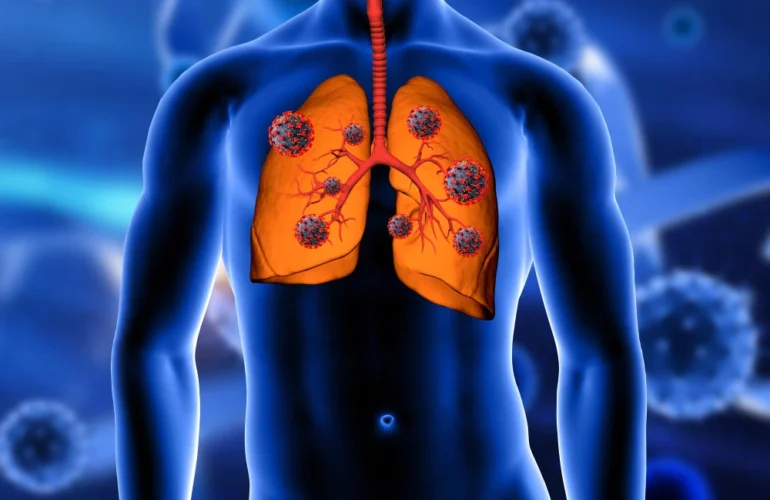
Pulmonary embolism (PE) is a potentially serious condition that occurs when a blood clot blocks one or more arteries in the lungs. In many cases, the clot originates in a deep vein in the leg or pelvis, breaks away and travels through the bloodstream to the lungs. Depending on the size and location of the clot and how it affects the heart and lungs, a pulmonary embolism can range from relatively low-risk to life-threatening.
Understanding the types of pulmonary embolism can help patients and families understand why doctors assess PE severity differently from one person to another.
Importantly, pulmonary embolism is not classified only by the physical size or location of a clot. Doctors also consider symptoms, blood pressure, heart function, oxygen levels, imaging findings and blood markers when determining how serious a PE is.
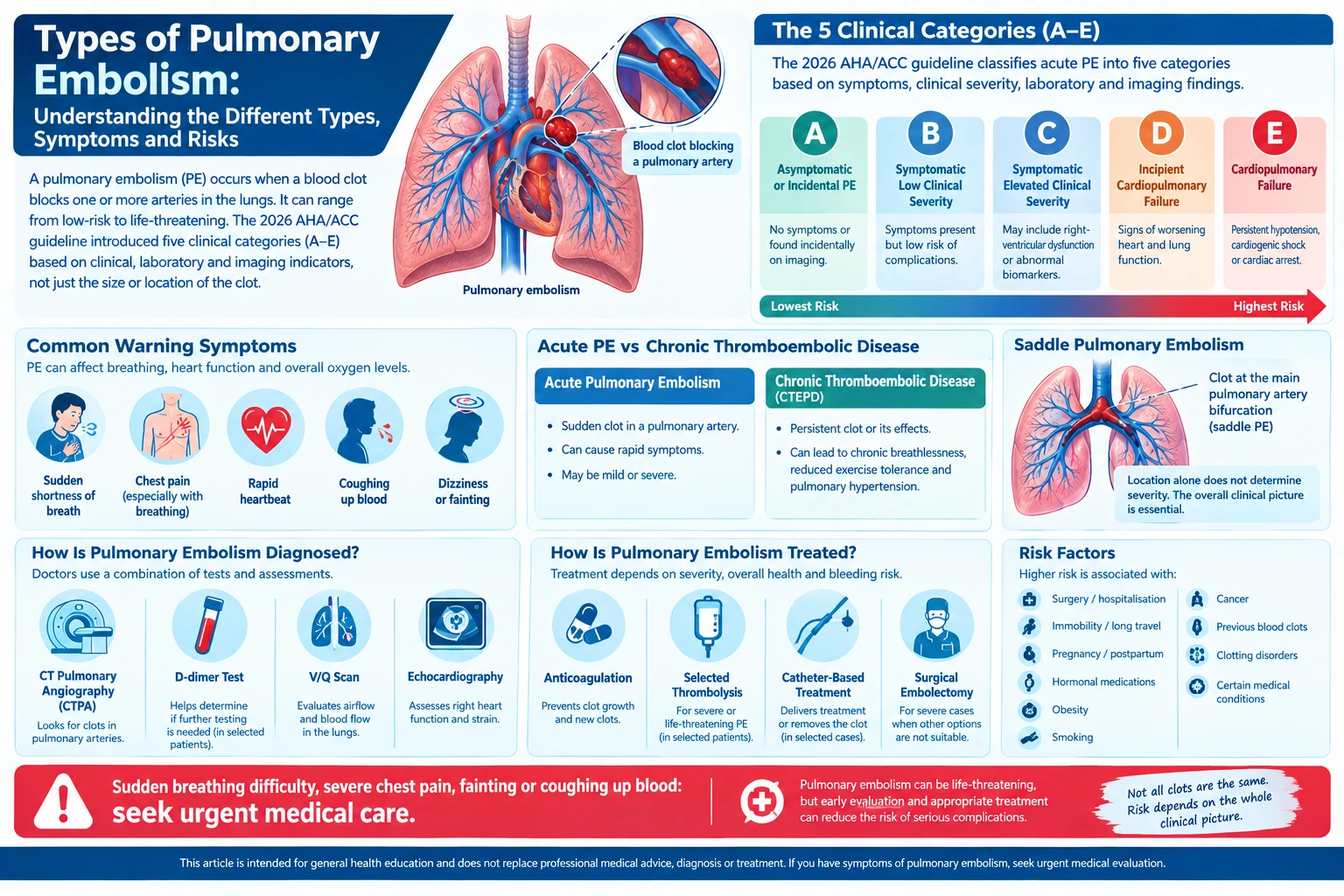
The 2026 American Heart Association/American College of Cardiology guideline introduced five clinical categories for acute pulmonary embolism, ranging from Category A, the lowest-risk group, to Category E, the highest-risk group.
Important: Sudden shortness of breath, chest pain, rapid heartbeat, coughing up blood, dizziness or fainting can be symptoms of pulmonary embolism. PE can be life-threatening, so urgent medical evaluation is important when these symptoms occur.
What Is Pulmonary Embolism?
A pulmonary embolism occurs when a blood clot or another embolus blocks blood flow through an artery in the lungs.
Most pulmonary embolisms are associated with deep vein thrombosis (DVT). A clot may form in a deep vein, commonly in the leg or pelvis, and then travel through the veins to the heart and into the pulmonary arteries.
The blockage can reduce blood flow through part of the lungs and may place additional strain on the right side of the heart.
The severity of PE varies significantly. Some people may have few or no symptoms, while others can develop severe breathing problems, low blood pressure, shock or cardiac arrest.
What Are the Types of Pulmonary Embolism?
There are several ways doctors and medical literature describe pulmonary embolism.
PE may be discussed according to:
- Clinical severity and risk
- Timing, such as acute or chronic thromboembolic disease
- Location of the clot, such as central or peripheral pulmonary arteries
- Number of clots, such as single or multiple emboli
For patients, the most useful classification is usually based on how severely the pulmonary embolism is affecting the body.
The current 2026 AHA/ACC system divides acute PE into five categories: A, B, C, D and E.
Type 1: Category A Pulmonary Embolism – Asymptomatic or Incidental PE
Category A represents the lowest-risk group in the new clinical classification system.
These pulmonary embolisms may be:
- Asymptomatic
- Found incidentally during imaging performed for another reason
- Associated with a low immediate risk of adverse outcomes
For example, a person may undergo a CT scan for another medical concern and unexpectedly be found to have a pulmonary embolism.
Even when a PE produces no obvious symptoms, it still requires medical assessment. The healthcare team determines whether treatment is necessary based on the patient’s overall condition and the characteristics of the clot.
The 2026 guideline notes that selected patients in Category A may be safely discharged without hospitalisation when appropriate.
Type 2: Category B Pulmonary Embolism – Symptomatic but Low Risk
Category B includes patients who have symptoms but have a relatively low clinical severity score and do not show features suggesting major cardiopulmonary compromise.
Symptoms may include:
- Mild shortness of breath
- Chest discomfort
- Mild cough
- Faster-than-usual heartbeat
A patient can have noticeable symptoms while still having a relatively low immediate risk.
The medical team may use validated clinical assessment tools and test results to determine whether outpatient treatment is appropriate. According to the 2026 guideline, selected patients in Categories A and B may be considered for early discharge when they meet appropriate criteria.
Type 3: Category C Pulmonary Embolism – Elevated Risk
Category C includes symptomatic patients with a higher clinical severity score and may involve abnormalities in biomarkers or right-heart function.
This category can include different levels of risk depending on the findings.
Doctors may assess:
- Heart rate
- Blood pressure
- Oxygen levels
- Right ventricular function
- Cardiac biomarkers
- Overall clinical condition
A PE that places significant strain on the right side of the heart requires closer monitoring.
This is one reason why the size of the clot alone does not determine how dangerous a pulmonary embolism is.
Two people may have clots of similar size but have very different outcomes depending on their heart function, blood pressure, oxygen levels and other medical conditions.
Type 4: Category D Pulmonary Embolism – Incipient Cardiopulmonary Failure
Category D represents a more serious form of acute PE where there are signs that the heart and lungs are beginning to fail.
Patients may develop:
- Low or falling blood pressure
- Signs of shock
- Significant breathing difficulty
- Reduced oxygen levels
- Evidence of worsening heart strain
The 2026 classification further divides Category D according to the specific clinical findings, including transient hypotension or other forms of shock.
These patients generally require hospitalisation and close monitoring.
Depending on the clinical situation, advanced treatments may be considered.
Type 5: Category E Pulmonary Embolism – Cardiopulmonary Failure
Category E represents the highest-risk category.
It involves severe cardiopulmonary failure, which can include:
- Persistent low blood pressure
- Cardiogenic shock
- Severe heart strain
- Refractory shock
- Cardiac arrest
This is a medical emergency requiring immediate treatment.
Patients in the highest-risk categories may require advanced therapies, including systemic thrombolysis, catheter-based treatment, mechanical thrombectomy or surgical embolectomy depending on the individual situation.
Pulmonary Embolism Categories at a Glance
| Category | General description | Relative risk |
| A | Asymptomatic or incidental PE | Lowest |
| B | Symptomatic but low clinical severity | Low |
| C | Symptomatic with elevated clinical risk | Intermediate |
| D | Signs of developing cardiopulmonary failure | High |
| E | Cardiopulmonary failure, shock or cardiac arrest | Highest |
These categories are simplified for patient education. Doctors use detailed clinical findings, laboratory results, imaging and validated assessment tools to determine the appropriate category and treatment.
Acute Pulmonary Embolism vs Chronic Thromboembolic Disease
Another way of discussing pulmonary embolism is based on how long the condition has been present.
Acute Pulmonary Embolism
An acute PE occurs when a clot suddenly blocks one or more pulmonary arteries.
Symptoms can develop rapidly and may include:
- Sudden shortness of breath
- Chest pain, particularly pain that worsens with breathing
- Rapid heart rate
- Cough
- Coughing up blood
- Lightheadedness
- Fainting
Some people may have few or no symptoms.
Acute PE requires prompt assessment because the condition can deteriorate quickly in severe cases.
Chronic Thromboembolic Disease
In some patients, blood clots or their effects may persist after an acute pulmonary embolism.
Persistent obstruction can contribute to chronic thromboembolic pulmonary disease (CTEPD) and, in some cases, chronic thromboembolic pulmonary hypertension (CTEPH).
Possible symptoms include:
- Persistent breathlessness
- Reduced exercise tolerance
- Fatigue
- Chest discomfort
- Dizziness or fainting in more severe cases
The 2026 guideline recommends ongoing assessment after PE for persistent symptoms and functional limitations so that chronic complications can be identified.
What Is a Saddle Pulmonary Embolism?
You may also come across the term saddle pulmonary embolism.
A saddle PE refers to a clot located at the point where the main pulmonary artery divides into the right and left pulmonary arteries.
The term describes the location of the clot rather than automatically indicating its severity.
A saddle PE can be serious, but its risk cannot be determined by location alone. Doctors also evaluate:
- Blood pressure
- Heart function
- Oxygen levels
- Symptoms
- Biomarkers
- Overall clinical condition
Therefore, “saddle PE” does not automatically mean that a patient has the most severe form of pulmonary embolism.
What Are the Symptoms of Pulmonary Embolism?
Symptoms can vary depending on the size and location of the clot and how much it affects blood flow.
Common symptoms include:
- Sudden shortness of breath
- Chest pain, particularly pain that worsens when breathing deeply
- Rapid breathing
- Increased heart rate
- Cough
- Coughing up blood
- Lightheadedness
- Fainting
- Anxiety or a feeling that something is seriously wrong
Some people may not have obvious symptoms.
When Is Pulmonary Embolism an Emergency?
Seek emergency medical attention if you develop:
- Sudden or severe difficulty breathing
- Severe chest pain
- Fainting
- Severe dizziness
- Rapid heartbeat associated with breathing difficulty
- Coughing up blood
- Sudden worsening of symptoms
PE can become life-threatening, particularly when it causes severe strain on the heart or cardiopulmonary failure.
What Causes Pulmonary Embolism?
The most common mechanism is a blood clot that develops in a deep vein and travels to the lungs.
Factors that can increase the risk of venous thromboembolism include:
- Recent major surgery
- Hospitalisation
- Long periods of immobility
- Prolonged travel
- Major injury or trauma
- Pregnancy and the postpartum period
- Certain hormonal medications
- Obesity
- Smoking
- Cancer
- Previous blood clots
- Certain inherited or acquired clotting disorders
Risk generally increases when blood flow is slowed, blood vessels are damaged or the blood has a greater tendency to clot.
How Is Pulmonary Embolism Diagnosed?
Doctors do not diagnose PE based on symptoms alone.
The evaluation may include:
Medical history and examination
Doctors assess symptoms, vital signs and risk factors for blood clots.
D-dimer blood test
A D-dimer test may help determine whether further investigation is needed in selected patients.
CT Pulmonary Angiography
CT pulmonary angiography (CTPA) is commonly used to look for blood clots in the pulmonary arteries.
Ventilation-Perfusion Scan
A V/Q scan evaluates airflow and blood flow in the lungs and may be used when CT pulmonary angiography is unsuitable or unavailable.
Heart assessment
Doctors may use echocardiography and other tests to determine whether the right side of the heart is under strain.
These findings can help determine the severity category and guide treatment.
How Is Pulmonary Embolism Treated?
Treatment depends on the severity of PE, the patient’s overall health and the risk of bleeding.
Anticoagulants
Blood-thinning medicines, also called anticoagulants, are the main treatment for most confirmed pulmonary embolisms. They help prevent existing clots from growing and reduce the formation of new clots.
Thrombolytic Treatment
Clot-dissolving medicines may be considered for selected patients with severe or life-threatening PE.
Because these medicines can cause serious bleeding, they are generally reserved for appropriate high-risk situations.
Catheter-Based Treatment
In selected patients, doctors may use a catheter-based procedure to deliver treatment to the clot or mechanically remove it.
Surgical Embolectomy
In certain severe cases, surgery may be used to remove the clot.
The 2026 guideline emphasises that advanced therapies are primarily considered for the highest-risk patients, while treatment decisions should be individualised according to the patient’s clinical category and risk profile.
Can Pulmonary Embolism Be Prevented?
Not every pulmonary embolism can be prevented, but certain measures can reduce the risk of blood clots.
Depending on your individual risk, a healthcare professional may recommend:
- Moving regularly during long journeys
- Following instructions for movement after surgery
- Taking prescribed preventive anticoagulants when indicated
- Maintaining a healthy weight
- Avoiding tobacco
- Staying physically active
- Managing medical conditions that increase clotting risk
- Discussing personal or family history of blood clots with your doctor
People who have previously experienced PE should follow their prescribed treatment plan and attend follow-up appointments.
Frequently Asked Questions About Types of Pulmonary Embolism
1. What are the main types of pulmonary embolism?
Pulmonary embolism can be classified in different ways. The current 2026 AHA/ACC clinical system categorises acute PE from Category A to Category E, based on symptoms, clinical severity and the degree of cardiopulmonary compromise.
2. What is the most serious type of pulmonary embolism?
Under the current AHA/ACC system, Category E represents the highest-risk acute PE, involving cardiopulmonary failure such as persistent hypotension, refractory shock or cardiac arrest.
3. Is a saddle pulmonary embolism always dangerous?
A saddle PE can be serious, but the word “saddle” describes the clot’s location rather than its overall clinical severity. Doctors must evaluate blood pressure, heart function, oxygen levels and other findings to determine risk.
4. What is the difference between acute and chronic pulmonary embolism?
Acute PE refers to a sudden pulmonary artery blockage by a clot. Persistent obstruction after PE can contribute to chronic thromboembolic pulmonary disease and, in some patients, pulmonary hypertension.
5. Can a pulmonary embolism have no symptoms?
Yes. Some pulmonary embolisms may be asymptomatic or discovered incidentally during imaging performed for another reason.
6. Can pulmonary embolism be treated?
Yes. Most confirmed PE cases are treated with anticoagulant medication. More advanced treatments, such as thrombolysis, catheter-based clot removal or surgery, may be considered for selected high-risk patients.
Final Takeaway
The types of pulmonary embolism can be understood in several ways, but the most current approach focuses on how severely the condition affects the patient.
The 2026 AHA/ACC classification uses five acute PE categories, A through E, ranging from asymptomatic or low-risk PE to cardiopulmonary failure and cardiac arrest. This approach helps doctors assess risk and choose treatment based on the patient’s overall condition rather than relying only on the size or location of a clot.
Pulmonary embolism can be life-threatening. Sudden shortness of breath, chest pain, rapid heartbeat, coughing up blood, dizziness or fainting should not be ignored. Seek urgent medical attention if these symptoms occur.
Early diagnosis and appropriate treatment can help reduce the risk of serious complications.
Disclaimer: This article is intended for general health education and does not replace professional medical advice, diagnosis or treatment. If you have symptoms that may indicate pulmonary embolism, seek urgent medical evaluation.
Contact Details:
Address: Malati Mohan Bunglow, Telephone Exchange, Mahatma Gandhi Rd, opp. Naupada, Naupada, Thane West, Mumbai, Thane, Maharashtra 400602
Phone: 022 6124 2400
Website: horizonnaupada.com