What Are the 4 Stages of Congestive Heart Failure?
Introduction
Congestive heart failure is a chronic medical condition in which the heart cannot pump blood effectively enough to meet the body’s needs or fill with blood normally. This can cause fluid to accumulate in the lungs, legs, feet or abdomen. The condition may develop gradually and can affect a person’s ability to perform everyday activities.
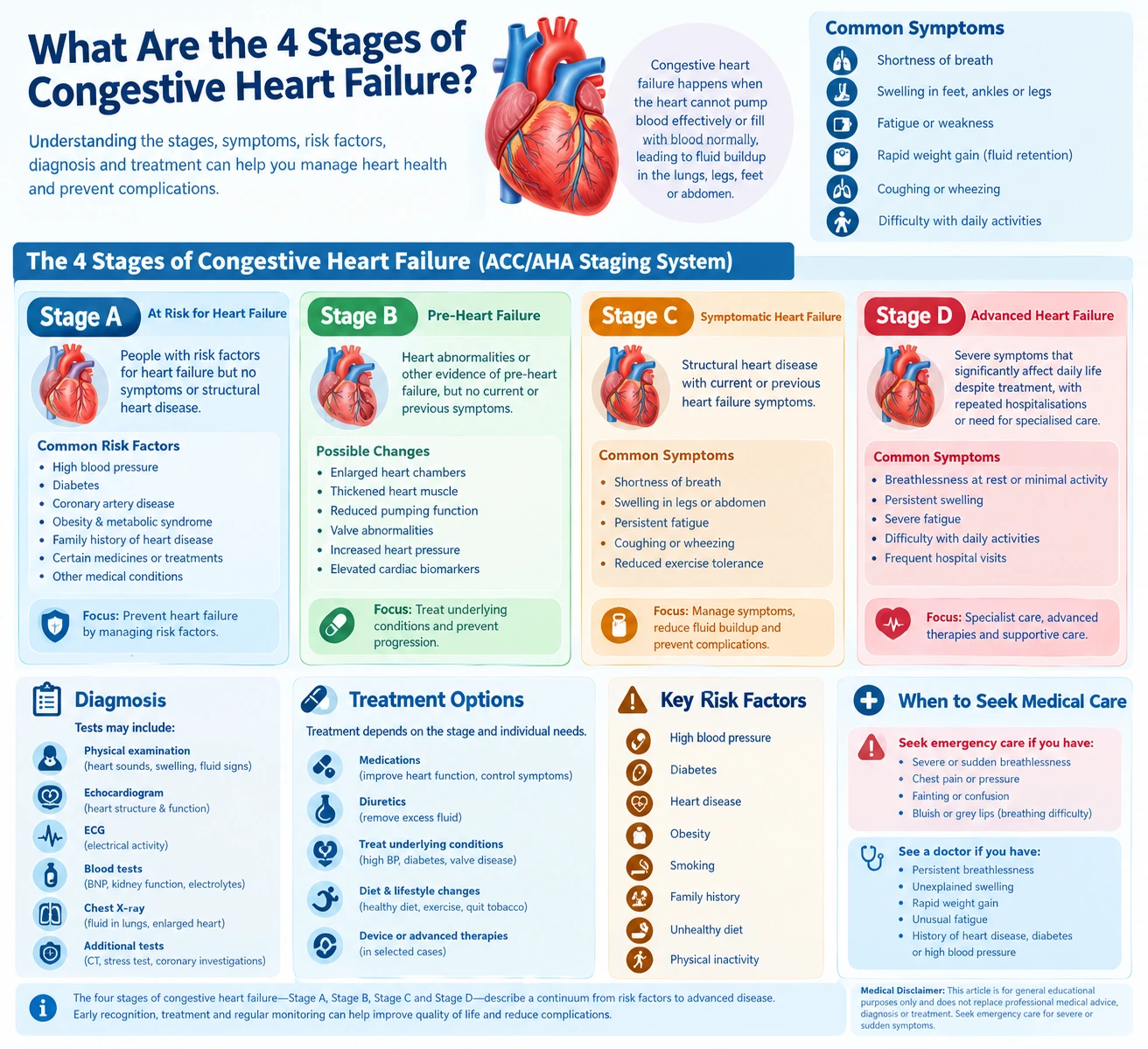
Understanding what the 4 stages of congestive heart failure mean can help patients and their families recognise risk factors, understand medical assessments and learn about available treatment approaches. Healthcare professionals commonly use the American College of Cardiology and American Heart Association (ACC/AHA) staging system, which identifies four stages: Stage A, Stage B, Stage C and Stage D.
These stages describe the development and progression of heart failure, from having risk factors to experiencing advanced symptoms. Stages A and B focus on people at risk of heart failure or those with early heart changes but no current or previous symptoms. Stages C and D involve symptomatic heart failure, with Stage D representing advanced disease.
The stage assigned to a patient depends on their medical history, symptoms and clinical findings. Early assessment, management of underlying conditions and appropriate medical care are important parts of heart failure management.
What Is Congestive Heart Failure?
Congestive heart failure occurs when the heart’s ability to fill with blood or pump blood effectively is impaired. As a result, the body may not receive sufficient blood flow to meet its needs, and fluid can accumulate in different parts of the body.
Heart failure does not mean that the heart has stopped working. It is a medical condition that requires ongoing evaluation and management.
There are different types of heart failure. In heart failure with reduced ejection fraction, the heart’s pumping ability is reduced. In heart failure with preserved ejection fraction, the heart may pump out a normal proportion of the blood in its chambers but have difficulty relaxing and filling properly.
Common symptoms include:
- Shortness of breath during physical activity or while lying down.
- Swelling in the feet, ankles or legs.
- Persistent fatigue or weakness.
- Rapid or unexplained weight gain due to fluid retention.
- Persistent coughing or wheezing.
- Difficulty performing routine physical activities.
Symptoms vary between individuals and may develop gradually or worsen suddenly. Some people have structural or functional heart abnormalities before experiencing any symptoms.
What Are the 4 Stages of Congestive Heart Failure?
The four stages of heart failure are:
- Stage A: At risk for heart failure.
- Stage B: Pre-heart failure.
- Stage C: Symptomatic heart failure.
- Stage D: Advanced heart failure.
Each stage helps healthcare professionals assess a patient’s condition and determine appropriate preventive measures, investigations and treatment.
Stage A: At Risk for Heart Failure
Stage A includes people who have risk factors for heart failure but do not have symptoms, structural heart disease or evidence of increased cardiac stress or injury that meets the criteria for later stages.
At this stage, preventing or reducing the effects of risk factors is a major focus.
Common Risk Factors
Risk factors for heart failure may include:
- High blood pressure.
- Diabetes.
- Coronary artery disease or other forms of cardiovascular disease.
- Obesity and metabolic syndrome.
- A family history of cardiomyopathy or certain inherited heart conditions.
- Exposure to certain medicines or treatments that may damage the heart.
- Other medical conditions that increase cardiovascular risk.
Having one or more risk factors does not mean that a person will necessarily develop heart failure. However, identifying and managing these risks can help reduce the likelihood of developing the condition.
Symptoms of Stage A
People in Stage A do not have symptoms of heart failure. They may feel well and continue their usual activities.
Risk factors may be identified during routine health assessments, blood pressure measurements or investigations for other medical conditions.
Management of Stage A
Management focuses on reducing cardiovascular risk through measures such as:
- Regular monitoring and control of blood pressure.
- Appropriate management of diabetes.
- Maintaining a healthy weight.
- Following a balanced diet.
- Engaging in suitable physical activity.
- Avoiding tobacco use.
- Taking prescribed medicines as directed.
- Reviewing cardiovascular risk with a healthcare professional.
The need for medication and investigations depends on the person’s individual risk factors and medical history.
Stage B: Pre-Heart Failure
Stage B, also called pre-heart failure, describes people who do not have current or previous symptoms of heart failure but have evidence of structural or functional heart abnormalities, increased pressure within the heart or certain abnormal cardiac biomarkers.
In this stage, changes may be detected before symptoms develop.
What Happens During Stage B?
The heart may show abnormalities such as:
- Enlargement of one or more heart chambers.
- Thickening of the heart muscle.
- Reduced pumping function.
- Certain heart valve abnormalities.
- Evidence of increased pressure within the heart chambers.
- Elevated cardiac biomarkers in appropriate clinical circumstances.
These findings may be identified through medical examinations, imaging or blood tests.
Symptoms of Stage B
People in Stage B do not have current or previous symptoms of heart failure. They may continue to feel well despite having changes in heart structure or function.
This is one reason why medical assessment may be important for people with cardiovascular risk factors or a history of heart disease.
Management of Stage B
Treatment aims to address the underlying heart condition and reduce the risk of developing symptomatic heart failure.
Depending on the clinical findings, management may include:
- Treating high blood pressure.
- Managing coronary artery disease and diabetes.
- Using prescribed medication to protect heart function when indicated.
- Monitoring heart structure and function.
- Assessing and treating relevant valve disease.
- Following appropriate lifestyle measures.
The treatment plan depends on the specific abnormalities identified. Not everyone in Stage B requires the same medication or procedures.
Stage C: Symptomatic Heart Failure
Stage C includes people with structural heart disease who currently have, or previously experienced, symptoms of heart failure.
Symptoms may develop when the heart cannot maintain adequate circulation without increased pressure or when fluid accumulates in the lungs or other tissues.
Common Symptoms of Stage C
Symptoms may include:
- Shortness of breath during everyday activities.
- Breathlessness when lying flat.
- Waking during the night with difficulty breathing.
- Swelling of the feet, ankles or legs.
- Abdominal swelling or discomfort due to fluid accumulation.
- Persistent fatigue and reduced exercise tolerance.
- Coughing or wheezing associated with fluid congestion.
- Rapid weight gain related to fluid retention.
Symptoms can vary in severity. Some patients experience mild limitations, while others have significant difficulty with routine activities.
Diagnosis of Stage C
A healthcare professional may review the patient’s symptoms, medical history and previous heart investigations. Tests may include an echocardiogram, electrocardiogram, blood tests and other investigations, depending on the suspected cause.
An echocardiogram helps assess heart structure, valve function and pumping performance. However, ejection fraction alone does not determine the stage of heart failure.
Management of Stage C
Treatment aims to reduce symptoms, manage fluid accumulation, improve daily functioning and reduce the risk of hospitalisation and other complications.
Depending on the type of heart failure and the patient’s clinical condition, treatment may include:
- Medicines that improve outcomes in eligible patients.
- Diuretics to help remove excess fluid.
- Treatment of underlying conditions such as coronary artery disease or valve disease.
- Monitoring of blood pressure, kidney function and electrolytes.
- Individualised dietary and fluid guidance.
- Appropriate physical activity and supervised cardiac rehabilitation when indicated.
Medication choices depend on factors such as ejection fraction, blood pressure, kidney function and other medical conditions. Treatment should be prescribed and adjusted by a qualified healthcare professional.
Stage D: Advanced Heart Failure
Stage D represents advanced heart failure in which symptoms significantly interfere with daily life and may remain difficult to control despite efforts to optimise recommended treatment.
Patients may experience repeated hospital admissions or require specialised care because of persistent symptoms and complications.
Symptoms of Stage D
Possible symptoms include:
- Breathlessness with minimal activity or at rest.
- Persistent swelling and fluid accumulation.
- Severe fatigue and reduced physical capacity.
- Difficulty performing basic daily activities.
- Repeated episodes of worsening heart failure.
- Frequent hospital visits or admissions.
- Difficulty maintaining stable fluid balance despite treatment.
The severity and combination of symptoms vary between individuals. Stage D requires a comprehensive assessment of the patient’s condition, treatment response and overall health.
Management of Stage D
Care may involve a specialised heart failure team and a review of treatment options based on the patient’s needs.
Management may include:
- Optimising medication and fluid management.
- Assessing eligibility for implantable cardiac devices.
- Considering selected procedures or advanced therapies.
- Evaluating suitability for mechanical circulatory support or heart transplantation in appropriate patients.
- Addressing other medical conditions that contribute to symptoms.
- Providing supportive and palliative care when appropriate to improve comfort and quality of life.
Advanced heart failure does not mean that all treatment options have been exhausted. The appropriate approach depends on the patient’s condition, treatment response, preferences and eligibility for specific interventions.
Comparison of the 4 Stages of Congestive Heart Failure
| Stage | Description | Main focus |
| Stage A | Risk factors without symptoms or structural heart disease | Prevent heart failure by managing risk factors |
| Stage B | Heart abnormalities or other evidence of pre-heart failure without symptoms | Treat underlying conditions and prevent progression |
| Stage C | Structural heart disease with current or previous heart failure symptoms | Manage symptoms and reduce complications |
| Stage D | Advanced heart failure with significant symptoms despite treatment | Specialist care and assessment of advanced treatment options |
The stages describe the development and progression of heart failure. They are not the same as the New York Heart Association (NYHA) functional classes, which assess how symptoms limit physical activity in people with symptomatic heart failure.
How Is Congestive Heart Failure Diagnosed?
The diagnosis of heart failure involves assessing symptoms, medical history, physical examination findings and appropriate investigations.
Tests may include:
Physical examination: A healthcare professional may check for swelling, abnormal heart sounds, changes in breathing and signs of fluid accumulation.
Echocardiogram: An ultrasound examination that evaluates heart structure, valve function and pumping performance.
Electrocardiogram (ECG): Records the heart’s electrical activity and may identify rhythm abnormalities or other changes.
Blood tests: Tests such as B-type natriuretic peptide or N-terminal pro-B-type natriuretic peptide may help assess suspected heart failure. Other blood tests may evaluate kidney function, electrolytes and related conditions.
Chest X-ray: May help identify fluid in the lungs or an enlarged heart.
Additional investigations: Depending on the suspected cause, further imaging, stress testing or coronary investigations may be recommended.
No single test establishes the stage in every case. The diagnosis and classification are based on the overall clinical assessment.
Can Congestive Heart Failure Progress From One Stage to Another?
Heart failure can progress over time, particularly when underlying causes and risk factors are not adequately managed. However, progression is not inevitable, and the course varies between individuals.
Preventive care during Stage A and appropriate treatment during Stage B may help reduce the risk of developing symptomatic heart failure. In Stages C and D, ongoing treatment and monitoring can help manage symptoms and complications.
A patient’s symptoms may improve with treatment, but improvement does not necessarily mean that the person returns to an earlier stage. The ACC/AHA staging system reflects the overall history and development of the condition, not just how the patient feels on a particular day.
When Should Medical Attention Be Sought?
People experiencing persistent breathlessness, unexplained swelling, unusual fatigue or rapid weight gain should seek medical assessment, particularly if they have a history of heart disease, diabetes or high blood pressure.
Seek emergency medical care if there is severe or sudden breathlessness, chest pain or pressure, fainting, confusion, or bluish or grey discolouration of the lips associated with breathing difficulty.
Do not wait for symptoms to worsen before seeking help. Sudden deterioration in someone with known heart failure may indicate an acute complication that requires urgent treatment.
Frequently Asked Questions
1. What is the most advanced stage of congestive heart failure?
Stage D is the most advanced stage in the ACC/AHA classification. It involves significant heart failure symptoms that interfere with daily activities and may remain difficult to control despite optimised treatment.
2. Can Stage A heart failure be prevented?
Stage A describes people at risk of developing heart failure rather than people with established symptomatic heart failure. Managing blood pressure, diabetes, weight and other cardiovascular risk factors may reduce the risk of progression.
3. Does Stage B heart failure cause symptoms?
By definition, Stage B includes people without current or previous symptoms of heart failure. However, tests may show structural or functional heart abnormalities or other evidence of pre-heart failure.
4. Can people with Stage C heart failure continue daily activities?
Some people can continue many daily activities with appropriate treatment, while others experience substantial limitations. Activity recommendations should be based on symptoms, clinical assessment and the treating healthcare professional’s advice.
5. Is Stage D heart failure always terminal?
Stage D indicates advanced heart failure, but it does not automatically mean that death is imminent. Treatment options, symptom management and supportive care depend on the person’s clinical condition and response to treatment.
6. Are the four stages of heart failure the same as NYHA Classes I to IV?
No. The ACC/AHA stages describe the development and progression of heart failure, while the NYHA functional classes describe the degree to which symptoms limit physical activity. Both systems may be used when assessing patients with symptomatic heart failure.
Conclusion
The four stages of congestive heart failure—Stage A, Stage B, Stage C and Stage D—describe a continuum from risk factors and early heart abnormalities to symptomatic and advanced disease. Each stage provides a framework for understanding the condition and guiding appropriate medical care.
Recognising cardiovascular risk factors, investigating relevant symptoms and managing underlying medical conditions are important parts of heart health. The appropriate treatment and monitoring plan depends on the individual’s symptoms, test results, heart function and overall medical history.
Medical Disclaimer: This article is intended for general educational purposes and does not replace professional medical advice, diagnosis or treatment. Heart failure classification and treatment decisions require an individual clinical assessment. Anyone experiencing severe or sudden breathing difficulty, chest pain or fainting should seek emergency medical care.
Contact Details:
Address: Malati Mohan Bunglow, Telephone Exchange, Mahatma Gandhi Rd, opp. Naupada, Naupada, Thane West, Mumbai, Thane, Maharashtra 400602
Phone: 022 6124 2400
Website: horizonnaupada.com