Which Size of Fibroid Is Dangerous? Understanding Size, Symptoms and Treatment
Introduction
Uterine fibroids are common growths that develop in or around the uterus. They are usually non-cancerous and can vary from a few millimetres to several centimetres in diameter. Some fibroids remain small and cause no symptoms, while others may contribute to heavy menstrual bleeding, pelvic discomfort, pressure on nearby organs or difficulties during pregnancy.
A common question is: which size of fibroid is dangerous? The answer depends on more than the measurement alone. A large fibroid may cause no significant symptoms, while a smaller fibroid located inside the uterine cavity may lead to heavy menstrual bleeding or affect fertility.
The number of fibroids, their location, growth pattern, symptoms, age and reproductive plans all influence the need for further investigation or treatment. Understanding these factors can help patients recognise when medical evaluation may be appropriate.
This article explains how fibroid size is assessed, which symptoms require attention, how fibroids are diagnosed and what treatment options may be considered.
What Are Uterine Fibroids?
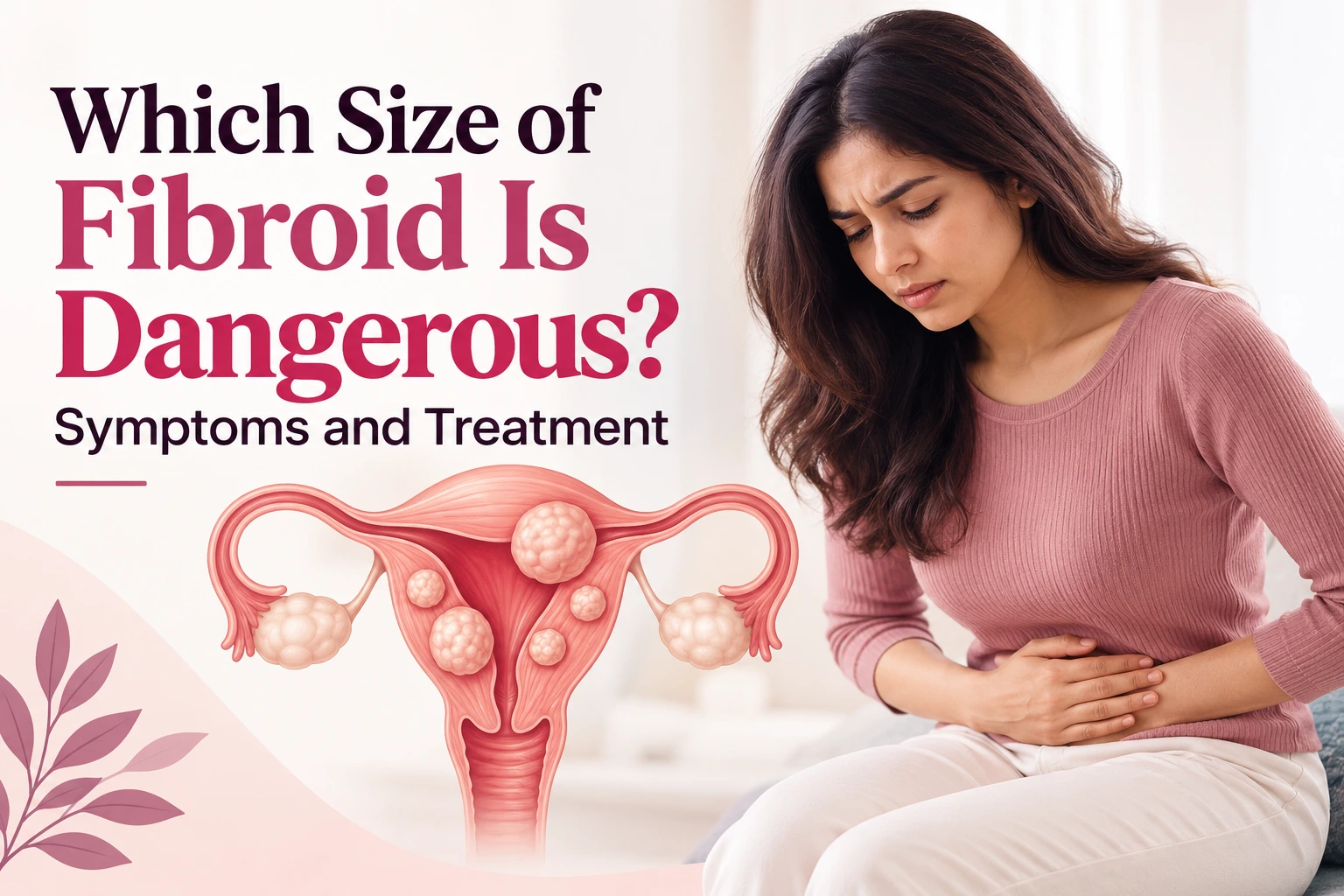
Uterine fibroids, also called leiomyomas or myomas, are growths that develop from the muscular tissue of the uterus. They may occur within the uterine wall, project into the uterine cavity or grow on the outer surface of the uterus.
Fibroids may develop as a single growth or as multiple growths of different sizes. Their growth patterns vary, and not all fibroids cause symptoms.
The main types include:
- Intramural fibroids: Develop within the muscular wall of the uterus.
- Submucosal fibroids: Grow towards or project into the uterine cavity.
- Subserosal fibroids: Grow towards the outer surface of the uterus.
- Pedunculated fibroids: Attach to the uterus by a narrow stalk and may occur on the inner or outer surface.
The location of a fibroid can influence the symptoms it causes and the treatment options available.
Which Size of Fibroid Is Dangerous?
There is no universally accepted size threshold that makes a uterine fibroid dangerous in every patient. Size is one factor in assessment, but it must be considered alongside symptoms, location, number of fibroids and overall health.
The following measurements provide a general guide to understanding fibroid size. They are descriptive categories, not diagnostic or treatment thresholds.
| Approximate fibroid size | General considerations |
| Less than 2 cm | Small fibroids may cause no symptoms, although those located inside the uterine cavity can sometimes cause bleeding. |
| 2–5 cm | Symptoms depend on location and number. Some fibroids in this range may cause heavy periods, pain or pressure. |
| 5–10 cm | Larger fibroids may cause abdominal fullness, pelvic pressure, heavy bleeding or urinary symptoms, although some remain asymptomatic. |
| More than 10 cm | Very large fibroids may enlarge the abdomen or compress nearby organs. Assessment depends on symptoms, location and clinical findings. |
These categories should not be used to determine whether a fibroid requires surgery. A fibroid measuring 3 cm may require evaluation if it causes significant bleeding, while a larger fibroid may be monitored if it is not causing concerning symptoms.
Medical assessment is particularly important when symptoms are persistent, bleeding is heavy, the fibroid’s characteristics are uncertain or there are concerns about fertility or pregnancy.
Does the Location of a Fibroid Matter More Than Its Size?
In some cases, location can be as important as, or more important than, size.
1. Submucosal Fibroids
Submucosal fibroids grow towards the inner cavity of the uterus. Even relatively small growths in this location may interfere with the uterine lining and contribute to heavy menstrual bleeding or reproductive difficulties.
The need for treatment depends on symptoms, the extent to which the fibroid projects into the cavity and individual reproductive considerations.
2. Intramural Fibroids
Intramural fibroids develop within the muscular wall of the uterus. Their effects depend on their size, number and proximity to the uterine cavity.
Some cause no symptoms, while others may be associated with heavy menstrual bleeding, painful periods or pelvic pressure.
3. Subserosal Fibroids
Subserosal fibroids grow on the outer surface of the uterus. Larger growths may press against nearby structures, including the bladder or bowel.
Depending on their location, they may cause frequent urination, constipation, abdominal fullness or discomfort.
4. Pedunculated Fibroids
Pedunculated fibroids are attached to the uterus by a stalk. In uncommon cases, twisting of the stalk may interrupt the fibroid’s blood supply and cause sudden pain.
Sudden or severe abdominal or pelvic pain requires prompt medical assessment, regardless of the measured fibroid size.
What Symptoms May Indicate That a Fibroid Needs Evaluation?
The need for further investigation depends on the symptoms rather than size alone. Common symptoms associated with uterine fibroids include:
- Heavy or prolonged menstrual bleeding.
- Menstrual cramps or pelvic pain.
- Bleeding between periods.
- Persistent lower abdominal pressure or fullness.
- Lower back discomfort.
- Frequent urination or difficulty emptying the bladder.
- Constipation or difficulty passing stools.
- Pain or discomfort during sexual intercourse.
- Fatigue, weakness or dizziness associated with blood loss.
Heavy menstrual bleeding can lead to iron-deficiency anaemia. Symptoms may include tiredness, weakness, breathlessness during activity and dizziness.
Not every symptom is caused by fibroids. Other gynaecological, urinary or digestive conditions can produce similar problems, so appropriate assessment is necessary.
When Can Fibroids Cause Complications?
Most uterine fibroids are benign, and many do not require treatment. However, some may cause complications depending on their location, size and associated symptoms.
Heavy Bleeding and Anaemia
Fibroids may contribute to heavy or prolonged periods. Repeated blood loss can reduce iron levels and lead to anaemia, which may affect energy levels and daily functioning.
Persistent heavy bleeding should be evaluated to identify the cause and determine whether treatment is needed.
Pressure on Nearby Organs
Large fibroids, or several fibroids growing together, may place pressure on the bladder, bowel or surrounding pelvic structures.
This can contribute to frequent urination, difficulty passing urine, constipation or a sensation of abdominal heaviness.
Fertility and Pregnancy
Some fibroids, particularly those that distort the uterine cavity, may affect fertility or pregnancy outcomes. However, many women with fibroids become pregnant and have uncomplicated pregnancies.
The impact depends on the fibroid’s location, size and relationship to the uterine cavity, along with other reproductive factors. Decisions about treatment should consider pregnancy plans and the potential benefits and risks of each option.
Sudden or Severe Pain
Sudden severe pelvic pain may occur with certain fibroid complications, including degeneration or twisting of a pedunculated fibroid. Other urgent conditions can cause similar symptoms.
Severe pain should not be assumed to be caused by a known fibroid without medical evaluation.
How Are Fibroids Diagnosed?
A healthcare professional may recommend investigations based on symptoms, medical history and physical examination findings.
Pelvic Examination
A pelvic examination may help identify an enlarged or irregularly shaped uterus. However, an examination alone may not determine the exact size, number or location of fibroids.
Ultrasound
Ultrasound is commonly used to identify fibroids and assess their size, number and location. It may be performed through the abdomen or using a transvaginal approach, depending on the clinical situation.
The findings help guide decisions about monitoring, further investigation or treatment.
Additional Investigations
Depending on the findings, further tests may include:
- Blood tests: To check for anaemia when heavy bleeding is present.
- MRI: To provide more detailed information about fibroids when needed for treatment planning.
- Hysteroscopy: To examine the inside of the uterus when a growth within the uterine cavity is suspected.
Not every patient requires all these tests. Investigations are selected according to individual symptoms and clinical findings.
Does Every Fibroid Need Treatment?
No. Treatment is not always necessary when fibroids are not causing symptoms or complications.
The decision depends on several factors, including:
- The size, number and location of fibroids.
- The severity of bleeding, pain or pressure symptoms.
- Whether anaemia or urinary problems are present.
- The patient’s age and proximity to menopause.
- Current or future pregnancy plans.
- Changes in symptoms or imaging findings over time.
Some fibroids may be monitored through periodic clinical reviews and imaging when appropriate. Others may require treatment to manage symptoms or address specific complications.
Treatment Options for Uterine Fibroids
Treatment is individualised according to the patient’s symptoms, fibroid characteristics and reproductive preferences.
1. Monitoring
If fibroids are not causing significant symptoms, a healthcare professional may recommend observation rather than immediate treatment. Follow-up depends on the clinical situation and whether symptoms change.
2. Medication
Medicines may be used to manage heavy menstrual bleeding or pain. Certain hormonal treatments may help control bleeding, while other medicines can temporarily reduce fibroid size in selected circumstances.
Medication choice depends on the patient’s medical history, contraindications, symptoms and treatment goals. Medicines should be used under appropriate medical supervision.
3. Myomectomy
Myomectomy is a procedure to remove fibroids while preserving the uterus. It may be considered for patients with significant symptoms or particular fertility-related concerns.
The surgical approach depends on the number, size and location of the fibroids.
4. Uterine Artery Embolisation
Uterine artery embolisation reduces the blood supply to fibroids, causing them to shrink over time. Its suitability depends on the patient’s clinical circumstances and reproductive plans.
5. Hysterectomy
Hysterectomy involves surgical removal of the uterus. It permanently prevents pregnancy and may be considered in selected cases when other treatments are unsuitable or have not adequately addressed the problem.
The benefits, risks and alternatives should be discussed with the treating specialist before a decision is made.
When Should You Seek Medical Attention?
Arrange a medical consultation if you experience persistent pelvic pain, heavy or prolonged menstrual bleeding, bleeding between periods, increasing abdominal fullness or urinary and bowel symptoms.
Seek urgent medical care if you experience:
- Sudden, severe abdominal or pelvic pain.
- Very heavy vaginal bleeding accompanied by dizziness, fainting or marked weakness.
- Severe pain with fever or vomiting.
- Difficulty passing urine with significant pain.
- Severe abdominal symptoms during pregnancy or when pregnancy is possible.
These symptoms may have causes other than fibroids and should not be self-diagnosed.
Frequently Asked Questions
1. Is a 3 cm fibroid dangerous?
A 3 cm fibroid is not automatically dangerous. Its significance depends on location, symptoms and other clinical factors. A fibroid of this size may require evaluation if it causes heavy bleeding, pain or fertility-related concerns.
2. Is a 5 cm fibroid considered large?
A 5 cm fibroid is generally larger than a small fibroid, but its clinical significance varies. Some fibroids of this size cause symptoms, while others do not require immediate treatment.
3. Can a 10 cm fibroid be dangerous?
A 10 cm fibroid may cause pressure symptoms, abdominal enlargement or other complications, depending on its location. However, size alone cannot determine whether surgery is necessary. A clinical assessment and appropriate imaging help guide management.
4. Can small fibroids cause heavy periods?
Yes. Fibroids located within or projecting into the uterine cavity may contribute to heavy menstrual bleeding even when relatively small.
5. Can fibroids shrink naturally?
Fibroids may shrink after menopause as hormone levels change, although this does not happen uniformly in every individual. Changes in symptoms or fibroid size should be assessed in the context of the patient’s medical history.
6. Do fibroids always require surgery?
No. Many fibroids do not require treatment if they are not causing significant symptoms. When treatment is needed, options may include medication, monitoring or procedures, depending on the individual circumstances.
Conclusion
There is no single measurement that determines which size of fibroid is dangerous. Fibroid size must be considered alongside location, number, symptoms, bleeding, pressure on nearby organs and reproductive plans.
Small fibroids can sometimes cause significant symptoms, while larger fibroids may not require immediate treatment. Ultrasound and clinical assessment help determine whether monitoring, medication or a procedure may be appropriate.
Persistent pain, heavy menstrual bleeding, urinary problems or other unexplained symptoms should be evaluated by a qualified healthcare professional. Treatment decisions should be based on individual clinical findings rather than fibroid size alone.
Medical Disclaimer: This article is intended for general educational purposes and does not replace professional medical advice, diagnosis or treatment. The significance of a uterine fibroid and the appropriate management approach vary between individuals. Consult a qualified healthcare professional for assessment of symptoms or concerns.
Contact Details:
Address: Malati Mohan Bunglow, Telephone Exchange, Mahatma Gandhi Rd, opp. Naupada, Naupada, Thane West, Mumbai, Thane, Maharashtra 400602
Phone: 022 6124 2400
Website: horizonnaupada.com