Difference Between Sinusitis and a Common Cold: Symptoms, Causes and Treatment
A blocked nose, runny nose, headache and facial discomfort are common symptoms of respiratory illnesses. These symptoms may occur with both sinusitis and the common cold, making it difficult to distinguish between the two conditions. However, understanding the difference between sinusitis and a common cold can help people recognise when symptoms may need medical evaluation.
A common cold is a viral infection that mainly affects the nose and throat. Sinusitis, also known as a sinus infection or rhinosinusitis, occurs when the lining of the sinuses becomes inflamed. It may develop during or after a cold, although allergies and other factors can also contribute to sinus inflammation.
The symptoms of these conditions overlap, but their duration, pattern and associated discomfort can provide useful clues. Neither mucus colour nor a single symptom can confirm a diagnosis. Persistent, severe or worsening symptoms should be assessed by a healthcare professional.
What Is the Common Cold?
The common cold is a viral infection of the upper respiratory tract, which includes the nose and throat. Several types of viruses can cause a cold, and the infection can spread through respiratory droplets, close contact or contaminated hands and surfaces.
Cold symptoms usually develop gradually and may become more noticeable during the first few days. Most people begin to recover within one to two weeks, although a cough or nasal congestion may last longer.
Common Symptoms of a Cold
Symptoms may include:
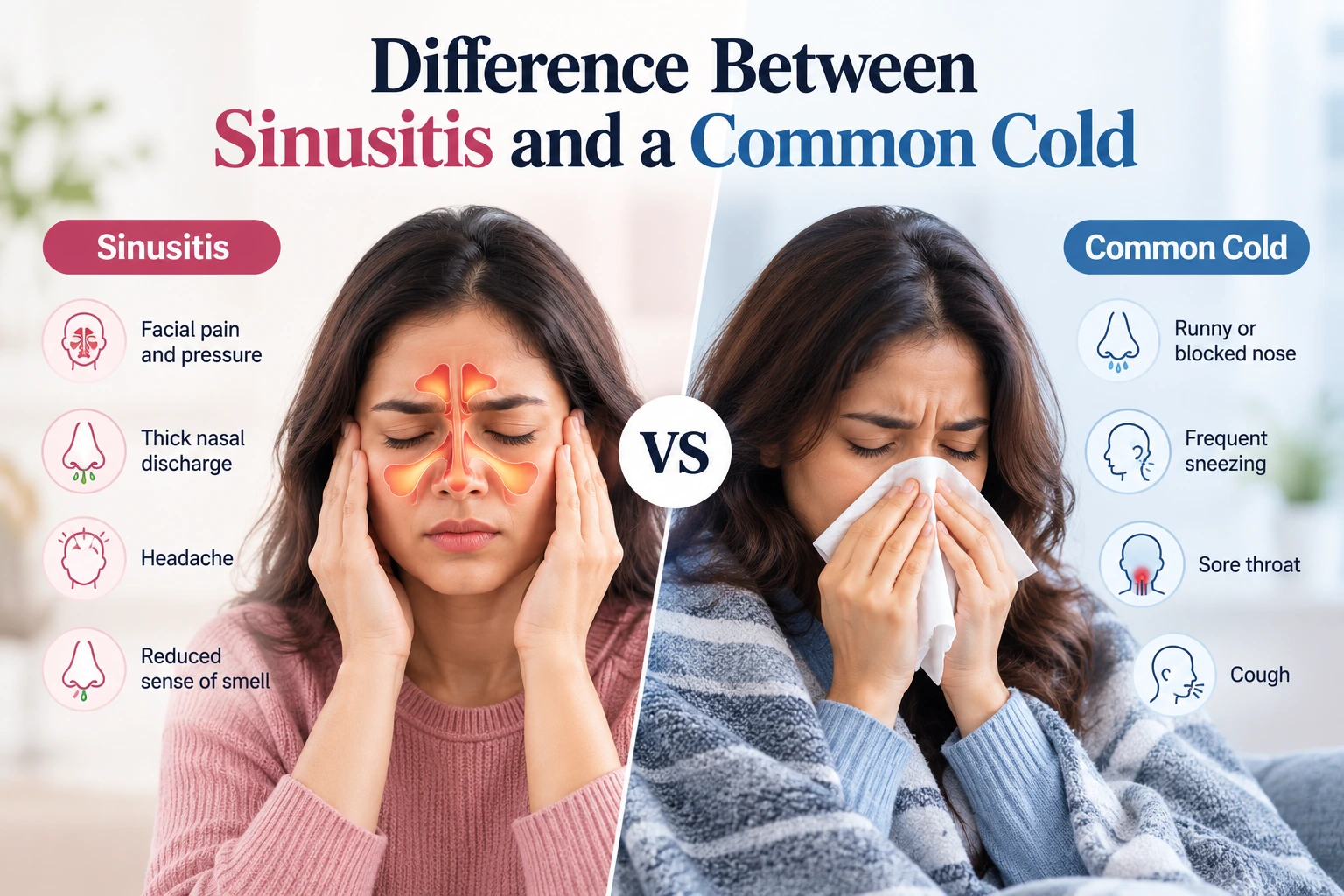
- Runny or blocked nose
- Frequent sneezing
- Sore or scratchy throat
- Mild headache
- Cough
- Watery eyes
- Mild body aches or tiredness
- Low-grade fever in some people
- Temporary reduction in the sense of smell
The symptoms vary from person to person. Most uncomplicated colds improve with rest, fluids and appropriate symptom relief.
What Is Sinusitis?
Sinusitis is inflammation of the tissue lining the sinuses. The sinuses are air-filled spaces located around the nose, forehead, cheeks and eyes. They produce mucus that normally drains into the nasal passages.
When the sinus lining becomes inflamed, it can swell and interfere with mucus drainage. This may cause nasal blockage, pressure around the face, headaches and changes in the sense of smell.
Sinusitis often develops during or after a viral respiratory infection, including the common cold. In some cases, bacteria may contribute to the infection. Allergies, nasal polyps and structural problems affecting nasal drainage can also be associated with recurring or persistent symptoms.
Common Symptoms of Sinusitis
Symptoms may include:
- Nasal congestion or difficulty breathing through the nose
- Thick nasal discharge
- Pain, pressure or tenderness around the cheeks, forehead or eyes
- Headache that may feel worse when bending forward
- Reduced sense of smell
- Mucus dripping down the back of the throat, known as postnasal drip
- Cough, particularly at night
- Bad breath
- Upper tooth discomfort
- Fever in some cases
- A feeling of fullness or pressure in the ears
Not everyone with sinusitis experiences all these symptoms. The severity and duration depend on the cause and the extent of inflammation.
Difference Between Sinusitis and a Common Cold
The main difference is that a common cold is a viral infection of the upper respiratory tract, whereas sinusitis refers to inflammation of the sinuses. A cold may resolve without complications, but sinus inflammation can continue during or after the initial infection.
The following table summarises the key differences.
| Feature | Common Cold | Sinusitis |
| Main condition | Viral infection of the upper respiratory tract | Inflammation of the sinus lining |
| Common symptoms | Sneezing, sore throat, runny nose and cough | Nasal blockage, facial pressure, headache and reduced sense of smell |
| Facial pain | Usually mild or absent | May be prominent around the cheeks, forehead or eyes |
| Nasal discharge | May be clear, white, yellow or green | May be thick and discoloured |
| Fever | Usually absent or mild in adults | May occur, depending on the cause and severity |
| Onset | Often develops gradually | May begin with a cold or develop as symptoms continue |
| Duration | Usually improves within one to two weeks | Acute sinusitis may last several weeks |
| Relationship between conditions | Can occur on its own | May develop during or after a cold |
| Treatment | Usually supportive care and symptom relief | Depends on the cause, duration and severity of symptoms |
These differences are general patterns rather than definitive diagnostic rules. A healthcare professional considers the overall symptom pattern and medical history before determining the likely cause.
How Can You Tell Whether It Is Sinusitis or a Common Cold?
Because the symptoms overlap, it may not be possible to distinguish the conditions based on one symptom alone. The following factors can help identify when sinusitis may be a possibility.
1. Facial Pain and Pressure
Facial pressure or tenderness around the cheeks, forehead or eyes is commonly associated with sinusitis. Some people also experience upper tooth discomfort or a headache that becomes more noticeable when bending forward.
A common cold can cause mild head pressure or a headache, but significant or persistent facial pain may warrant medical assessment.
2. Duration of Symptoms
The duration and progression of symptoms are important clues.
A common cold generally starts improving within one to two weeks. Sinusitis may also improve on its own, but acute symptoms can continue for several weeks.
Consider seeking medical advice if:
- Symptoms persist for more than 10 days without improvement.
- Symptoms improve initially but then return or become worse.
- Facial pain or headache becomes severe.
- Fever persists or is accompanied by worsening symptoms.
These patterns do not automatically mean that a bacterial infection is present. They indicate that further assessment may be appropriate.
3. Changes in Nasal Discharge
Both a cold and sinusitis can cause nasal discharge. The mucus may change from clear to white, yellow or green as an illness progresses.
Yellow or green mucus alone does not establish that an infection is bacterial or that antibiotics are required. Other features, including symptom duration, severity and progression, are more useful when assessing the cause.
4. Reduced Sense of Smell
A temporary reduction in the sense of smell can occur with both conditions because nasal inflammation interferes with airflow. It may be more persistent when sinus inflammation continues.
A sudden or persistent change in smell, particularly when accompanied by other concerning symptoms, should be discussed with a healthcare professional.
Can a Common Cold Turn Into Sinusitis?
Yes. Sinusitis can develop during or after a common cold. When a respiratory virus causes inflammation in the nose and sinuses, swelling may interfere with the normal drainage of mucus. This can lead to congestion and sinus pressure.
Most sinus infections are viral and improve without antibiotics. In some cases, a bacterial infection may develop.
The possibility of bacterial sinusitis becomes more concerning when symptoms:
- Continue for more than 10 days without improvement
- Are severe, particularly when accompanied by a high fever and significant facial pain or purulent nasal discharge for several consecutive days
- Become worse after an initial period of improvement
These patterns should be assessed in context by a healthcare professional rather than used for self-diagnosis.
How Long Do Sinusitis and a Common Cold Last?
The recovery period varies according to the cause, the severity of symptoms and the person’s overall health.
Common Cold
Most people with a common cold begin to feel better within one to two weeks. Sneezing, a runny nose and a sore throat may improve earlier, while cough or nasal congestion can sometimes persist.
If symptoms do not improve after 10 days, or if they worsen after initially improving, medical advice may be appropriate.
Sinusitis
Acute sinusitis may last for several weeks, and many cases resolve without specific treatment. Symptoms that persist, recur frequently or interfere substantially with daily activities may require further evaluation.
Chronic sinusitis is generally defined as sinus inflammation lasting at least 12 weeks. It may be associated with allergies, nasal polyps or other factors that affect sinus drainage.
The duration alone does not determine whether antibiotics are needed. The likely cause and overall clinical picture are also important.
Treatment for a Common Cold
There is no specific cure for the common cold, but supportive care can help manage symptoms while the body recovers.
Measures That May Help
- Rest: Allow time for recovery, particularly if fatigue is present.
- Stay hydrated: Drink enough fluids to maintain hydration and help keep mucus from becoming too thick.
- Saline nasal spray: Saline products may help loosen mucus and relieve nasal congestion.
- Warm fluids: Warm drinks may soothe throat irritation.
- Symptom-relief medicines: A healthcare professional or pharmacist can advise on appropriate medicines for pain, fever or congestion, taking age, other medicines and existing health conditions into account.
- Reduce the spread of infection: Wash hands regularly, cover coughs and sneezes, and avoid close contact with others while unwell.
Antibiotics do not treat the viruses responsible for a common cold and should not be taken unless a clinician identifies a reason for their use.
Treatment for Sinusitis
Treatment depends on the likely cause, the duration of symptoms and their severity. Many cases of acute sinusitis improve with supportive care.
Common Management Options
- Saline nasal spray or irrigation
Saline products may help clear mucus and reduce nasal blockage. For nasal irrigation, use sterile or distilled water, or water that has been boiled and cooled, and clean the device according to its instructions. Do not use untreated tap water for nasal rinsing.
- Pain and fever relief
Appropriate pain-relief medicines may help manage facial discomfort, headaches or fever. Ask a healthcare professional or pharmacist about suitability, especially for children, pregnant people and those with underlying medical conditions.
- Nasal corticosteroid sprays
A clinician may recommend a nasal corticosteroid spray in selected cases, particularly when inflammation or allergies contribute to symptoms. These medicines should be used as directed.
- Allergy management
When allergies contribute to ongoing nasal inflammation, identifying and managing the triggers may help reduce symptoms.
- Antibiotics, when indicated
Antibiotics may be considered when a healthcare professional suspects bacterial sinusitis. They are not routinely required for every case, and many sinus infections improve without them. Taking antibiotics unnecessarily can cause side effects and contribute to antimicrobial resistance.
Persistent or recurrent symptoms may require an assessment for contributing factors such as nasal polyps, allergies or problems with sinus drainage.
When Should You Seek Medical Advice?
Medical evaluation is recommended if symptoms are persistent, severe or getting worse rather than gradually improving.
Arrange an assessment if you experience:
- Nasal or sinus symptoms lasting more than 10 days without improvement
- Symptoms that improve and then return or worsen
- Persistent or high fever
- Severe facial pain or headache
- Repeated episodes of sinusitis
- Ongoing nasal blockage or reduced sense of smell
- Symptoms that interfere with sleep or daily activities
Seek urgent medical attention if you develop swelling or redness around an eye, changes in vision, a severe or unusual headache, confusion, a stiff neck or other signs of serious illness. Difficulty breathing also requires urgent assessment.
People with weakened immune systems or significant long-term medical conditions should seek advice earlier when symptoms develop or worsen.
How Can You Reduce the Risk of Colds and Sinusitis?
Although not all respiratory infections can be prevented, some measures may reduce the risk of infection or help limit exposure to irritants.
- Wash hands regularly with soap and water.
- Avoid touching the eyes, nose and mouth with unwashed hands.
- Cover the mouth and nose when coughing or sneezing.
- Avoid close contact with people who have active respiratory infections when possible.
- Avoid smoking and exposure to second-hand smoke, which can irritate the nasal passages.
- Manage known allergies according to medical advice.
- Keep indoor humidifiers clean if using them.
- Follow recommended vaccinations to reduce the risk of certain respiratory infections.
People who experience frequent sinus symptoms may benefit from an assessment to identify contributing factors.
Frequently Asked Questions
1. What is the main difference between sinusitis and a common cold?
A common cold is a viral infection that mainly affects the nose and throat. Sinusitis is inflammation of the sinus lining and is often associated with facial pressure, pain, nasal blockage and reduced smell. Sinusitis can develop during or after a cold.
2. How do I know if my cold has turned into sinusitis?
Persistent nasal congestion, facial pressure or pain, and symptoms lasting more than 10 days without improvement may suggest sinusitis. Symptoms that worsen after initially improving also warrant assessment. A healthcare professional can evaluate the symptoms and determine the likely cause.
3. Does green or yellow mucus mean I need antibiotics?
No. Mucus can change colour during a viral infection. Its colour alone does not confirm a bacterial infection or establish a need for antibiotics. The duration, severity and progression of symptoms are also considered.
4. Can sinusitis go away without antibiotics?
Yes. Many cases of acute sinusitis are caused by viruses and improve without antibiotics. Antibiotics may be appropriate in selected cases when bacterial infection is suspected or diagnosed by a healthcare professional.
5. Can sinusitis cause a headache?
Yes. Sinus inflammation can cause pressure or discomfort around the forehead, cheeks and eyes. However, headaches can have many causes, so severe, unusual or persistent headaches should not automatically be attributed to sinusitis.
6. When should I see a doctor for a blocked nose?
Consider medical evaluation if nasal blockage persists for more than 10 days without improvement, repeatedly returns, is associated with severe facial pain or fever, or affects sleep and daily activities. Seek urgent care if it occurs with eye swelling, vision changes, confusion or other severe symptoms.
Conclusion
Understanding the difference between sinusitis and a common cold begins with recognising their causes, symptom patterns and duration. A cold commonly causes sneezing, a runny nose, a sore throat and cough, while sinusitis may involve more prominent facial pressure, nasal blockage and a reduced sense of smell. However, these conditions can overlap, and a cold may lead to sinus inflammation.
Most uncomplicated colds and many cases of acute sinusitis improve with supportive care. Persistent, severe or worsening symptoms should be evaluated by a healthcare professional to determine whether further treatment is needed. Antibiotics should only be used when clinically indicated.
Medical Disclaimer: This article is intended for general educational purposes and does not replace professional medical advice, diagnosis or treatment. Symptoms can vary between individuals. Consult a qualified healthcare professional for an assessment of persistent, severe or concerning symptoms.
Contact Details:
Address: Malati Mohan Bunglow, Telephone Exchange, Mahatma Gandhi Rd, opp. Naupada, Naupada, Thane West, Mumbai, Thane, Maharashtra 400602
Phone: 022 6124 2400
Website: horizonnaupada.com