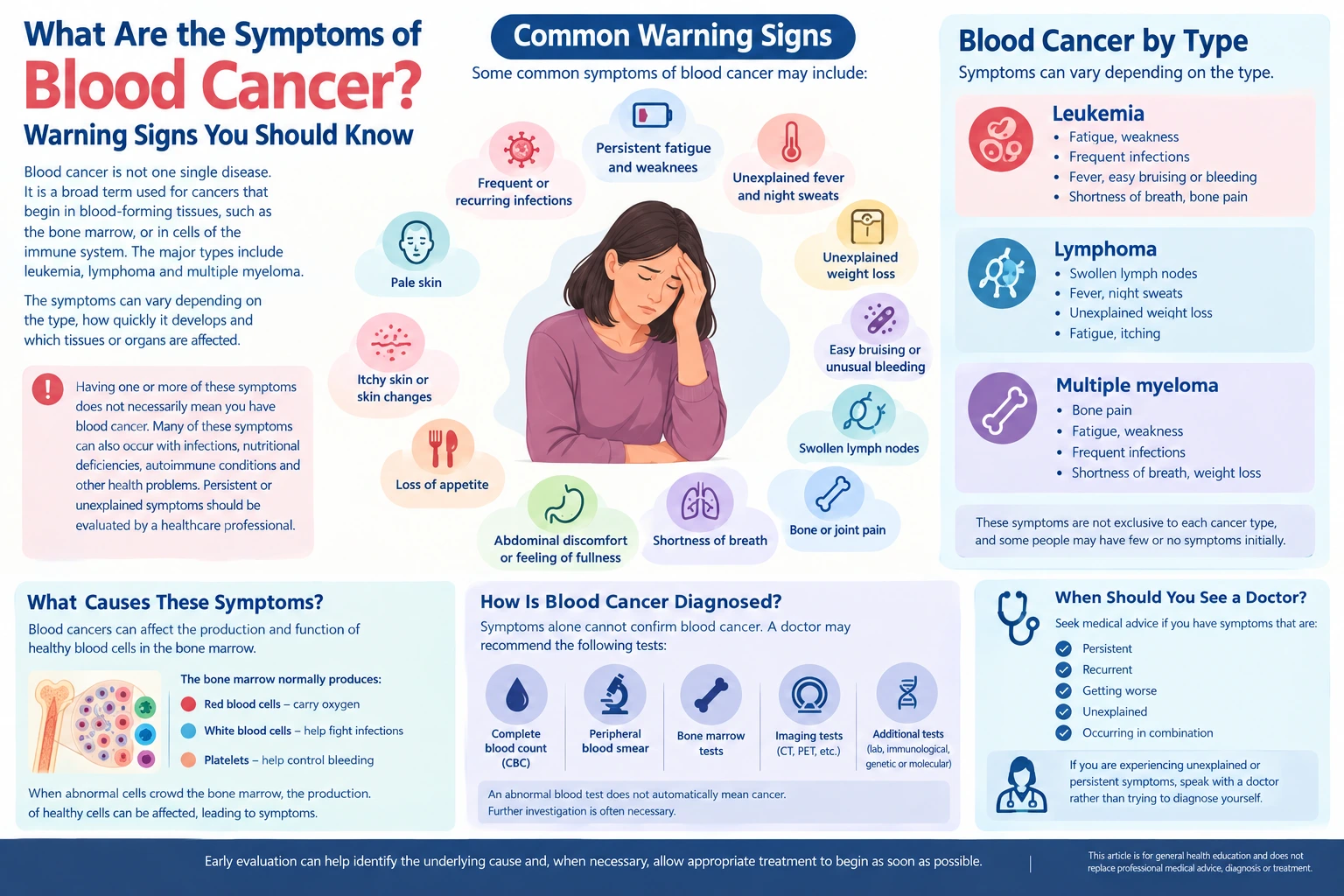
What Are the Symptoms of Blood Cancer? Warning Signs You Should Know
What are the symptoms of blood cancer? This is a common question when someone experiences unexplained tiredness, frequent infections, unusual bruising, swollen lymph nodes or unexplained weight loss.
Blood cancer is not one single disease. It is a broad term used for cancers that begin in blood-forming tissues, such as the bone marrow, or in cells of the immune system. The major types include leukemia, lymphoma and multiple myeloma.
Because these cancers affect different types of cells and parts of the blood or immune system, their symptoms can vary considerably. Some symptoms may develop gradually, while others can become noticeable over a shorter period.
Importantly, having one or more of these symptoms does not necessarily mean that you have blood cancer. Many of the symptoms associated with blood cancer can also occur with infections, nutritional deficiencies, autoimmune conditions and other health problems. However, persistent or unexplained symptoms should be evaluated by a healthcare professional.
What Are the Symptoms of Blood Cancer?
The symptoms of blood cancer depend on the specific type, how quickly it develops and which tissues or organs are affected.
Common warning signs may include:
- Persistent or unusual fatigue
- Weakness
- Frequent or recurring infections
- Unexplained fever
- Heavy night sweats
- Unexplained weight loss
- Easy bruising
- Unusual or prolonged bleeding
- Pale skin
- Swollen lymph nodes
- Bone or joint pain
- Shortness of breath
- Abdominal discomfort or a feeling of fullness
- Loss of appetite
- Itchy skin or skin changes
Not everyone with blood cancer experiences all these symptoms. Some people may have only a few symptoms, while others may have no obvious symptoms during the early stages.
1. Persistent Fatigue and Weakness
One of the common symptoms associated with blood cancers is persistent fatigue.
This may feel different from ordinary tiredness after a busy day. A person may feel unusually weak or exhausted even after adequate sleep or rest.
Blood cancers that affect the bone marrow can interfere with the production of healthy blood cells. A reduction in red blood cells can decrease the amount of oxygen delivered to tissues, contributing to fatigue and weakness.
However, fatigue is extremely common and can result from many conditions, including anemia, thyroid problems, infections, poor sleep and nutritional deficiencies. Persistent fatigue should therefore be evaluated rather than automatically attributed to cancer.
2. Frequent or Persistent Infections
Blood cancers can affect the production or function of healthy white blood cells, which play an important role in fighting infections.
As a result, some people may experience:
- Frequent infections
- Infections that take longer to resolve
- Repeated fevers
- More severe infections than usual
This symptom is particularly relevant in certain types of leukemia, where abnormal blood cells can interfere with the production and function of normal blood cells.
Frequent infections do not automatically indicate blood cancer. Many other conditions can affect the immune system, so a medical assessment is important if infections are unusually frequent or persistent.
3. Easy Bruising or Unusual Bleeding
Another important warning sign is bruising or bleeding without an obvious explanation.
A person may notice:
- Bruises appearing without an injury
- Frequent nosebleeds
- Bleeding gums
- Heavier-than-usual menstrual bleeding
- Small red or purple spots on the skin called petechiae
- Bleeding that takes longer than expected to stop
Some blood cancers can interfere with platelet production in the bone marrow. Platelets help the blood clot, so a low platelet count can make bruising and bleeding more likely.
If unexplained bleeding is persistent or significant, medical evaluation should not be delayed.
4. Unexplained Fever and Night Sweats
A persistent fever without an obvious infection can sometimes occur with blood cancer.
Some people may also experience drenching night sweats, where they wake up with their clothes or bedding unusually wet despite a comfortable sleeping environment.
Fever and night sweats can occur in several types of blood cancer, including lymphoma and leukemia. In lymphoma, fever, drenching night sweats and unexplained weight loss are sometimes referred to collectively as B symptoms.
However, infections and many other medical conditions can cause similar symptoms.
5. Unexplained Weight Loss
Losing weight without intentionally changing your diet or exercise routine can be a warning sign that requires investigation.
Blood cancer may be associated with:
- Reduced appetite
- Changes in metabolism
- Increased energy demands associated with disease
- Other effects of cancer on the body
Unexplained weight loss is not specific to blood cancer and can occur with thyroid disorders, gastrointestinal conditions, infections and other cancers.
If weight loss continues without an obvious explanation, speak with a doctor.
6. Swollen Lymph Nodes
Painless swelling of lymph nodes in the neck, underarms or groin can occur with lymphoma and some other blood cancers.
Lymph nodes are small structures that form part of the immune system. Lymphoma begins in lymphocytes, a type of white blood cell, and abnormal lymphocytes can accumulate in lymph nodes or other tissues.
A swollen lymph node is much more commonly caused by an infection than cancer. However, a lump that persists, grows, feels unusual or occurs alongside unexplained fever, night sweats or weight loss should be evaluated.
7. Bone or Joint Pain
Bone pain can be associated with certain blood cancers, particularly multiple myeloma.
Myeloma develops from abnormal plasma cells in the bone marrow. It can affect the bones and may cause pain, particularly in areas such as the back, ribs, hips or shoulders. It can also weaken bones and increase the risk of fractures.
Persistent or unexplained bone pain should be assessed, particularly when it occurs with fatigue, weight loss, recurrent infections or other concerning symptoms.
8. Shortness of Breath
Shortness of breath can occur when blood cancer affects healthy red blood cell production and causes anemia.
A person may notice breathlessness:
- During physical activity
- When climbing stairs
- While performing routine tasks
- Occasionally even while resting if anemia is severe
However, breathlessness has many possible causes, including heart and lung conditions, anemia from other causes, infections and anxiety.
Sudden or severe difficulty breathing requires urgent medical attention.
9. Pale Skin
Pale skin, particularly when it develops alongside fatigue, weakness or breathlessness, can sometimes indicate anemia.
Anemia occurs when the blood does not have enough healthy red blood cells or hemoglobin to deliver oxygen efficiently.
Because some blood cancers can interfere with normal blood cell production in the bone marrow, anemia can be one of their associated findings.
A simple blood test can help determine whether anemia is present and may provide clues about its possible cause.
10. Abdominal Fullness or Swelling
Some blood cancers can cause enlargement of organs such as the spleen or liver.
This may result in:
- A feeling of fullness below the ribs
- Abdominal discomfort
- Reduced appetite
- Abdominal swelling
Some leukemia patients may experience fullness or pain below the ribs because of an enlarged spleen.
These symptoms can also occur for many other reasons, so medical examination is necessary to identify the cause.
11. Itchy Skin or Skin Changes
Some people with blood cancers may experience:
- Persistent itching
- Skin rashes
- Unexplained skin changes
Itching can occur with some types of lymphoma. However, itchy skin is extremely common and is often caused by allergies, dry skin, eczema, infections or other conditions.
Persistent itching without an obvious explanation should be discussed with a healthcare professional, particularly when accompanied by other symptoms.
12. Loss of Appetite and General Unwellness
A person with blood cancer may experience reduced appetite or a general feeling of being unwell.
This can occur alongside:
- Fatigue
- Weight loss
- Fever
- Abdominal discomfort
- Nausea
- Weakness
These symptoms are not specific to blood cancer, but persistent combinations of unexplained symptoms deserve medical attention.
Blood Cancer Symptoms by Type
Because blood cancer includes several different diseases, symptoms can vary depending on the type.
| Type of blood cancer | Symptoms that may occur |
| Leukemia | Fatigue, weakness, frequent infections, fever, easy bruising or bleeding, shortness of breath, bone pain |
| Lymphoma | Swollen lymph nodes, fever, night sweats, unexplained weight loss, fatigue, itching |
| Multiple myeloma | Bone pain, fatigue, weakness, frequent infections, shortness of breath, weight loss, increased thirst or urination |
These symptoms are not exclusive to each cancer type, and some people may have few or no symptoms initially.
What Causes These Symptoms?
Many blood cancer symptoms occur because abnormal blood cells interfere with the production or function of healthy blood cells.
The bone marrow normally produces:
- Red blood cells, which carry oxygen
- White blood cells, which help fight infections
- Platelets, which help control bleeding
When abnormal cells crowd the bone marrow, the production of healthy cells can be affected. This can contribute to anemia, increased susceptibility to infection and bleeding or bruising.
Different blood cancers can also affect lymph nodes, bones, the spleen, kidneys and other organs.
How Is Blood Cancer Diagnosed?
Symptoms alone cannot confirm blood cancer.
A doctor may begin with a medical history and physical examination and then recommend investigations based on the symptoms.
Common tests may include:
Complete Blood Count
A CBC measures different types of blood cells and can identify abnormalities in red blood cells, white blood cells and platelets.
Peripheral Blood Smear
A blood sample may be examined under a microscope to look for abnormalities in the appearance of blood cells.
Bone Marrow Tests
If leukemia or another bone marrow disorder is suspected, a bone marrow examination may be recommended.
Imaging Tests
Depending on the symptoms, doctors may use imaging such as CT, PET or other scans to examine lymph nodes, organs or bones.
Additional Tests
Some blood cancers require specialised laboratory, immunological, genetic or molecular tests to determine the exact type and characteristics of the disease.
Importantly, an abnormal blood test does not automatically mean that a person has cancer. Further investigation is often necessary.
When Should You See a Doctor?
You should consider seeing a healthcare professional if you have symptoms that are:
- Persistent
- Recurrent
- Getting worse
- Unexplained
- Occurring in combination
For example, persistent fatigue together with unexplained bruising, recurrent infections, fever or weight loss deserves medical evaluation.
The National Cancer Institute notes that symptoms lasting for several weeks should be discussed with a doctor, while also emphasising that many cancer-like symptoms are caused by conditions other than cancer.
Does Having These Symptoms Mean You Have Blood Cancer?
No.
This is one of the most important points to understand.
Fatigue, fever, bruising, swollen lymph nodes and weight loss are common symptoms that can occur for many reasons. Having one or even several of these symptoms does not establish a diagnosis of blood cancer.
At the same time, persistent or unexplained symptoms should not be ignored.
The purpose of recognising blood cancer symptoms is not to self-diagnose, but to understand when professional evaluation may be appropriate.
Frequently Asked Questions
What are the symptoms of blood cancer in adults?
Common symptoms may include persistent fatigue, weakness, unexplained fever, night sweats, frequent infections, unusual bruising or bleeding, swollen lymph nodes, unexplained weight loss, bone pain and shortness of breath.
What is usually the first symptom of blood cancer?
There is no single first symptom. Some people notice persistent fatigue or weakness, while others may first notice swollen lymph nodes, recurrent infections, unexplained bruising or other symptoms. Some blood cancers may initially cause few or no noticeable symptoms.
Can a blood test detect blood cancer?
Blood tests can identify abnormalities that may lead doctors to investigate for blood cancer, but a blood test alone does not always establish the exact diagnosis. Additional tests may be necessary.
What are the symptoms of leukemia?
Leukemia may cause fatigue, weakness, fever, frequent infections, easy bruising or bleeding, shortness of breath, weight loss and bone or abdominal discomfort.
What are the symptoms of lymphoma?
Lymphoma may cause painless swollen lymph nodes, unexplained fever, drenching night sweats, unexplained weight loss and fatigue. Some people may also experience itching or pain depending on where the lymphoma develops.
What are the symptoms of multiple myeloma?
Multiple myeloma may cause bone pain, fatigue, weakness, shortness of breath, frequent infections, unexplained weight loss and increased thirst or urination. Some people have no symptoms initially.
Final Takeaway
So, what are the symptoms of blood cancer?
The symptoms can vary depending on the type of blood cancer, but common warning signs include persistent fatigue, weakness, unexplained fever, night sweats, frequent infections, unusual bruising or bleeding, swollen lymph nodes, unexplained weight loss, bone pain, shortness of breath and pale skin.
These symptoms do not necessarily mean that a person has cancer. However, symptoms that persist, recur or occur together should be evaluated by a qualified healthcare professional.
Early medical evaluation can help identify the underlying cause and, when necessary, allow appropriate treatment to begin as soon as possible.
If you are experiencing unexplained or persistent symptoms, speak with a doctor rather than attempting to diagnose yourself based on symptoms alone.
Disclaimer: This article is intended for general health education and does not replace professional medical advice, diagnosis or treatment.
Contact Details:
Address: Malati Mohan Bunglow, Telephone Exchange, Mahatma Gandhi Rd, opp. Naupada, Naupada, Thane West, Mumbai, Thane, Maharashtra 400602
Phone: 022 6124 2400
Website: horizonnaupada.com