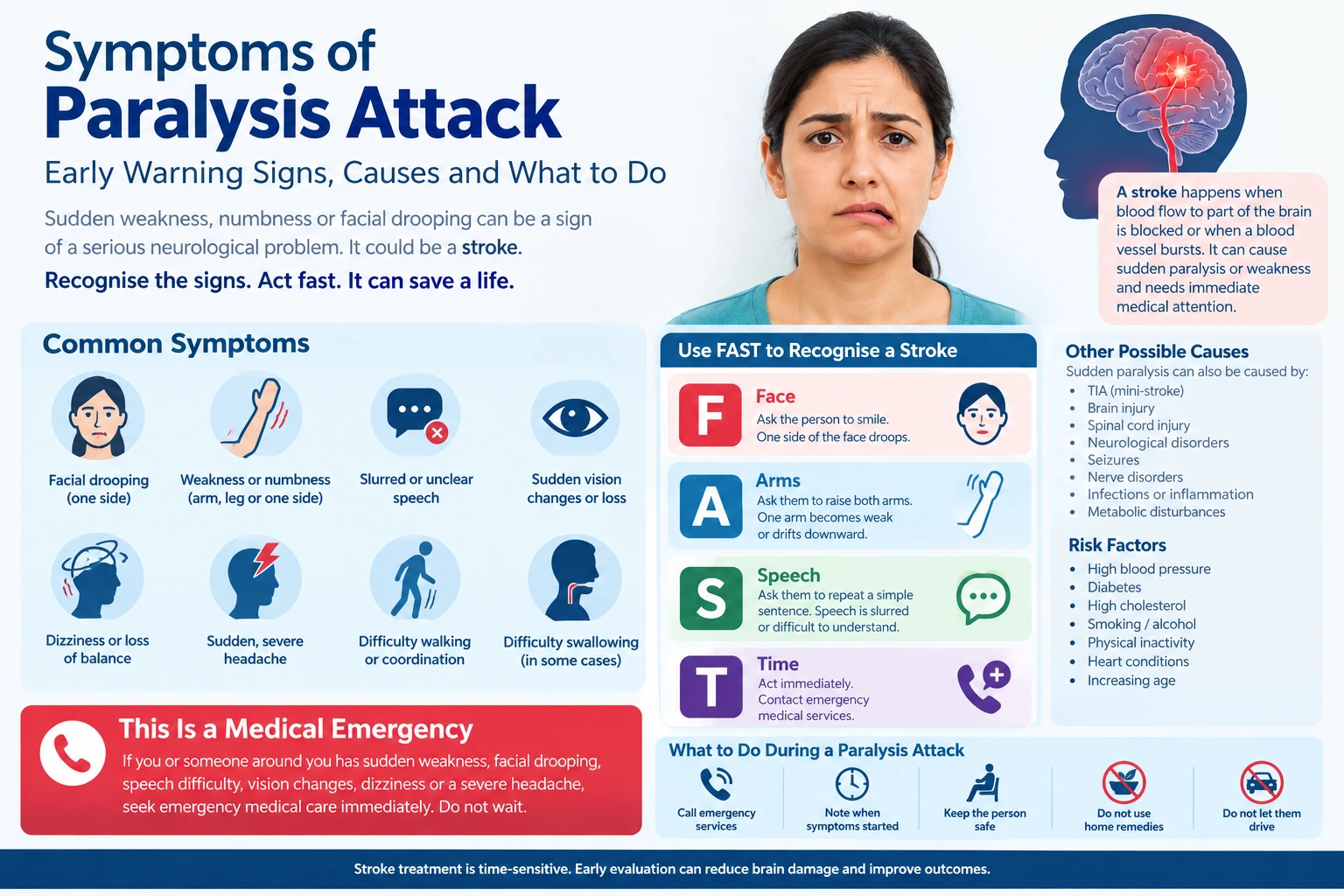
Symptoms of Paralysis Attack: Early Warning Signs, Causes and What to Do
A sudden inability to move an arm, leg, or one side of the face can be frightening. Many people search for “symptoms of paralysis attack” when they notice sudden weakness, numbness, facial drooping, or difficulty speaking. While “paralysis attack” is a commonly used term, sudden paralysis or weakness is not a diagnosis by itself. It can occur because of several neurological conditions, and stroke is one of the most important causes that requires immediate medical attention.
A stroke happens when blood flow to part of the brain is blocked or when a blood vessel in the brain bursts. Because brain cells can be damaged when they are deprived of oxygen, stroke is a medical emergency where rapid assessment and treatment are essential.
Recognising the warning signs early can help a person receive treatment as quickly as possible.
Emergency warning: If someone suddenly develops weakness or numbness on one side, facial drooping, difficulty speaking, sudden vision problems, severe dizziness, loss of balance, or an unexplained severe headache, seek emergency medical care immediately. Do not wait for the symptoms to disappear.
What Are the Symptoms of a Paralysis Attack?
The symptoms can vary depending on the underlying cause and the part of the nervous system affected.
When sudden paralysis or weakness is caused by a stroke, symptoms commonly appear without warning and may affect one side of the body.
The most important symptoms include:
- Sudden weakness or numbness of the face, arm, or leg
- Weakness mainly on one side of the body
- Drooping of one side of the face
- Difficulty smiling normally
- Inability to raise or keep one arm raised
- Slurred or unclear speech
- Difficulty understanding what other people are saying
- Sudden confusion
- Difficulty walking
- Dizziness or loss of balance
- Sudden vision changes or loss of vision
- A sudden, severe headache without an obvious cause
- Difficulty swallowing in some cases
These symptoms can occur individually or in combination. A person does not need to have all of them before seeking emergency medical attention.
How to Recognise a Paralysis Attack Using FAST
One of the simplest ways to recognise the warning signs of stroke is the FAST method.
| FAST | What to check | Warning sign |
| F – Face | Ask the person to smile | One side of the face droops |
| A – Arms | Ask them to raise both arms | One arm becomes weak or drifts downward |
| S – Speech | Ask them to repeat a simple sentence | Speech is slurred, strange, or difficult to understand |
| T – Time | Act immediately | Contact emergency medical services |
Some health organisations also use B.E. FAST, adding balance and eye symptoms to the checklist. Sudden dizziness, difficulty walking, loss of coordination, or vision problems can also be signs of stroke.
Why Does FAST Matter?
Stroke treatment is time-sensitive. The longer the brain remains without adequate blood flow, the greater the possibility of brain injury. Getting emergency medical assessment quickly allows doctors to determine whether the symptoms are caused by a stroke and whether emergency treatment is appropriate.
If symptoms begin suddenly, note the time they started and communicate this information to the emergency medical team. This can help doctors determine treatment options.
What Does Paralysis Feel Like?
Paralysis can involve a complete inability to move a part of the body or significant weakness that makes movement difficult.
A person may experience:
- Complete loss of movement
- Muscle weakness
- Numbness
- Tingling or altered sensation
- A heavy feeling in an arm or leg
- Difficulty controlling facial movements
- Difficulty standing or walking
- Problems with coordination
- Muscle stiffness or spasms in some conditions
Paralysis can develop suddenly or gradually, depending on its cause. Sudden paralysis or weakness, especially when it affects one side of the face or body, requires urgent medical assessment because it can indicate a serious neurological problem.
Is Sudden Paralysis Always a Stroke?
No. Stroke is an important cause, but sudden weakness or paralysis can have other causes as well.
Possible causes include:
- Stroke
- Transient ischemic attack (TIA)
- Brain injury
- Spinal cord injury
- Certain neurological disorders
- Seizures or conditions occurring after a seizure
- Nerve disorders
- Certain infections or inflammatory conditions
- Metabolic disturbances
This is why it is not safe to assume that sudden paralysis is caused by a less serious condition.
When symptoms develop suddenly, particularly when they involve facial weakness, arm weakness or speech problems, stroke must be considered until a healthcare professional has evaluated the person.
What Causes Paralysis During a Stroke?
A stroke affects the brain by interrupting its blood supply or causing bleeding within the brain.
There are two major types of stroke:
1. Ischemic Stroke
An ischemic stroke occurs when a blood clot or another blockage prevents blood from reaching part of the brain.
Without enough oxygen and nutrients, brain tissue can become damaged.
2. Hemorrhagic Stroke
A hemorrhagic stroke occurs when a blood vessel in the brain ruptures and causes bleeding.
The blood can place pressure on surrounding brain tissue and cause neurological symptoms.
Both types of stroke can result in weakness, paralysis, speech difficulties, vision changes and other neurological problems. Brain imaging is generally needed to determine which type of stroke has occurred.
Symptoms of Paralysis Attack vs Other Conditions
Certain symptoms can help raise concern for stroke, although only medical assessment can establish the diagnosis.
| Symptom | May occur with stroke | Requires urgent assessment? |
| Sudden facial drooping | Yes | Yes |
| Sudden weakness on one side | Yes | Yes |
| Sudden numbness | Yes | Yes |
| Slurred speech | Yes | Yes |
| Difficulty understanding speech | Yes | Yes |
| Sudden vision loss | Yes | Yes |
| Sudden severe headache | Yes | Yes |
| Sudden dizziness or loss of balance | Yes | Yes |
| Gradual weakness over a long period | Possible with other conditions | Medical assessment recommended |
The sudden onset of symptoms is particularly important. A person should not wait to see whether symptoms become more severe.
Can Paralysis Symptoms Disappear?
Yes. Stroke-like symptoms can sometimes improve or disappear after a short period.
This can happen with a transient ischemic attack (TIA), sometimes called a “mini-stroke.” However, disappearing symptoms do not mean that the situation is harmless.
A TIA is considered a medical emergency because it can be a warning sign of a future stroke, and it can initially be difficult to distinguish from a stroke.
Therefore, if someone experiences sudden weakness, numbness, speech difficulty, facial drooping or another possible stroke symptom that later disappears, they should still seek urgent medical evaluation.
What Should You Do During a Paralysis Attack?
If you suspect that someone is having a stroke or sudden neurological event, act immediately.
Step 1: Call emergency medical services
Do not wait to see whether the symptoms improve.
Step 2: Note when the symptoms started
Write down the time the person was last known to be normal or when the symptoms were first noticed.
Step 3: Keep the person safe
Help them remain in a safe position and avoid unnecessary movement.
Step 4: Do not delay for home remedies
Do not attempt to treat suspected stroke with home remedies or wait for symptoms to disappear.
Step 5: Do not let the person drive
Emergency medical transportation allows healthcare professionals to begin assessment and care while transporting the patient.
Why Is Immediate Treatment Important?
Stroke can cause permanent brain injury, disability and, in severe cases, death. However, some treatments can reduce the impact of certain strokes when eligible patients receive care quickly.
At the hospital, doctors may perform brain imaging such as a CT or MRI scan to determine what is happening and identify the type of stroke. Blood tests and other investigations may also be performed.
Depending on the type of stroke and the patient’s circumstances, treatment may include medicines to restore blood flow, procedures to remove a clot, treatment to control bleeding or pressure in the brain, and supportive medical care.
The earlier the person is evaluated, the sooner doctors can determine which treatments may be appropriate.
What Are the Risk Factors for Stroke and Paralysis?
Several health and lifestyle factors can increase the risk of stroke.
Important risk factors include:
- High blood pressure
- Diabetes
- High cholesterol
- Smoking or tobacco use
- Excess alcohol consumption
- Physical inactivity
- Obesity or overweight
- Certain heart conditions, including atrial fibrillation
- Previous stroke or TIA
- Increasing age
- Certain blood vessel conditions
High blood pressure is an especially important modifiable risk factor for stroke. Managing blood pressure, blood sugar and cholesterol, along with avoiding tobacco and maintaining an active lifestyle, can help reduce stroke risk.
Can Paralysis After a Stroke Be Treated?
Treatment depends on the cause, severity and area of the brain affected.
Following the emergency phase of stroke treatment, rehabilitation may become an important part of recovery.
Depending on the patient’s needs, rehabilitation may involve:
- Physiotherapy to improve strength and movement
- Occupational therapy to support daily activities
- Speech and language therapy
- Swallowing assessment and therapy
- Mobility and balance training
- Psychological support
- Medical management to reduce the risk of another stroke
Recovery is different for every person. Some people recover significantly, while others may have lasting weakness or disability. Rehabilitation can help many stroke survivors work toward greater independence.
How Can You Reduce the Risk of Stroke?
Although not every stroke can be prevented, managing risk factors can make an important difference.
Consider the following:
Monitor blood pressure
High blood pressure can damage blood vessels and significantly increase stroke risk. Regular monitoring and taking prescribed medication can help control it.
Manage diabetes
Keeping blood glucose within the recommended range can help protect blood vessels.
Control cholesterol
High cholesterol can contribute to blood vessel disease. Follow your doctor’s recommendations regarding diet, medication and monitoring.
Avoid tobacco
Smoking damages blood vessels and increases cardiovascular risk.
Stay physically active
Regular physical activity supports cardiovascular health and can help with blood pressure, blood sugar and weight management.
Follow prescribed treatment
If you have high blood pressure, diabetes, high cholesterol, heart disease or another stroke risk factor, take prescribed medications as directed and attend recommended follow-up appointments.
When Should You Seek Emergency Medical Help?
Do not wait for symptoms to become severe.
Seek emergency medical help immediately if you or someone around you develops:
- Sudden weakness or numbness on one side
- Facial drooping
- Sudden difficulty speaking
- Difficulty understanding speech
- Sudden loss or change of vision
- Sudden difficulty walking
- Severe dizziness or loss of balance
- A sudden severe headache with no known cause
- Sudden paralysis
- Difficulty swallowing or breathing associated with sudden neurological symptoms
Even if symptoms disappear, urgent medical evaluation is still important because they may have been caused by a TIA.
Frequently Asked Questions About Symptoms of Paralysis Attack
1. What are the first symptoms of a paralysis attack?
Sudden weakness or numbness, particularly on one side of the face or body, facial drooping and difficulty speaking can be important warning signs. Sudden vision problems, dizziness, loss of balance and severe headache may also occur.
2. Is sudden paralysis a sign of stroke?
It can be. Sudden paralysis or weakness, especially on one side of the body, is a major warning sign of stroke and requires immediate medical assessment.
3. Can paralysis happen suddenly?
Yes. Paralysis or significant weakness can develop suddenly in conditions such as stroke. Sudden-onset paralysis should always be treated as a medical emergency until a serious cause has been ruled out.
4. What is the FAST test for paralysis or stroke?
FAST stands for Face, Arms, Speech and Time. Facial drooping, weakness in an arm, speech problems and the need to act immediately are the key warning signs.
5. What if paralysis symptoms disappear?
Do not ignore them. Symptoms that disappear after a short period may indicate a TIA, which requires urgent medical evaluation.
6. Can a person recover from paralysis after a stroke?
Recovery varies significantly. Some people regain substantial movement, while others have persistent weakness. Medical treatment followed by rehabilitation can support recovery and independence.
Final Takeaway
Knowing the symptoms of paralysis attack can help you recognise a potentially life-threatening neurological emergency. Sudden facial drooping, weakness or numbness on one side, speech difficulties, vision changes, dizziness, loss of balance or an unexplained severe headache should never be ignored.
If these symptoms occur suddenly, do not wait for them to improve and do not attempt to manage them at home. Seek emergency medical care immediately.
Stroke treatment is time-sensitive, and early evaluation can help doctors identify the cause and determine the appropriate treatment as quickly as possible.
If you or someone near you is experiencing sudden paralysis, weakness, facial drooping or difficulty speaking right now, seek emergency medical care immediately.
Disclaimer: This article is intended for general health education and does not replace professional medical evaluation, diagnosis or treatment. Sudden paralysis or stroke-like symptoms require urgent medical attention.
Contact Details:
Address: Malati Mohan Bunglow, Telephone Exchange, Mahatma Gandhi Rd, opp. Naupada, Naupada, Thane West, Mumbai, Thane, Maharashtra 400602
Phone: 022 6124 2400
Website: horizonnaupada.com