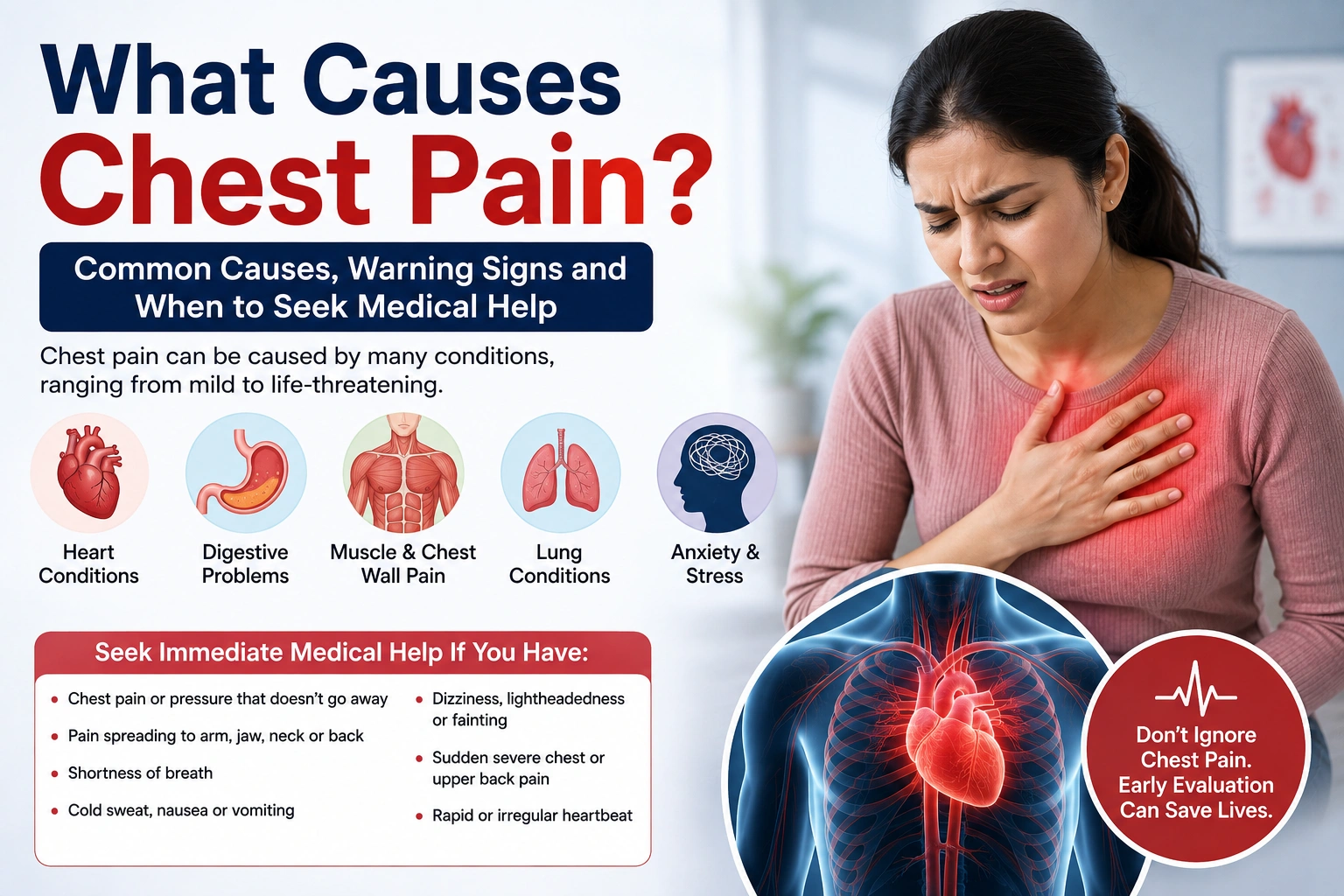
What Causes Chest Pain? Common Causes, Warning Signs and When to Seek Medical Help
Chest pain can be frightening, especially because many people immediately associate it with a heart attack. However, chest pain can have many causes, ranging from acidity and muscle strain to heart and lung conditions that require urgent medical attention.
If you are wondering what causes chest pain, it is important to understand that the location, nature, duration and associated symptoms can provide clues, but they cannot reliably determine the cause on their own. New, sudden or unexplained chest pain should always be taken seriously and medically evaluated.
At Horizon Naupada Hospital, we understand how concerning chest discomfort can be for patients and families. This guide explains the common causes of chest pain, symptoms that may indicate a medical emergency, and how doctors evaluate chest pain.
What Causes Chest Pain?
Chest pain can originate from several structures in or around the chest, including the heart, lungs, oesophagus, muscles, ribs and nerves. Some conditions are relatively minor, while others can be life-threatening.
Common causes include:
- Heart-related conditions such as angina and heart attack
- Acid reflux and other digestive problems
- Muscle strain and chest wall inflammation
- Lung infections and inflammation
- Blood clots in the lungs
- Anxiety and panic attacks
- Inflammation around the heart
- Rib injuries
- Nerve-related conditions such as shingles
Because symptoms can overlap between different conditions, the type of pain alone should not be used to rule out a serious problem.
Heart-Related Causes of Chest Pain
Heart-related conditions are among the most important causes of chest pain to identify because some require immediate treatment.
1. Angina
Angina occurs when the heart muscle does not receive enough oxygen-rich blood. It is commonly associated with coronary artery disease.
Angina may feel like:
- Pressure or heaviness in the chest
- Tightness or squeezing
- A burning or aching sensation
- Discomfort that develops during physical activity or emotional stress
The discomfort may spread to the shoulder, arm, neck, jaw, back or upper abdomen. Stable angina often improves with rest or prescribed medication, while new, worsening or persistent chest discomfort may indicate a more serious problem.
2. Heart Attack
A heart attack occurs when blood flow to part of the heart muscle becomes blocked, depriving the heart tissue of oxygen.
Chest discomfort during a heart attack may feel like:
- Pressure
- Tightness
- Squeezing
- Heaviness
- Aching
- Burning or discomfort similar to indigestion
Other symptoms can include shortness of breath, sweating, nausea, dizziness, unusual fatigue and discomfort spreading to the arm, shoulder, back, neck or jaw. Importantly, not everyone experiences severe or classic chest pain. Some people may have relatively mild or less obvious symptoms.
3. Pericarditis
Pericarditis is inflammation of the thin sac surrounding the heart. It can cause sharp chest pain that may become worse with deep breathing, coughing or lying down.
4. Aortic Dissection
Aortic dissection is a rare but potentially life-threatening condition involving a tear in the inner layer of the aorta, the body’s major artery.
It may cause sudden and severe chest or upper back pain and requires emergency medical attention.
Digestive Problems That Can Cause Chest Pain
Not every chest pain is related to the heart. Problems involving the digestive system can also create discomfort in the chest.
Acid Reflux and GERD
Gastroesophageal reflux disease (GERD) occurs when stomach contents move back into the oesophagus. This can cause a burning sensation behind the breastbone, commonly known as heartburn.
Chest discomfort associated with reflux may occur along with:
- A sour or acidic taste in the mouth
- Food or acid coming back into the throat
- Burning after meals
- Difficulty swallowing
- Symptoms that become worse when lying down
Although reflux can cause chest discomfort, it should not automatically be assumed to be the cause of new chest pain, particularly when symptoms are severe or unusual.
Oesophageal Problems
Conditions affecting the oesophagus can sometimes cause chest pain, particularly when swallowing. Some oesophageal disorders can produce symptoms that resemble heart-related chest discomfort.
Muscle and Chest Wall Causes of Chest Pain
Musculoskeletal problems are another common reason for chest discomfort.
Muscle Strain
Chest muscles can become strained after:
- Heavy lifting
- Exercise
- Repeated coughing
- Sudden physical activity
- Minor injuries
The pain may become more noticeable when moving the upper body or using the affected muscles.
Costochondritis
Costochondritis is inflammation of the cartilage connecting the ribs to the breastbone. It can cause localized chest pain and tenderness and may sometimes feel similar to heart-related pain.
Pain that can be reproduced by pressing on a specific area of the chest may suggest a chest wall cause, although patients should not rely on this finding alone to rule out serious conditions.
Rib Injury
A bruised or fractured rib can cause significant chest pain, particularly when taking a deep breath, coughing or moving the upper body.
Lung-Related Causes of Chest Pain
Several conditions affecting the lungs or the tissues surrounding them can cause chest pain.
Pneumonia and Pleurisy
Pneumonia is an infection of the lungs. Inflammation of the tissues around the lungs, known as pleurisy, can cause sharp chest pain that becomes worse while breathing or coughing.
Other symptoms may include:
- Fever
- Chills
- Cough
- Difficulty breathing
- Mucus production
- General weakness or fatigue
Pleuritic chest pain should be assessed alongside the other symptoms to determine its cause.
Pulmonary Embolism
A pulmonary embolism occurs when a blood clot travels to a blood vessel in the lungs and obstructs blood flow.
Possible symptoms include:
- Sudden chest pain
- Shortness of breath
- Rapid heartbeat
- Dizziness or fainting
- Cough, sometimes with blood
A pulmonary embolism can be life-threatening and requires urgent medical assessment.
Pneumothorax
A pneumothorax, commonly called a collapsed lung, occurs when air enters the space between the lung and chest wall. It can cause sudden chest pain and shortness of breath and requires medical evaluation.
Can Anxiety or Panic Attacks Cause Chest Pain?
Yes. Anxiety and panic attacks can cause physical symptoms, including chest pain or discomfort.
A panic attack may occur with:
- Intense fear or a feeling of impending danger
- Rapid heartbeat
- Rapid breathing
- Sweating
- Dizziness
- Nausea
- Shortness of breath
- Chest discomfort
However, chest pain should not automatically be attributed to anxiety. Panic attacks and heart-related problems can sometimes produce similar symptoms. If you are experiencing new, severe or unexplained chest pain, medical assessment is important.
How Can You Tell What Is Causing Chest Pain?
There is no single symptom that can reliably identify the cause of chest pain. Doctors consider several factors, including the characteristics of the pain and the patient’s overall health.
| Feature | Possible causes |
| Pressure, squeezing or heaviness | Angina or heart attack |
| Burning behind the breastbone | Acid reflux/GERD or heart-related causes |
| Pain spreading to arm, jaw, back or neck | Possible heart-related condition |
| Pain worse with deep breathing or coughing | Lung or pleural conditions |
| Localized tenderness | Muscle or chest wall problems |
| Pain associated with movement | Musculoskeletal causes |
| Sudden chest pain with shortness of breath | Pulmonary embolism, pneumothorax or other urgent conditions |
| Chest pain with intense fear and rapid heartbeat | Panic attack, although serious causes must first be considered |
These patterns are only general clues. A doctor may need tests to determine the actual cause.
When Is Chest Pain an Emergency?
Seek emergency medical help immediately if chest pain is sudden, severe, unexplained or persistent, particularly when it is accompanied by other concerning symptoms.
Warning signs include:
- Chest pressure, squeezing or tightness that does not go away
- Pain spreading to the arm, shoulder, back, neck or jaw
- Shortness of breath
- Cold sweating
- Nausea or vomiting
- Severe dizziness or lightheadedness
- Fainting or loss of consciousness
- Sudden severe upper back or neck pain
- Sudden chest pain with significant breathing difficulty
- Chest pain associated with a racing or irregular heartbeat
Heart attack symptoms can sometimes be mild or unusual, particularly in women, older adults and people with diabetes. Therefore, the absence of severe chest pain does not necessarily mean that a heart attack is not occurring.
How Do Doctors Diagnose the Cause of Chest Pain?
When a patient arrives with chest pain, doctors first assess whether the symptoms could indicate a life-threatening condition.
Depending on the symptoms and clinical findings, evaluation may include:
Medical History and Physical Examination
The doctor may ask:
- When did the pain begin?
- Was it sudden or gradual?
- How long does it last?
- What does the pain feel like?
- Does it spread anywhere?
- Does physical activity trigger it?
- Does breathing or movement change the pain?
- Are there associated symptoms such as sweating, nausea or breathlessness?
- Do you have a history of heart disease or other medical conditions?
- Are you taking any medications?
ECG
An electrocardiogram (ECG/EKG) records the electrical activity of the heart. It can help doctors identify signs of a heart attack and other heart-related abnormalities.
Blood Tests
Blood tests may be used to look for substances released into the bloodstream when heart muscle is damaged. Cardiac biomarkers such as troponin can be important in evaluating suspected heart attacks.
Chest X-ray
A chest X-ray may help evaluate the lungs, heart and surrounding structures. It can assist in identifying conditions such as pneumonia and other causes of chest symptoms.
Depending on the suspected cause, doctors may recommend additional investigations such as echocardiography, CT imaging, stress testing or other specialised tests.
What Should You Do If You Experience Chest Pain?
If you develop new or unexplained chest pain, do not attempt to determine the cause yourself.
Instead:
- Stop strenuous activity and sit or rest safely.
- Pay attention to associated symptoms, such as breathlessness, sweating, nausea or dizziness.
- Seek urgent medical help if the pain is sudden, severe, persistent or accompanied by warning signs.
- Do not drive yourself if you may be experiencing a medical emergency; emergency medical assistance is safer.
- Follow medical advice regarding medications. Do not take someone else’s prescription medication.
Even when chest pain turns out not to be heart-related, prompt assessment can help identify the underlying condition and appropriate treatment.
Can Chest Pain Be Prevented?
Prevention depends on its underlying cause. For heart-related chest pain, reducing cardiovascular risk is particularly important.
Healthy habits may include:
- Maintaining a healthy weight
- Being physically active as medically appropriate
- Following a balanced diet
- Avoiding tobacco
- Managing blood pressure
- Managing cholesterol and blood sugar
- Taking prescribed medicines as directed
- Attending regular health check-ups when recommended
People with known heart disease or cardiovascular risk factors should discuss an appropriate prevention plan with their doctor.
Frequently Asked Questions About What Causes Chest Pain
What causes chest pain most commonly?
Chest pain can have many causes, including heart conditions, acid reflux, muscle strain, chest wall inflammation, lung problems and anxiety. The cause cannot be confirmed based on symptoms alone.
Does chest pain always mean a heart problem?
No. Chest pain can result from digestive, muscular, respiratory or other conditions. However, potentially serious heart and lung conditions can also cause chest pain, so new or unexplained symptoms should not be ignored.
Can gas or acidity cause chest pain?
Yes. Acid reflux and other digestive problems can cause burning or discomfort in the chest. However, severe or unexplained chest pain should not automatically be assumed to be gas or acidity because heart-related conditions can sometimes feel similar to indigestion.
Can stress cause chest pain?
Stress and panic attacks can produce chest discomfort, rapid heartbeat, sweating, dizziness and shortness of breath. Nevertheless, new or unexplained chest pain should be medically evaluated rather than automatically attributed to stress.
When should I see a doctor for chest pain?
You should seek medical evaluation for new, unexplained or recurring chest pain. Emergency help is especially important when chest pain is severe, persistent or accompanied by breathing difficulty, sweating, nausea, dizziness, fainting or pain spreading to the arm, jaw, back or neck.
What tests are used to find the cause of chest pain?
Depending on the situation, doctors may use an ECG, blood tests, chest X-ray and other investigations. Additional testing depends on the suspected cause and the patient’s symptoms and medical history.
Conclusion
Understanding what causes chest pain is important, but identifying the cause safely requires more than looking at where the pain occurs or how it feels. Chest discomfort may result from something as common as acid reflux or muscle strain, but it can also signal a heart attack, pulmonary embolism or another serious condition.
The safest approach is to take new or unexplained chest pain seriously. If symptoms are sudden, severe or associated with breathlessness, sweating, nausea, dizziness, fainting or pain spreading to other parts of the body, seek emergency medical attention without delay.
For recurring or unexplained chest discomfort, consult a qualified healthcare professional for appropriate evaluation and diagnosis.
Contact Details:
Address: Malati Mohan Bunglow, Telephone Exchange, Mahatma Gandhi Rd, opp. Naupada, Naupada, Thane West, Mumbai, Thane, Maharashtra 400602
Phone: 022 6124 2400
Website: horizonnaupada.com