What Are the First Signs of Kidney Stones?
Kidney stones are hard, crystal-like deposits that form inside the kidneys when certain minerals and salts become concentrated in the urine. They can range from tiny particles that pass unnoticed to larger stones that cause significant pain and urinary problems.
Many people wonder, what are the first signs of kidney stones? Recognising the early symptoms can help you seek medical attention before a stone causes complications such as urinary obstruction, infection, or kidney damage.
The symptoms can vary depending on the size and location of the stone. Some small kidney stones may cause no symptoms at all until they begin moving through the urinary tract. Others can cause noticeable discomfort, changes in urination, nausea, or blood in the urine.
This guide explains the first signs of kidney stones, how symptoms may progress, when medical attention is necessary, and how kidney stones are diagnosed and treated.
What Are Kidney Stones?
Kidney stones are solid deposits made from minerals and salts that develop inside the kidneys. They form when urine contains high levels of certain substances that can crystallise and stick together.
Common types include:
- Calcium stones: The most common type, usually made from calcium oxalate or calcium phosphate.
- Uric acid stones: May develop when urine is persistently acidic.
- Struvite stones: Often associated with certain urinary tract infections.
- Cystine stones: Rare stones caused by an inherited condition called cystinuria.
A person can have a kidney stone without experiencing any symptoms. Symptoms generally begin when the stone moves from the kidney into the ureter, the narrow tube that carries urine to the bladder.
What Are the First Signs of Kidney Stones?
The first signs of kidney stones can be subtle or sudden. Some people initially experience mild discomfort, while others develop intense pain as the stone moves.
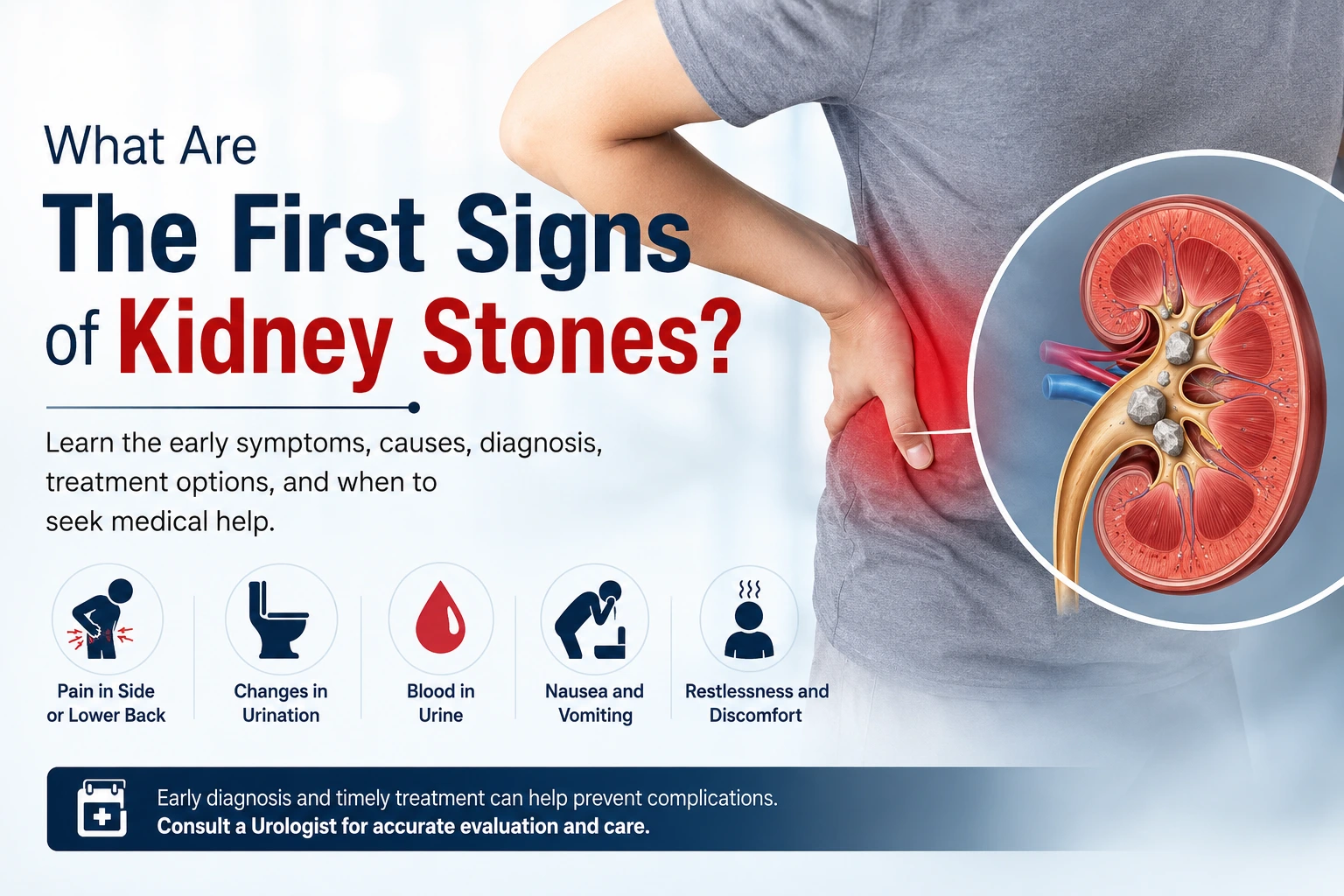
The most common early symptoms include:
1. Pain in the Side or Lower Back
Pain is one of the most recognised symptoms of kidney stones. It may begin as a dull ache in the side or lower back and become more noticeable as the stone moves.
Kidney stone pain may:
- Occur on one side of the body
- Begin in the back or side below the ribs
- Spread toward the lower abdomen or groin
- Come and go in waves
- Become severe as the stone moves through the ureter
The intensity of pain does not necessarily indicate the size of the stone. Even a relatively small stone can cause severe pain if it becomes lodged in the urinary tract.
2. Changes in Urination
Changes in normal urination can be an early indication of a kidney stone, particularly when the stone has moved into the lower urinary tract.
You may notice:
- A frequent urge to urinate
- Urinating more often than usual
- Pain or burning while urinating
- Difficulty passing urine
- Passing only a small amount of urine at a time
These symptoms can also occur with urinary tract infections, so proper medical evaluation is important.
3. Blood in the Urine
Blood in the urine, medically known as hematuria, can occur when a kidney stone irritates or scratches the lining of the urinary tract.
The urine may appear:
- Pink
- Red
- Brown
- Tea-coloured
Sometimes blood is not visible to the naked eye and is detected only through a urine test.
Blood in the urine should not automatically be assumed to be caused by kidney stones. Several other urinary conditions can cause hematuria, so medical assessment is recommended.
4. Nausea and Vomiting
Kidney stones can cause nausea or vomiting, particularly when they trigger severe pain.
The kidneys and gastrointestinal system have connected nerve pathways, which may cause digestive symptoms during a painful kidney stone episode.
Nausea can sometimes accompany:
- Severe side or back pain
- Abdominal discomfort
- Sweating
- Restlessness
5. Restlessness
People experiencing kidney stone pain may find it difficult to sit, stand, or lie comfortably. Unlike some other types of abdominal pain, kidney stone pain may cause a person to constantly change positions in an attempt to find relief.
This restlessness can occur when a stone is moving through the ureter.
6. Cloudy or Unusual-Smelling Urine
Cloudy urine or urine with an unusual smell can sometimes occur with kidney stones, particularly when a urinary infection is also present.
However, these symptoms are not specific to kidney stones and may have other causes.
If cloudy or foul-smelling urine occurs along with fever, chills, painful urination, or significant side pain, prompt medical evaluation is important.
Kidney Stone Symptoms: Early Signs vs Advanced Symptoms
The symptoms of kidney stones can change as the stone moves through the urinary system.
| Early or Common Signs | More Severe Symptoms |
| Mild side or back discomfort | Severe, wave-like pain |
| Frequent urge to urinate | Inability to pass urine |
| Painful urination | Persistent vomiting |
| Blood in urine | Fever and chills |
| Cloudy urine | Severe weakness or feeling unwell |
| Nausea | Symptoms of urinary infection |
Not everyone experiences all of these symptoms. Some kidney stones remain symptom-free and are discovered incidentally during imaging performed for another reason.
Where Does Kidney Stone Pain Usually Start?
Kidney stone pain commonly starts in the side or back below the ribs. As the stone moves down the ureter, the pain may travel toward the lower abdomen, pelvis, or groin.
The location can change depending on where the stone is positioned.
For example:
- A stone in the kidney may cause discomfort in the side or back.
- A stone entering the ureter may cause intense, cramping pain.
- A stone closer to the bladder may cause urinary urgency or discomfort while urinating.
Kidney stone pain often comes in waves because the ureter contracts as it attempts to move the stone toward the bladder.
What Causes Kidney Stones?
Kidney stones develop when certain substances become concentrated in urine and form crystals. Several factors can increase the risk.
Common risk factors include:
- Not drinking enough water
- Excessive intake of salt
- Certain dietary patterns
- Family history of kidney stones
- Previous kidney stones
- Obesity
- Certain metabolic conditions
- Some digestive disorders
- Recurrent urinary tract infections
- Certain medications
- Conditions that affect mineral or uric acid levels
Dehydration is particularly important because insufficient fluid intake can make urine more concentrated, increasing the likelihood of crystal formation.
Who Is More Likely to Develop Kidney Stones?
Kidney stones can affect adults of different ages, although some people have a higher risk than others.
Risk may be increased if you:
- Have had kidney stones before
- Have a family history of kidney stones
- Drink inadequate amounts of water
- Consume a high-sodium diet
- Have certain metabolic or digestive conditions
- Have recurrent urinary infections
- Take medications associated with stone formation
- Live or work in conditions that cause significant fluid loss
People who have previously developed kidney stones may also be more likely to experience them again.
When Should You See a Doctor for Kidney Stone Symptoms?
Mild symptoms should still be evaluated if they persist or recur, particularly if you notice blood in your urine or repeated episodes of side or back pain.
However, some symptoms require prompt medical attention.
Seek urgent medical evaluation if kidney stone symptoms occur with:
- Fever or chills
- Severe or worsening pain
- Persistent vomiting
- Difficulty or inability to urinate
- Blood in the urine
- Severe weakness or dizziness
- Signs of a urinary infection
A kidney stone that blocks urine flow and occurs alongside an infection can become a medical emergency and requires timely treatment.
How Are Kidney Stones Diagnosed?
If your symptoms suggest kidney stones, a doctor may recommend several tests to confirm the diagnosis and determine the stone’s size and location.
Common diagnostic tests include:
Urine test:
A urine examination can identify blood, crystals, signs of infection, and other abnormalities.
Blood tests:
Blood tests may help assess kidney function and identify abnormalities in substances such as calcium or uric acid.
Ultrasound:
Ultrasound can detect many kidney stones and identify urinary tract obstruction without radiation exposure.
CT scan:
A non-contrast CT scan may be used when more detailed imaging is required, particularly when the diagnosis is uncertain or symptoms are severe.
The choice of test depends on factors such as symptoms, age, medical history, pregnancy status, and clinical findings.
How Are Kidney Stones Treated?
Treatment depends on the stone’s size, location, type, symptoms, and whether it is blocking urine flow.
Small stones may sometimes pass naturally with appropriate medical guidance. Larger or obstructing stones may require a procedure.
Treatment options can include:
- Observation and medical management: Appropriate for selected small stones that are likely to pass.
- Pain management: Medicines may be prescribed to control discomfort.
- Medicines to facilitate stone passage: In selected cases, doctors may prescribe medication to help the stone pass.
- Shock wave lithotripsy: Shock waves are used to break a stone into smaller pieces.
- Ureteroscopy: A small instrument is passed through the urinary tract to locate and remove or fragment the stone.
- Percutaneous nephrolithotomy: Used mainly for larger or complex kidney stones and involves removing the stone through a small opening in the back.
Your doctor will determine the most appropriate treatment based on your individual condition.
Can Kidney Stones Be Prevented?
While not every kidney stone can be prevented, several lifestyle measures can reduce the risk of developing stones.
Helpful measures include:
- Drink adequate fluids throughout the day.
- Avoid excessive salt intake.
- Follow a balanced diet.
- Maintain a healthy body weight.
- Follow dietary recommendations provided by your doctor.
- Take prescribed medicines as directed.
- If you have had a kidney stone, ask about stone analysis and appropriate preventive testing.
People who repeatedly develop kidney stones may require a more specific dietary and medical prevention plan based on the type of stone they form.
Frequently Asked Questions About the First Signs of Kidney Stones
What are the first signs of kidney stones?
The first signs may include pain in the side or lower back, changes in urination, blood in the urine, nausea, or urinary discomfort. Some small stones may not cause symptoms at all.
Can kidney stones start with mild pain?
Yes. Kidney stone pain may initially feel like a mild ache in the side or back and can become more intense as the stone moves through the ureter.
Do kidney stones cause frequent urination?
They can. A stone near the lower part of the urinary tract may cause a frequent or urgent need to urinate, although urinary infections can cause similar symptoms.
Can kidney stones cause blood in urine?
Yes. A kidney stone can irritate the urinary tract and cause visible or microscopic blood in the urine.
Can you have a kidney stone without symptoms?
Yes. Some kidney stones remain inside the kidney without causing noticeable symptoms and may be discovered during imaging for another reason.
When is kidney stone pain an emergency?
Severe pain accompanied by fever, chills, persistent vomiting, inability to urinate, or other signs of infection requires urgent medical evaluation.
Take the Early Signs of Kidney Stones Seriously
Knowing what are the first signs of kidney stones can help you recognise symptoms and seek appropriate medical evaluation. Side or back pain, changes in urination, blood in the urine, nausea, and urinary discomfort can all occur with kidney stones, although these symptoms can also have other causes.
Early diagnosis can help determine the stone’s size and location and identify whether it is causing an obstruction or infection. If you experience persistent or severe symptoms, consult a qualified healthcare professional rather than attempting to diagnose or treat the condition yourself.
For evaluation and treatment of kidney stones, patients can consult the urology and surgical specialists at Horizon Naupada Hospital, Thane, for appropriate diagnosis and personalised management.
Contact Details:
Address: Malati Mohan Bunglow, Telephone Exchange, Mahatma Gandhi Rd, opp. Naupada, Naupada, Thane West, Mumbai, Thane, Maharashtra 400602
Phone: 022 6124 2400
Website: horizonnaupada.com