
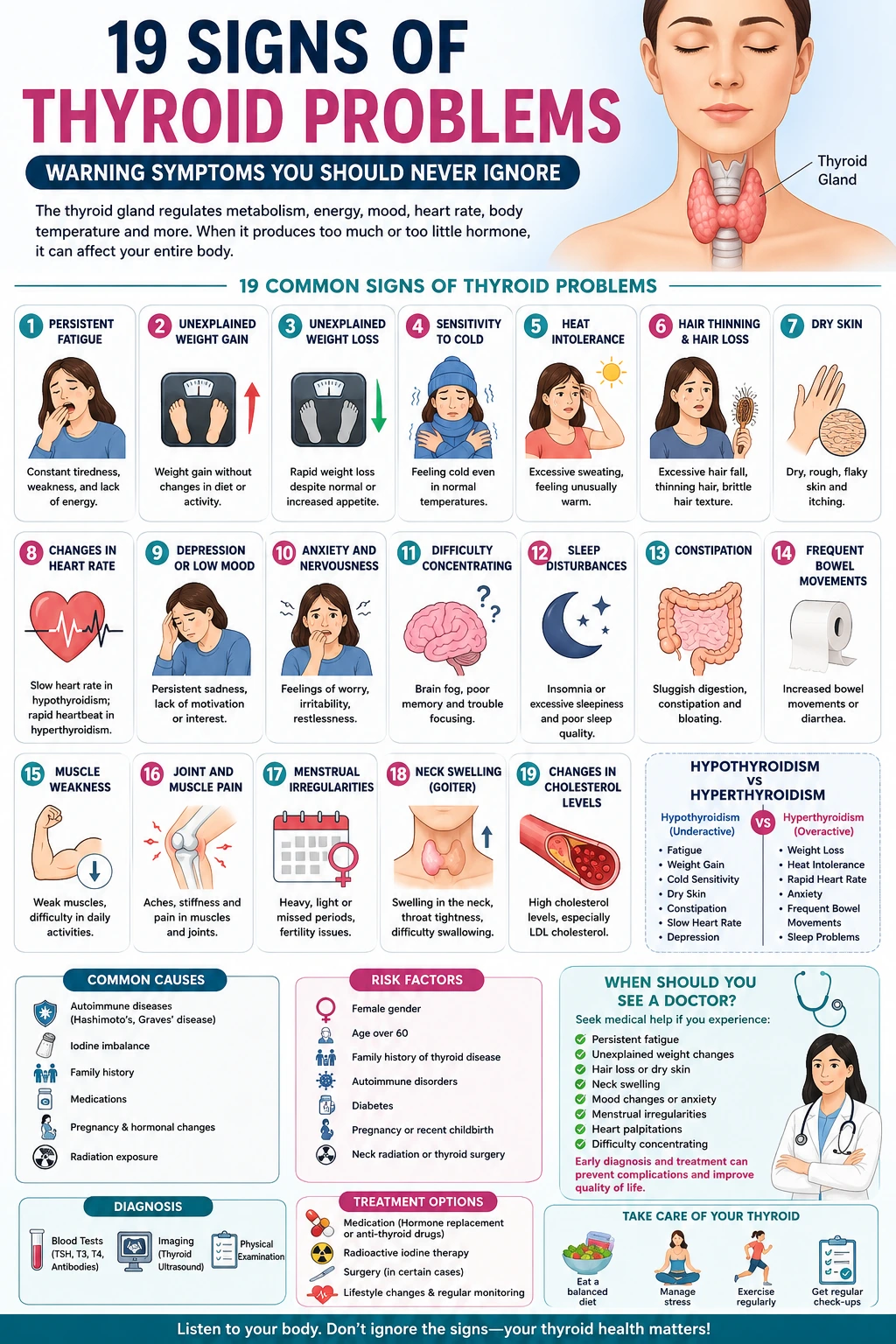
19 Signs of Thyroid Problems: Warning Symptoms You Should Never Ignore
The thyroid gland may be small, but it plays a vital role in regulating many essential functions in the body. Located at the base of the neck, this butterfly-shaped gland produces hormones that influence metabolism, energy levels, heart rate, body temperature, digestion, and even mood.
When the thyroid gland produces too much or too little hormone, it can lead to a wide range of symptoms that affect daily life and overall health. Unfortunately, thyroid disorders often develop gradually, making them difficult to recognize in the early stages.
Understanding the 19 signs of thyroid problems can help you identify potential thyroid dysfunction and seek timely medical care before complications develop.
In this comprehensive guide, we’ll explore the most common thyroid symptoms, causes, risk factors, diagnostic tests, treatment options, and when you should consult a healthcare professional.
What Is the Thyroid Gland?
The thyroid gland is part of the endocrine system and produces two primary hormones:
- Thyroxine (T4)
- Triiodothyronine (T3)
These hormones regulate:
- Metabolism
- Energy production
- Heart function
- Body temperature
- Muscle strength
- Brain function
The pituitary gland controls thyroid hormone production through thyroid-stimulating hormone (TSH).
When this delicate balance is disrupted, thyroid disorders can occur.
Common Types of Thyroid Disorders
Before discussing the 19 signs of thyroid problems, it’s important to understand the major thyroid conditions.
Hypothyroidism
Hypothyroidism occurs when the thyroid gland produces insufficient hormones.
Common causes include:
- Hashimoto’s thyroiditis
- Thyroid surgery
- Radiation therapy
- Iodine deficiency
Hyperthyroidism
Hyperthyroidism occurs when the thyroid gland produces excessive hormones.
Common causes include:
- Graves’ disease
- Thyroid nodules
- Thyroid inflammation
Each condition produces a different set of symptoms, though some may overlap.
19 Signs of Thyroid Problems
1. Persistent Fatigue
One of the earliest and most common thyroid symptoms is ongoing fatigue.
People with thyroid disorders may feel:
- Constantly tired
- Weak throughout the day
- Exhausted despite adequate sleep
Fatigue is particularly common in hypothyroidism.
2. Unexplained Weight Gain
Sudden or gradual weight gain without changes in diet or activity levels can indicate an underactive thyroid.
Reduced thyroid hormone levels slow metabolism, causing:
- Weight gain
- Difficulty losing weight
- Fluid retention
3. Unexplained Weight Loss
Conversely, hyperthyroidism often speeds up metabolism.
This can result in:
- Rapid weight loss
- Increased appetite
- Muscle wasting
Unexpected weight changes are among the key signs of thyroid dysfunction.
4. Sensitivity to Cold
People with hypothyroidism frequently feel cold even when others are comfortable.
Symptoms may include:
- Cold hands and feet
- Difficulty tolerating winter temperatures
- Frequent chills
5. Heat Intolerance
Individuals with hyperthyroidism often experience:
- Excessive sweating
- Feeling unusually warm
- Difficulty tolerating hot weather
This occurs because excess thyroid hormone increases metabolic activity.
6. Hair Thinning and Hair Loss
Hair changes are common among those with thyroid disorders.
Symptoms include:
- Excessive hair shedding
- Thinning scalp hair
- Brittle hair texture
- Sparse eyebrows
Thyroid hormone is essential for healthy hair growth.
7. Dry Skin
Hypothyroidism can reduce skin cell turnover, leading to:
- Dry skin
- Rough patches
- Flaky skin
- Itching
Persistent dry skin may warrant thyroid evaluation.
8. Changes in Heart Rate
Thyroid hormones directly affect heart function.
Hypothyroidism
May cause:
- Slow heart rate
- Reduced exercise tolerance
Hyperthyroidism
May cause:
- Rapid heartbeat
- Palpitations
- Irregular heart rhythms
9. Depression or Low Mood
Mental health changes are frequently overlooked among the 19 signs of thyroid problems.
Hypothyroidism can contribute to:
- Depression
- Lack of motivation
- Emotional numbness
Many patients experience significant improvement after treatment.
10. Anxiety and Nervousness
Hyperthyroidism often causes:
- Anxiety
- Irritability
- Restlessness
- Panic-like symptoms
These psychological symptoms may mimic anxiety disorders.
11. Difficulty Concentrating
Many patients report:
- Brain fog
- Memory problems
- Poor concentration
- Mental sluggishness
Cognitive symptoms can significantly affect work and daily activities.
12. Sleep Disturbances
Thyroid disorders can interfere with healthy sleep.
Hypothyroidism
May cause:
- Excessive sleepiness
- Increased need for sleep
Hyperthyroidism
May cause:
- Insomnia
- Frequent nighttime awakenings
- Restlessness
13. Constipation
Slow metabolism affects digestive function.
Hypothyroidism commonly causes:
- Constipation
- Bloating
- Sluggish digestion
Persistent constipation may indicate an underlying thyroid issue.
14. Frequent Bowel Movements
Hyperthyroidism can accelerate digestion.
Symptoms include:
- Frequent bowel movements
- Diarrhea
- Abdominal discomfort
Digestive changes often accompany other thyroid symptoms.
15. Muscle Weakness
Thyroid disorders can impact muscle health.
Patients may notice:
- Difficulty climbing stairs
- Reduced strength
- Muscle fatigue
- Weak grip strength
These symptoms often improve with treatment.
16. Joint and Muscle Pain
Many individuals experience:
- Muscle aches
- Joint stiffnessx
- Generalized body pain
These symptoms can resemble arthritis or other musculoskeletal conditions.
17. Menstrual Irregularities
Women with thyroid disorders may experience:
- Heavy periods
- Light periods
- Missed periods
- Fertility challenges
Thyroid hormones play a significant role in reproductive health.
18. Swelling in the Neck (Goiter)
An enlarged thyroid gland may cause:
- Visible neck swelling
- Throat tightness
- Difficulty swallowing
- Hoarseness
A goiter can occur in both hypothyroidism and hyperthyroidism.
19. Changes in Cholesterol Levels
Hypothyroidism often increases cholesterol levels.
This can lead to:
- Elevated LDL cholesterol
- Increased cardiovascular risk
- Poor response to cholesterol medications
Sometimes abnormal cholesterol is the first clue of thyroid disease.
Summary Table: 19 Signs of Thyroid Problems
| Sign | Common in Hypothyroidism | Common in Hyperthyroidism |
| Fatigue | ✓ | ✓ |
| Weight Gain | ✓ | ✗ |
| Weight Loss | ✗ | ✓ |
| Cold Sensitivity | ✓ | ✗ |
| Heat Intolerance | ✗ | ✓ |
| Hair Loss | ✓ | ✓ |
| Dry Skin | ✓ | Less Common |
| Slow Heart Rate | ✓ | ✗ |
| Rapid Heart Rate | ✗ | ✓ |
| Depression | ✓ | Less Common |
| Anxiety | Less Common | ✓ |
| Brain Fog | ✓ | ✓ |
| Sleep Problems | ✓ | ✓ |
| Constipation | ✓ | ✗ |
| Frequent Bowel Movements | ✗ | ✓ |
| Muscle Weakness | ✓ | ✓ |
| Joint Pain | ✓ | Sometimes |
| Menstrual Changes | ✓ | ✓ |
| Goiter | ✓ | ✓ |
What Causes Thyroid Problems?
Several factors can contribute to thyroid dysfunction.
Autoimmune Diseases
The most common cause includes:
- Hashimoto’s thyroiditis
- Graves’ disease
Iodine Imbalance
Both iodine deficiency and excess iodine intake can affect thyroid function.
Family History
Genetics play an important role in thyroid disease risk.
Medications
Certain medications may impact thyroid hormone production.
Pregnancy
Hormonal changes during pregnancy can affect thyroid health.
Who Is at Higher Risk?
You may be at increased risk if you:
- Are female
- Are over 60 years old
- Have a family history of thyroid disease
- Have an autoimmune disorder
- Have undergone neck radiation
- Have diabetes
- Are pregnant or recently gave birth
Regular screening may be beneficial for high-risk individuals.
How Are Thyroid Problems Diagnosed?
Doctors use several tests to diagnose thyroid disorders.
Blood Tests
| Test | Purpose |
| TSH | Primary thyroid screening test |
| Free T4 | Measures thyroid hormone levels |
| Free T3 | Assesses active thyroid hormone |
| Thyroid Antibodies | Detect autoimmune thyroid disease |
Imaging Tests
Additional evaluation may include:
- Thyroid ultrasound
- Radioactive iodine uptake scan
- Thyroid biopsy (if nodules are present)
Treatment Options for Thyroid Disorders
Treatment depends on the underlying condition.
Hypothyroidism Treatment
Most patients require:
- Levothyroxine replacement therapy
- Regular monitoring
- Dose adjustments as needed
Hyperthyroidism Treatment
Options include:
- Anti-thyroid medications
- Radioactive iodine therapy
- Thyroid surgery
- Beta-blockers for symptom control
Early treatment helps prevent long-term complications.
When Should You See a Doctor?
Consult a healthcare professional if you experience:
- Persistent fatigue
- Unexplained weight changes
- Hair loss
- Neck swelling
- Mood changes
- Menstrual irregularities
- Heart palpitations
- Difficulty concentrating
Prompt diagnosis can significantly improve outcomes.
Why Choose Horizon Naupada Hospital for Thyroid Care?
At Horizon Naupada Hospital, our experienced endocrinologists and physicians provide comprehensive evaluation and treatment for thyroid disorders. Using advanced diagnostic testing and personalized treatment plans, we help patients achieve optimal thyroid health and improve their quality of life.
Our multidisciplinary approach ensures accurate diagnosis, effective treatment, and long-term monitoring for thyroid conditions.
Frequently Asked Questions (FAQs)
What are the first signs of thyroid problems?
Fatigue, weight changes, hair loss, mood changes, and sensitivity to temperature are often among the earliest symptoms.
Can thyroid problems cause anxiety?
Yes. Hyperthyroidism frequently causes anxiety, nervousness, irritability, and restlessness.
Does thyroid disease cause hair loss?
Yes. Both hypothyroidism and hyperthyroidism can contribute to hair thinning and excessive hair shedding.
Can thyroid disorders affect fertility?
Yes. Untreated thyroid conditions can interfere with ovulation and menstrual cycles, affecting fertility.
Are thyroid problems curable?
Many thyroid disorders can be effectively managed with medication, lifestyle changes, or other treatments, allowing patients to live healthy lives.
Conclusion
Recognizing the 19 signs of thyroid problems is essential for early diagnosis and effective treatment. Because thyroid disorders can affect nearly every organ system, symptoms may be subtle and easily overlooked. Persistent fatigue, weight changes, mood disturbances, hair loss, digestive issues, and heart-related symptoms should never be ignored.
If you notice several of these symptoms, consulting a healthcare professional for thyroid testing can help identify underlying issues and prevent complications. With proper treatment and ongoing care, most thyroid disorders can be effectively managed, allowing patients to lead healthy and active lives.
Contact Details:
Address: Malati Mohan Bunglow, Telephone Exchange, Mahatma Gandhi Rd, opp. Naupada, Naupada, Thane West, Mumbai, Thane, Maharashtra 400602
Phone: 022 6124 2400
Website: horizonnaupada.com