What Causes Kidney Stones? Symptoms, Treatment, and Prevention
Kidney stones are one of the most common urinary tract problems affecting people of all age groups. They can cause severe pain, discomfort, and complications if left untreated. Understanding what causes kidney stones is essential for preventing recurrence and protecting long-term kidney health.
Kidney stones are hard deposits made of minerals and salts that form inside the kidneys. These stones develop when substances in the urine become concentrated and crystallize. While some stones are small enough to pass naturally, larger stones may require medical treatment or surgery.
At Horizon Hospital Naupada, patients receive comprehensive evaluation and advanced treatment for kidney stones with a focus on early diagnosis, pain relief, and long-term prevention.
What Are Kidney Stones?
Kidney stones, also called renal calculi or nephrolithiasis, are solid crystal-like masses that form in the kidneys due to the accumulation of minerals and waste products in urine.
These stones can vary in:
- Size
- Shape
- Composition
- Severity
Some kidney stones remain inside the kidneys without causing symptoms, while others travel through the urinary tract and cause intense pain.
What Causes Kidney Stones?
Many people ask, “What causes kidney stones?” The answer is usually a combination of dietary habits, lifestyle factors, medical conditions, and genetics.
Below are the major causes of kidney stones.
1. Dehydration
Dehydration is one of the leading causes of kidney stones. When the body does not get enough water, urine becomes concentrated. This allows minerals and salts to stick together and form crystals.
Common reasons for dehydration include:
- Drinking insufficient water
- Excessive sweating
- Hot weather conditions
- Heavy exercise without adequate fluid intake
- Frequent diarrhea or vomiting
People living in hot and humid climates are often at higher risk.
2. High Salt Intake
A diet rich in sodium increases calcium levels in urine, which significantly raises the risk of calcium stone formation.
Foods high in sodium include:
- Processed foods
- Chips and snacks
- Fast food
- Pickles
- Packaged soups
- Processed meats
Reducing salt intake is one of the most effective preventive strategies.
3. Excess Animal Protein
Consuming excessive amounts of animal protein can increase uric acid levels and reduce citrate in urine, promoting stone formation.
Foods that may contribute include:
- Red meat
- Organ meats
- Shellfish
- Chicken
- Eggs
High-protein diets can especially increase the risk of uric acid stones.
4. Oxalate-Rich Foods
Certain foods contain oxalates, which can bind with calcium and form calcium oxalate stones, the most common type of kidney stone.
Oxalate-rich foods include:
- Spinach
- Beetroot
- Nuts
- Chocolate
- Tea
- Soy products
- Sweet potatoes
This does not mean these foods should be completely avoided, but moderation is important.
5. Obesity and Sedentary Lifestyle
Being overweight can alter the acid balance in urine, increasing the risk of stone formation. Obesity is strongly associated with kidney stones.
Lack of physical activity may also contribute to:
- Poor metabolism
- Dehydration
- Increased calcium excretion
6. Family History and Genetics
If a close family member has had kidney stones, your risk becomes higher. Certain inherited disorders can also increase the likelihood of recurrent stones.
Genetic conditions linked to stones include:
- Cystinuria
- Hyperoxaluria
- Renal tubular acidosis
7. Certain Medical Conditions
Several health conditions can increase the risk of kidney stones.
These include:
- Diabetes
- Gout
- Hyperparathyroidism
- Urinary tract infections
- Digestive disorders
- Inflammatory bowel disease
Repeated urinary infections can especially lead to struvite stones.
8. Certain Medications and Supplements
Some medicines and supplements may increase stone formation.
These include:
- Excess vitamin C supplements
- Calcium-based antacids
- Certain diuretics
- Migraine medications
- Laxative overuse
Always take supplements only under medical guidance.
Types of Kidney Stones
Understanding the type of stone helps determine the underlying cause and treatment plan.
| Type of Kidney Stone | Main Cause | Common Risk Factors |
| Calcium Stones | Calcium oxalate buildup | High sodium diet, dehydration |
| Uric Acid Stones | Excess uric acid | High protein diet, gout |
| Struvite Stones | Urinary infections | Recurrent UTIs |
| Cystine Stones | Genetic disorder | Family history |
Symptoms of Kidney Stones
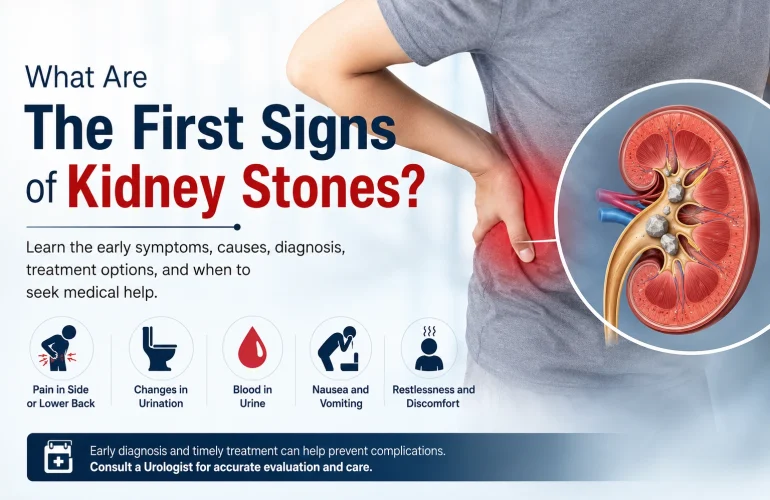
Kidney stones may not cause symptoms initially. Pain usually begins when the stone moves into the ureter and blocks urine flow.
Common Symptoms Include:
Severe Pain
- Sharp pain in the back or side
- Pain radiating to the lower abdomen or groin
- Pain occurring in waves
Urinary Symptoms
- Burning sensation during urination
- Frequent urge to urinate
- Difficulty passing urine
- Blood in urine
Other Symptoms
- Nausea and vomiting
- Fever and chills
- Cloudy or foul-smelling urine
When Should You See a Doctor?
Seek immediate medical attention if you experience:
- Severe unbearable pain
- Fever with urinary symptoms
- Persistent vomiting
- Difficulty urinating
- Blood in urine
- Reduced urine output
These symptoms may indicate obstruction or infection and require urgent treatment.
How Are Kidney Stones Diagnosed?
Doctors use several diagnostic methods to confirm kidney stones and assess their size and location.
Diagnostic Tests Include:
Imaging Tests
- Ultrasound
- CT scan
- X-ray
Laboratory Tests
- Urine analysis
- Blood tests
- Stone analysis
A CT scan is often considered highly accurate for detecting kidney stones.
Treatment for Kidney Stones
Treatment depends on:
- Stone size
- Location
- Type
- Severity of symptoms
1. Conservative Treatment for Small Stones
Small stones often pass naturally with supportive care.
Treatment may include:
- Increased water intake
- Pain relief medications
- Alpha-blockers to relax the ureter
2. Shock Wave Lithotripsy (ESWL)
This non-invasive treatment uses sound waves to break stones into smaller fragments that can pass through urine.
Recommended for:
- Medium-sized stones
- Stones located in the kidney or upper ureter
3. Ureteroscopy (URS)
A thin scope is inserted through the urinary tract to remove or break stones using laser technology.
Benefits:
- Minimally invasive
- No large incision
- Faster recovery
4. Percutaneous Nephrolithotomy (PCNL)
PCNL is used for large or complex kidney stones.
Involves:
- Small incision in the back
- Direct removal of large stones
This procedure is highly effective for large stone burdens.
How to Prevent Kidney Stones
Preventing kidney stones is extremely important because recurrence is common.
Drink Plenty of Water
Hydration is the most effective preventive measure. Drinking enough fluids helps dilute urine and reduce crystal formation.
Tips:
- Drink 2.5–3 liters of water daily
- Increase fluid intake during summer
- Aim for clear or pale-yellow urine
Reduce Salt Intake
Limiting sodium helps decrease calcium buildup in urine.
Avoid:
- Processed foods
- Fast food
- Packaged snacks
Eat a Balanced Diet
A healthy diet can significantly reduce stone risk.
Include:
- Fruits and vegetables
- Adequate dietary calcium
- Whole grains
Limit:
- Excess sugar
- Red meat
- Oxalate-rich foods in excess
Maintain Healthy Weight
Regular exercise and weight control help improve metabolism and reduce stone risk.
Take Medicines as Prescribed
Some patients with recurrent stones may require medications like:
- Potassium citrate
- Thiazide diuretics
- Allopurinol
These medicines help prevent stone recurrence.
Can Kidney Stones Be Prevented Completely?
Not all kidney stones can be prevented, especially when genetic factors are involved. However, lifestyle modifications and early medical intervention can greatly reduce recurrence risk.
People who have already had one kidney stone are more likely to develop another, making preventive care extremely important.
Why Choose Horizon Hospital Naupada for Kidney Stone Treatment?
Horizon Hospital Naupada offers comprehensive kidney stone management with advanced diagnostic and treatment facilities.
Patients benefit from:
- Experienced urology specialists
- Advanced imaging technology
- Minimally invasive stone removal procedures
- Personalized treatment plans
- Focus on prevention and long-term kidney health
The hospital provides patient-centered care with a commitment to accurate diagnosis, effective treatment, and faster recovery.
Conclusion
Understanding what causes kidney stones is the first step toward prevention and timely treatment. Dehydration, unhealthy dietary habits, obesity, medical conditions, and genetics all contribute to stone formation.
Early diagnosis and proper treatment can prevent serious complications and preserve kidney function. Making simple lifestyle changes such as drinking more water, reducing salt intake, and maintaining a healthy diet can significantly reduce the risk of recurrence.
If you experience symptoms of kidney stones, seeking prompt medical care is essential for accurate diagnosis and effective treatment.