
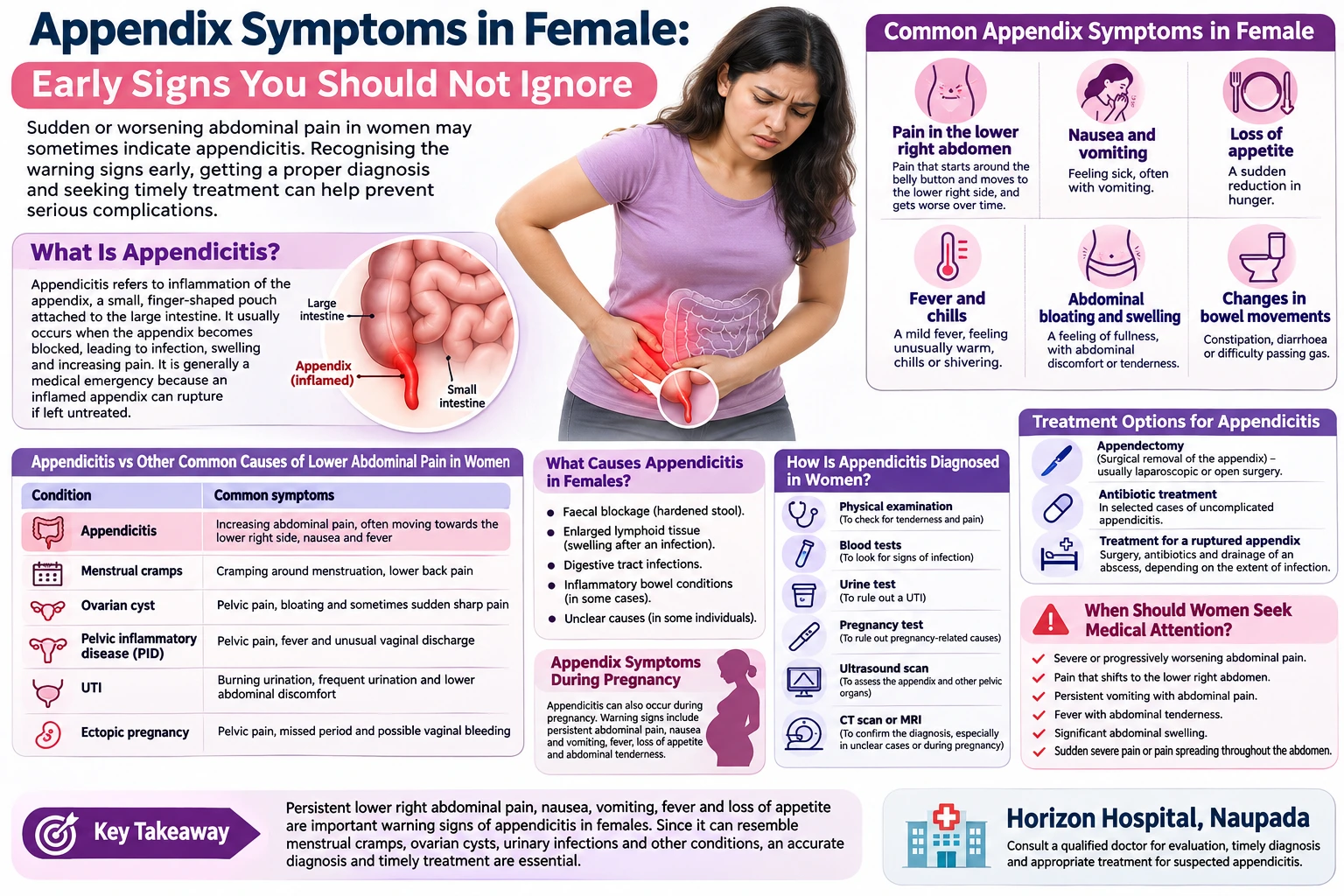
Appendix Symptoms in Female: Early Signs You Should Not Ignore
Abdominal pain is a common health concern among women and can occur due to several reasons, including menstrual cramps, digestive problems, urinary tract infections and gynaecological conditions. However, sudden or worsening abdominal pain may sometimes indicate a more serious condition, such as appendicitis.
Understanding appendix symptoms in female is important because appendicitis can sometimes be difficult to identify in women. Its symptoms may resemble those of ovarian cysts, pelvic inflammatory disease, urinary infections or other reproductive health conditions. Recognising the warning signs and seeking timely medical attention can help prevent complications.
Appendicitis refers to inflammation of the appendix, a small, finger-shaped pouch attached to the large intestine. It is generally considered a medical emergency because an inflamed appendix can rupture if left untreated.
In this blog, we explain the common symptoms of appendicitis in females, its causes, diagnosis, treatment options and when to seek medical care.
What Is Appendicitis?
The appendix is a small, narrow pouch located in the lower right side of the abdomen, where the small and large intestines meet. Although it is not essential for survival, it may have a role in supporting immune function and maintaining healthy gut bacteria.
Appendicitis occurs when the appendix becomes inflamed, usually because its opening becomes blocked. This blockage can cause bacteria to multiply, resulting in swelling, infection and increasing pressure inside the appendix.
If appendicitis is not treated promptly, the appendix may rupture, allowing infected material to spread into the abdominal cavity. This can cause serious complications, including peritonitis and an abscess.
Appendicitis can affect people of any sex and age, but recognising its symptoms in women is particularly important because abdominal and pelvic conditions can produce similar discomfort.
Common Appendix Symptoms in Female
The symptoms of appendicitis can develop over several hours and may become progressively worse. While the presentation varies between individuals, certain warning signs are commonly experienced.
1. Pain in the Lower Right Abdomen
Abdominal pain is one of the most recognised symptoms of appendicitis.
Initially, the discomfort may begin around the belly button and gradually move towards the lower right side of the abdomen. The pain may become sharper, more persistent and increasingly uncomfortable.
Women may experience:
- Pain concentrated in the lower right abdomen.
- Discomfort that gradually increases in intensity.
- Pain while walking, coughing, sneezing or moving.
- Tenderness when the affected area is touched.
- Difficulty standing or walking comfortably because of pain.
2. Nausea and Vomiting
Nausea is another common symptom of appendicitis. It may develop after abdominal pain begins and can sometimes be accompanied by vomiting.
Persistent nausea or vomiting along with worsening abdominal pain should not be ignored, as it may indicate inflammation or infection.
3. Loss of Appetite
Women experiencing appendicitis may notice a sudden reduction in appetite. Even when they have not eaten for several hours, they may not feel hungry.
Loss of appetite may occur alongside nausea, abdominal discomfort and digestive changes.
4. Fever and Chills
A mild fever may develop as the body responds to inflammation and infection.
Other associated symptoms may include:
- Feeling unusually warm.
- Chills or shivering.
- General weakness.
- Fatigue and discomfort.
A higher fever, particularly with worsening abdominal pain, requires urgent medical assessment.
5. Abdominal Bloating and Swelling
Some women may experience abdominal bloating, swelling or a feeling of fullness.
The abdomen may feel uncomfortable or tender, and passing gas may become difficult. These symptoms can occur due to inflammation and changes in normal bowel function.
6. Changes in Bowel Movements
Appendicitis may also affect digestive activity. Some women experience constipation, diarrhoea or difficulty passing gas.
However, bowel changes alone do not confirm appendicitis. They should be considered alongside other symptoms, especially abdominal pain.
Appendix Symptoms in Female: How Are They Different from Menstrual or Pelvic Pain?
One of the challenges in identifying appendicitis in women is that its symptoms can resemble several gynaecological conditions.
For example, pain in the lower abdomen may also occur due to:
- Menstrual cramps: Usually occur around menstruation and may affect the lower abdomen, back and thighs.
- Ovarian cysts: May cause pelvic pain, bloating or sudden discomfort if a cyst ruptures.
- Pelvic inflammatory disease (PID): An infection of the female reproductive organs that may cause lower abdominal pain, fever and unusual vaginal discharge.
- Ectopic pregnancy: A pregnancy that develops outside the uterus, commonly in a fallopian tube, and may cause abdominal pain and vaginal bleeding.
- Urinary tract infections (UTIs): May cause lower abdominal discomfort, frequent urination and burning while passing urine.
| Condition | Common symptoms |
| Appendicitis | Increasing abdominal pain, often moving towards the lower right side, nausea and fever |
| Menstrual cramps | Cramping around menstruation, lower back pain |
| Ovarian cyst | Pelvic pain, bloating and sometimes sudden sharp pain |
| Pelvic inflammatory disease | Pelvic pain, fever and unusual vaginal discharge |
| UTI | Burning urination, frequent urination and lower abdominal discomfort |
| Ectopic pregnancy | Pelvic pain, missed period and possible vaginal bleeding |
These conditions cannot always be distinguished through symptoms alone. Medical examination and appropriate investigations are necessary to identify the underlying cause.
What Causes Appendicitis in Females?
Appendicitis is generally caused by a blockage inside the appendix, which leads to inflammation and bacterial infection.
Possible causes and contributing factors include:
- Faecal blockage: Hardened stool can obstruct the opening of the appendix.
- Enlarged lymphoid tissue: Tissue in the appendix wall may become swollen following an infection.
- Digestive tract infections: Certain infections can contribute to inflammation and blockage.
- Inflammatory bowel conditions: Conditions affecting the digestive tract may sometimes be associated with appendiceal inflammation.
- Unclear causes: In some cases, the exact reason for appendicitis cannot be identified.
Appendicitis is not exclusive to women and is not generally caused by menstruation, pregnancy or routine dietary changes.
Appendix Symptoms During Pregnancy
Appendicitis can also develop during pregnancy and requires prompt medical attention.
Identifying appendicitis during pregnancy may be challenging because pregnancy itself can cause nausea, vomiting, constipation and abdominal discomfort. Additionally, as the uterus grows, the position of abdominal organs may change, and the location of pain may not always follow the typical pattern.
Warning signs may include:
- Persistent or worsening abdominal pain.
- Nausea and vomiting beyond usual pregnancy-related symptoms.
- Fever or chills.
- Loss of appetite.
- Abdominal tenderness.
If appendicitis is suspected during pregnancy, doctors may recommend an ultrasound or MRI to assess the appendix. The choice of investigation depends on the clinical situation.
Timely diagnosis and appropriate treatment are important to protect both maternal and foetal health.
How Is Appendicitis Diagnosed in Women?
Diagnosing appendicitis involves evaluating symptoms, conducting a physical examination and performing appropriate tests. Since several abdominal and reproductive conditions can produce similar symptoms, doctors may use multiple investigations.
1. Physical Examination
The doctor checks the abdomen for tenderness, swelling and pain, particularly in the lower right area. They may also assess whether movement or pressure increases discomfort.
2. Blood Tests
A complete blood count (CBC) may help identify an increased white blood cell count, which can indicate infection or inflammation. Other inflammatory markers may also be checked.
3. Urine Test
A urine examination helps identify urinary tract infections and kidney-related conditions that may cause similar symptoms.
4. Pregnancy Test
For women of reproductive age, a pregnancy test may be recommended to rule out pregnancy-related complications, including ectopic pregnancy.
5. Ultrasound Scan
An abdominal or pelvic ultrasound may help identify an enlarged appendix and assess other possible causes of abdominal pain, including ovarian conditions.
6. CT Scan or MRI
A CT scan provides detailed images of the abdomen and can help confirm appendicitis. MRI may be considered when radiation exposure needs to be avoided, particularly during pregnancy.
The doctor selects the appropriate tests based on symptoms, examination findings and individual medical circumstances.
Treatment Options for Appendicitis
Treatment depends on the severity of inflammation, whether the appendix has ruptured and the patient’s overall health.
1. Appendectomy (Surgical Removal of the Appendix)
Surgery to remove the appendix, known as an appendectomy, is the standard treatment for most cases of appendicitis.
It is performed under general anaesthesia and can be carried out using two approaches:
- Laparoscopic appendectomy: The surgeon makes a few small incisions and uses a camera and specialised instruments to remove the appendix.
- Open appendectomy: A larger incision is made in the lower right abdomen to access and remove the appendix. This approach may be necessary in certain complicated cases.
2. Antibiotic Treatment
In selected cases of uncomplicated appendicitis, doctors may consider antibiotics without immediate surgery. However, this approach is not suitable for everyone, and appendicitis can recur.
3. Treatment for a Ruptured Appendix
If the appendix ruptures, treatment may involve surgery, antibiotics and drainage of an abscess, depending on the extent of infection.
The treatment plan is determined by the surgeon after evaluating the patient’s condition.
When Should Women Seek Medical Attention?
Women should seek immediate medical evaluation if they experience:
- Severe or progressively worsening abdominal pain.
- Pain that shifts towards the lower right abdomen.
- Persistent vomiting accompanied by abdominal pain.
- Fever with abdominal tenderness.
- Significant abdominal swelling.
- Sudden severe abdominal pain or pain spreading throughout the abdomen.
A ruptured appendix can cause peritonitis, an abscess or sepsis, which may become life-threatening without treatment.
Do not wait for all symptoms to appear before seeking medical help. If appendicitis is suspected, visit a hospital emergency department promptly. Avoid trying to diagnose or treat the condition at home.
Recovery After Appendix Surgery
Recovery after an appendectomy depends on the surgical approach, the severity of the infection and the patient’s overall health.
Most patients recover well after surgery with appropriate medical care.
Some general recovery recommendations include:
- Follow the surgeon’s instructions regarding medication and wound care.
- Avoid strenuous exercise and heavy lifting until medically cleared.
- Maintain adequate hydration.
- Follow the recommended diet during recovery.
- Attend follow-up appointments.
- Report fever, increasing abdominal pain, wound redness or discharge to the treating doctor.
Patients undergoing laparoscopic surgery generally recover faster than those requiring open surgery. However, recovery timelines vary from person to person.
Frequently Asked Questions (FAQs)
1. What are the first symptoms of appendicitis in females?
The first symptoms commonly include abdominal pain around the belly button, followed by pain that moves towards the lower right abdomen. Nausea, vomiting, loss of appetite and mild fever may also occur.
2. Where is appendix pain located in females?
Appendix pain typically occurs in the lower right side of the abdomen. However, it may initially begin around the belly button before shifting to the lower right side. The location can vary in some individuals, particularly during pregnancy.
3. Can appendix pain be confused with period pain?
Yes. Appendicitis and menstrual cramps can both cause lower abdominal pain. However, appendicitis pain generally becomes progressively worse and may be accompanied by nausea, vomiting, fever and loss of appetite. Medical evaluation is important to distinguish between them.
4. How long can appendicitis symptoms last?
Appendicitis symptoms can develop over several hours and worsen quickly. The condition should not be left untreated while waiting for symptoms to resolve, as the appendix may rupture and cause serious complications.
5. Can appendicitis be treated without surgery?
Some selected cases of uncomplicated appendicitis may be treated with antibiotics alone. However, surgery remains the standard treatment for most cases. The appropriate option depends on the patient’s condition and the surgeon’s assessment.
6. Is appendicitis dangerous during pregnancy?
Yes. Untreated appendicitis during pregnancy can lead to serious complications for both the mother and baby. Persistent or worsening abdominal pain during pregnancy requires prompt medical evaluation.
Conclusion
Recognising appendix symptoms in female is important for identifying appendicitis before it progresses into a serious medical emergency. Persistent lower right abdominal pain, nausea, vomiting, fever and loss of appetite are important warning signs that should not be ignored.
Since appendicitis can resemble menstrual cramps, ovarian cysts, urinary infections and other gynaecological conditions, an accurate diagnosis is essential. Timely medical attention and appropriate treatment can help prevent complications and support a smooth recovery.
At Horizon Hospital, Naupada, patients can seek medical evaluation for abdominal pain and suspected appendicitis. Consulting a qualified doctor when symptoms appear can help ensure timely diagnosis and appropriate treatment.
Contact Details:
Address: Malati Mohan Bunglow, Telephone Exchange, Mahatma Gandhi Rd, opp. Naupada, Naupada, Thane West, Mumbai, Thane, Maharashtra 400602
Phone: 022 6124 2400
Website: horizonnaupada.com