
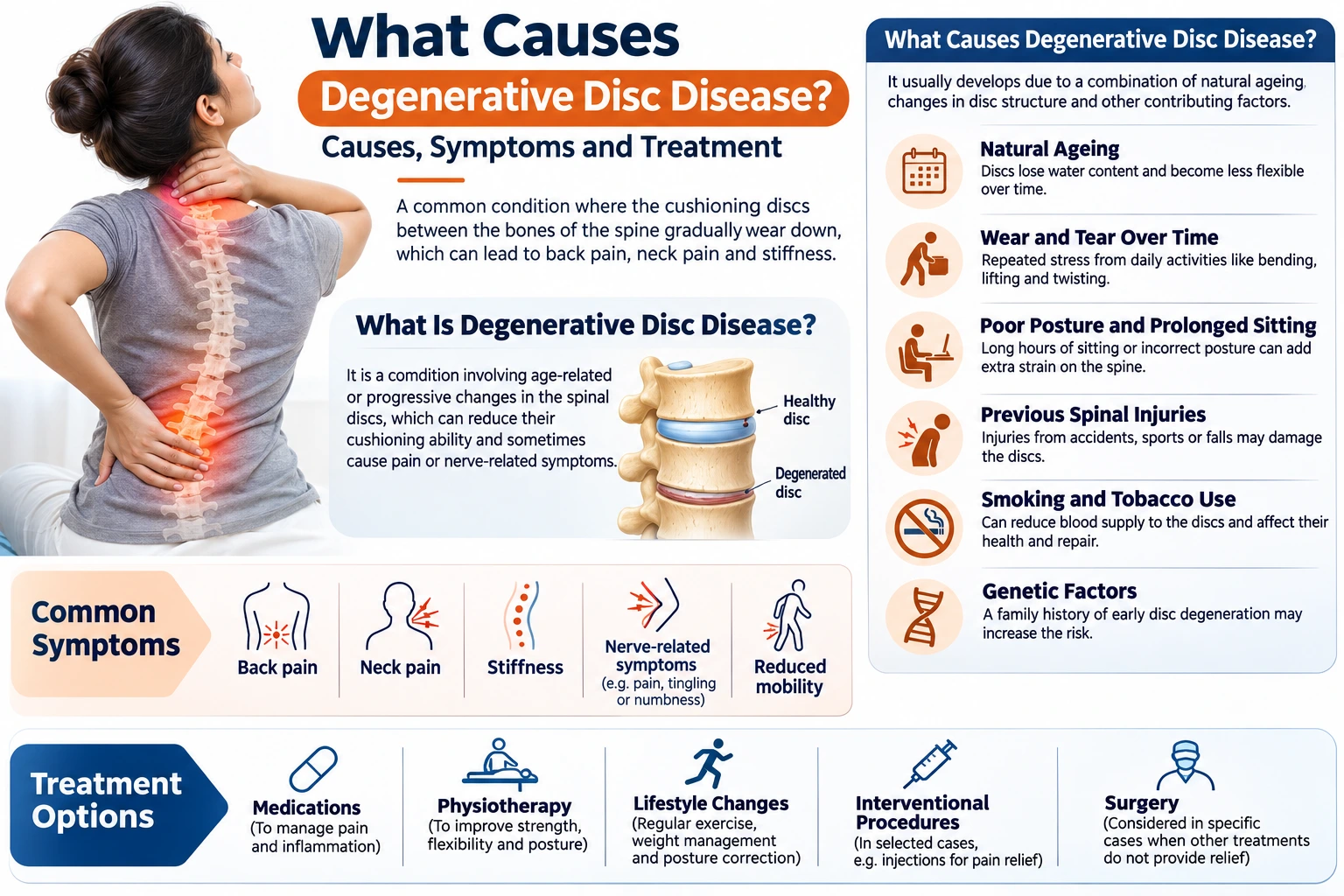
What Causes Degenerative Disc Disease? Causes, Symptoms and Treatment
Back pain and neck pain are common health concerns that can affect people of different age groups. While these problems are often associated with muscle strain, poor posture or injuries, they can sometimes develop due to changes in the spinal discs. One such condition is degenerative disc disease, which occurs when the cushioning discs between the bones of the spine gradually wear down.
Understanding what causes degenerative disc disease is important because early identification of contributing factors can help people take steps to protect their spinal health and manage discomfort.
Despite its name, degenerative disc disease is not actually a disease in the traditional sense. It is a condition involving age-related or progressive changes in the spinal discs. These changes may cause back pain, neck pain, stiffness and, in some cases, nerve-related symptoms.
In this blog, we discuss the causes of degenerative disc disease, common risk factors, symptoms, diagnostic methods and available treatment options.
What Is Degenerative Disc Disease?
The spine consists of a series of bones called vertebrae, which are separated by soft, flexible structures known as intervertebral discs. These discs act as cushions between the vertebrae and help the spine absorb pressure during everyday activities.
Each spinal disc has two main components:
- Nucleus pulposus: The soft, gel-like centre that helps absorb pressure and distribute loads.
- Annulus fibrosus: The tough outer layer that surrounds and protects the inner portion of the disc.
Healthy discs allow the spine to bend, twist and move comfortably. However, as people age, these discs gradually lose water content, flexibility and some of their ability to absorb pressure.
This process can lead to disc thinning, small tears and reduced cushioning between the vertebrae. In some individuals, these changes cause pain and inflammation, while others may have disc degeneration without experiencing noticeable symptoms.
Degenerative disc changes commonly affect the lumbar spine (lower back) and cervical spine (neck).
What Causes Degenerative Disc Disease?
Degenerative disc disease usually develops due to a combination of natural ageing, changes in disc structure and other contributing factors. Although ageing is the most common factor, certain lifestyle habits and physical conditions may increase the likelihood of developing symptoms.
1. Natural Ageing
Ageing is one of the primary causes of degenerative disc disease.
As the body ages, spinal discs gradually lose water content, making them less flexible and less effective at absorbing pressure. The outer layer may also become weaker and develop small cracks or tears.
These changes can lead to:
- Reduced disc height.
- Loss of flexibility.
- Increased friction between vertebrae.
- Reduced shock absorption.
- Greater susceptibility to disc damage.
Disc degeneration is a natural part of ageing, but its severity and symptoms vary from person to person.
2. Wear and Tear Over Time
The spine supports the weight of the upper body and experiences repeated pressure during everyday activities such as walking, bending, lifting and sitting.
Over time, repeated mechanical stress may contribute to changes in the spinal discs.
Activities involving frequent bending, twisting or lifting heavy objects can place additional stress on the spine, particularly when performed with improper techniques.
Although everyday movement does not automatically cause disc degeneration, repeated excessive loading may contribute to disc damage in some individuals.
3. Poor Posture and Prolonged Sitting
Maintaining an incorrect posture for extended periods can increase stress on the spine.
People who spend long hours sitting at desks, working on computers or using mobile phones may experience additional strain on their neck and lower back.
Common posture-related habits include:
- Slouching while sitting.
- Bending the neck forward while using a phone.
- Sitting without adequate back support.
- Working continuously without movement breaks.
- Maintaining an incorrect sitting position for long periods.
Poor posture is not a direct or proven cause of degenerative disc disease, but it can contribute to back and neck discomfort and aggravate existing symptoms.
4. Previous Spinal Injuries
Injuries involving the spine may damage the intervertebral discs and increase the risk of developing degenerative changes.
Such injuries may occur due to:
- Road accidents.
- Sports-related injuries.
- Falls.
- Heavy lifting accidents.
- Sudden twisting or bending movements.
A damaged disc may gradually lose its structural strength and become more vulnerable to further degeneration.
5. Smoking and Tobacco Use
Smoking is an important modifiable risk factor associated with spinal disc degeneration.
Nicotine and other harmful substances in tobacco can affect blood circulation and reduce the supply of oxygen and nutrients to spinal tissues.
Since spinal discs receive nutrients through a process involving surrounding blood vessels and the vertebral endplates, reduced nutrient delivery may negatively affect disc health.
Smoking may also interfere with tissue repair and increase the risk of persistent back pain.
6. Genetic Factors
Genetics may influence how quickly spinal discs undergo degenerative changes.
Research suggests that inherited factors can affect disc structure, composition and resistance to mechanical stress.
People with a family history of early disc degeneration may have a higher likelihood of developing similar changes.
However, having a family history does not mean that a person will necessarily develop symptomatic degenerative disc disease.
7. Obesity and Excess Body Weight
Excess body weight can increase the mechanical load placed on the spine, particularly the lumbar region.
Over time, additional pressure may contribute to discomfort and place greater demands on the structures supporting the spine.
Maintaining a healthy body weight, following an appropriate exercise routine and strengthening the muscles that support the spine may help improve overall spinal health.
8. Physically Demanding Occupations
Certain occupations may place repeated stress on the spine and increase the risk of disc-related problems.
People working in construction, transportation, healthcare, manufacturing and other physically demanding jobs may regularly perform activities that put pressure on their spinal structures.
Potential contributing activities include:
- Repeated heavy lifting.
- Frequent bending and twisting.
- Prolonged driving.
- Repetitive physical movements.
- Working in awkward positions for extended periods.
These activities do not necessarily cause disc degeneration, but repeated mechanical stress may contribute to spinal problems over time.
Risk Factors for Degenerative Disc Disease
Apart from the direct causes, several factors may increase a person’s likelihood of developing degenerative disc disease.
| Risk factor | How it affects spinal health |
| Ageing | Discs gradually lose water content and flexibility. |
| Genetics | Inherited factors may influence disc structure and strength. |
| Smoking | May reduce nutrient supply to spinal discs. |
| Obesity | Increases mechanical stress on the spine. |
| Previous injuries | May damage the structure of spinal discs. |
| Physically demanding work | Repeated lifting and bending may increase spinal stress. |
| Sedentary lifestyle | May contribute to reduced muscle strength and poor physical conditioning. |
Having one or more risk factors does not necessarily mean a person will develop painful degenerative disc disease.
What Are the Common Symptoms of Degenerative Disc Disease?
Not everyone with disc degeneration experiences pain. However, when symptoms develop, they may affect daily activities, movement and overall quality of life.
Common symptoms include:
- Persistent back pain: Pain may occur in the lower back and become more noticeable after prolonged sitting, bending or lifting.
- Neck pain: Degeneration in the cervical spine may cause stiffness and discomfort while turning or moving the head.
- Pain that spreads to the arms or legs: If a damaged disc presses against nearby nerves, pain may travel into the arms, buttocks or legs.
- Numbness and tingling: Nerve irritation may cause unusual sensations in the hands, arms, legs or feet.
- Muscle weakness: Nerve compression may affect muscle strength and coordination.
- Reduced flexibility: Some individuals experience stiffness and difficulty bending, twisting or maintaining certain positions.
The severity of symptoms depends on the location and extent of disc degeneration and whether nearby nerves are affected.
How Is Degenerative Disc Disease Diagnosed?
Diagnosing degenerative disc disease involves reviewing the patient’s medical history, evaluating symptoms and conducting a physical examination.
Doctors may recommend the following investigations:
- Physical Examination
The doctor assesses spinal movement, posture, tenderness, muscle strength and flexibility. They may also check reflexes and sensations to identify possible nerve involvement.
- X-ray
An X-ray can help identify reduced space between vertebrae, changes in spinal alignment and bone spurs associated with degeneration.
- MRI Scan
An MRI provides detailed images of spinal discs, nerves and surrounding soft tissues. It can help identify disc dehydration, bulging discs, herniation and possible nerve compression.
- CT Scan
A CT scan provides detailed images of the bones and spinal structures. It may be recommended when additional information about the spine is required.
It is important to understand that disc degeneration seen on an imaging scan does not always explain a person’s pain. Doctors interpret scan findings alongside symptoms and physical examination results.
Treatment Options for Degenerative Disc Disease
Treatment depends on the severity of symptoms, the affected spinal region and whether nerve compression is present. Most patients can initially be managed with non-surgical treatments.
1. Medications
Doctors may prescribe medications to manage pain and inflammation. Depending on the patient’s condition, these may include pain relievers, anti-inflammatory medicines or other medications for nerve-related pain.
Medication should only be taken under medical guidance.
2. Physiotherapy
Physiotherapy plays an important role in managing degenerative disc disease.
A personalised physiotherapy programme may include:
- Exercises to strengthen the back and abdominal muscles.
- Gentle stretching to improve flexibility.
- Posture correction techniques.
- Exercises to improve spinal stability.
- Movement training to reduce unnecessary strain.
3. Lifestyle Modifications
Certain lifestyle changes may help reduce discomfort and support spinal health.
These include:
- Maintaining a healthy body weight.
- Avoiding smoking.
- Staying physically active.
- Taking regular breaks from prolonged sitting.
- Practising correct lifting techniques.
- Maintaining an appropriate workstation setup.
4. Injection-Based Treatments
In selected patients, doctors may recommend spinal injections, such as epidural steroid injections, to help manage inflammation and nerve-related pain.
These treatments are considered based on the underlying problem and individual medical assessment.
5. Surgery
Surgery may be considered when severe symptoms persist despite appropriate non-surgical treatment or when significant nerve compression causes neurological problems.
Depending on the condition, surgical procedures may include:
- Discectomy: Removal of the portion of a damaged disc pressing on a nerve.
- Spinal decompression: Removal of structures causing pressure on the spinal nerves.
- Spinal fusion: Joining two or more vertebrae to improve spinal stability.
Surgery is not required for everyone with degenerative disc disease. The appropriate approach depends on the patient’s symptoms, examination findings and imaging results.
Can Degenerative Disc Disease Be Prevented?
Age-related disc degeneration cannot always be prevented. However, certain lifestyle habits may help maintain spinal health and reduce avoidable strain.
Some helpful measures include:
- Exercise regularly: Walking, swimming and other low-impact activities can improve mobility and strengthen supporting muscles.
- Maintain good posture: Keep your back supported while sitting and avoid prolonged forward bending.
- Avoid smoking: Quitting tobacco can support better spinal tissue health.
- Maintain a healthy weight: Reducing excess body weight can help minimise mechanical stress on the spine.
- Lift objects correctly: Bend your knees and keep heavy objects close to your body when lifting.
- Avoid prolonged sitting: Take regular movement breaks, particularly if your work involves sitting for long hours.
These habits support overall spinal health but cannot guarantee that disc degeneration will not occur.
When Should You Consult a Doctor?
Occasional back or neck discomfort may improve with rest and appropriate care. However, persistent or worsening symptoms should be evaluated by a healthcare professional.
Consult a doctor if you experience:
- Back or neck pain that continues for several weeks.
- Pain spreading into your arms or legs.
- Persistent numbness or tingling.
- Muscle weakness.
- Difficulty performing everyday activities.
- Increasing stiffness or restricted spinal movement.
Seek emergency medical attention
Sudden loss of bladder or bowel control, numbness around the groin or inner thighs, or rapidly worsening leg weakness may indicate serious nerve compression and require immediate medical assessment.
Frequently Asked Questions (FAQs)
1. What is the main cause of degenerative disc disease?
Ageing is the most common cause of degenerative disc disease. As people grow older, spinal discs gradually lose water content and flexibility, reducing their ability to absorb pressure. Genetics, smoking, obesity and previous spinal injuries may also contribute.
2. Can degenerative disc disease occur at a young age?
Yes. Although it is more common with increasing age, younger individuals can also develop disc degeneration due to genetic factors, injuries or other contributing conditions.
3. Is degenerative disc disease a serious condition?
Degenerative disc disease is not necessarily serious. Many people have disc degeneration without experiencing pain. However, some individuals may develop persistent back pain, nerve compression or other spinal complications that require medical treatment.
4. Can exercise help with degenerative disc disease?
Yes. Appropriate exercises can strengthen the muscles supporting the spine, improve flexibility and help manage discomfort. Walking, swimming and supervised physiotherapy exercises may be beneficial. The exercise programme should be selected according to the individual’s condition.
5. Does degenerative disc disease require surgery?
No. Most patients do not require surgery. Treatment generally begins with medications, physiotherapy and lifestyle modifications. Surgery may be considered when symptoms remain severe despite non-surgical treatment or significant nerve compression is present.
6. Can degenerative disc disease cause leg pain?
Yes. Degeneration may be associated with disc bulging or herniation, which can irritate or compress nearby nerves. When nerves in the lower back are affected, pain may travel from the back into the buttocks and legs.
Conclusion
Understanding what causes degenerative disc disease can help individuals recognise the factors that affect spinal health and take appropriate steps to manage their condition. Although ageing is the most common cause, genetics, smoking, obesity, previous injuries and repeated physical stress may also contribute to disc degeneration.
Not everyone with degenerative disc changes experiences pain or requires treatment. However, persistent back pain, neck stiffness, numbness or weakness should not be ignored. Early medical evaluation can help identify the underlying problem and determine an appropriate treatment plan.
At Horizon Hospital, Naupada, patients experiencing persistent back pain, neck pain or other spine-related symptoms can seek medical evaluation and guidance. Consulting a qualified spine specialist can help assess the condition and identify suitable treatment options for maintaining mobility and improving quality of life.
Contact Details:
Address: Malati Mohan Bunglow, Telephone Exchange, Mahatma Gandhi Rd, opp. Naupada, Naupada, Thane West, Mumbai, Thane, Maharashtra 400602
Phone: 022 6124 2400
Website: horizonnaupada.com